

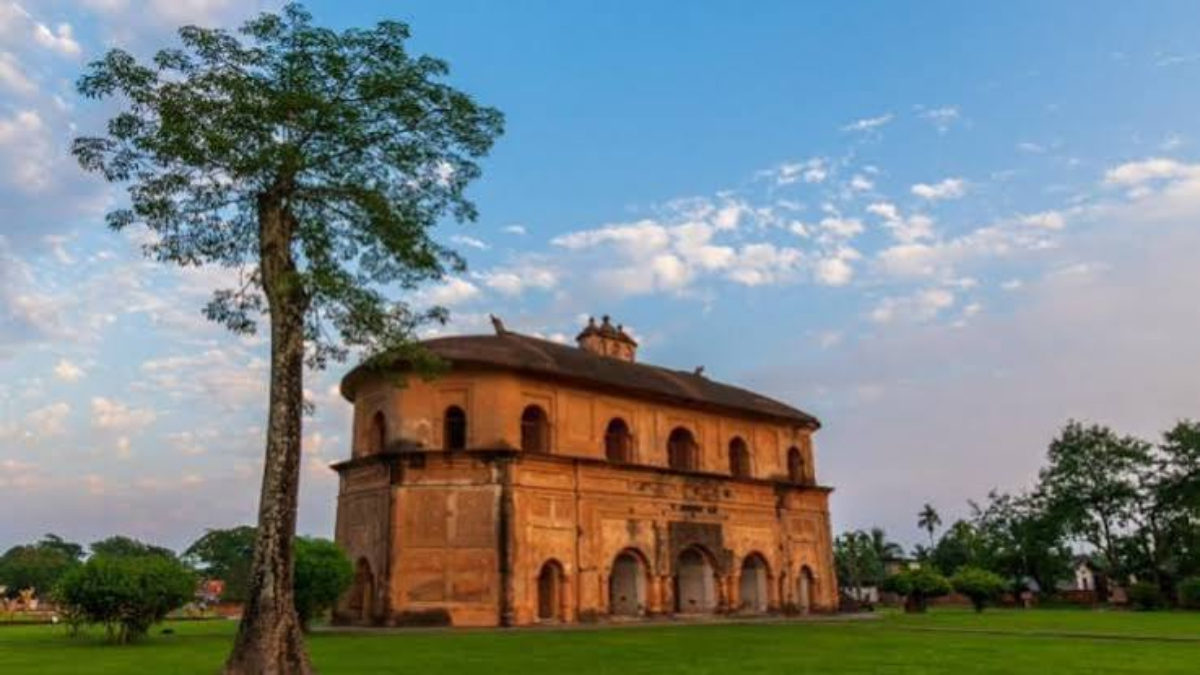
Rangpur-Sivasagar Ensemble has moved a step closer to global heritage recognition after India formally submitted the historic site in Assam to UNESCO’s Tentative List for World Heritage status. The submission, made by India’s Permanent Delegation to UNESCO on June 19, 2026, places the historic heart of the Ahom kingdom among India’s latest proposed cultural heritage sites.
Assam Chief Minister Himanta Biswa Sarma highlighted the development, saying the submission could give international recognition to the state’s rich Ahom heritage. He also linked the initiative to the 2024 UNESCO recognition of the Charaideo Moidams, describing the two sites as complementary parts of the Ahom story.
A major step for Assam’s Ahom heritage
The Rangpur-Sivasagar Ensemble represents the political and ceremonial centre of the Ahom kingdom, which ruled the Brahmaputra Valley for about six centuries. UNESCO has listed the property under cultural heritage criteria (iii) and (iv), recognising its importance as evidence of a living cultural tradition and as an outstanding example of historic architecture, urban planning and engineering.
The proposed heritage area covers two principal components, Rangpur and Sivasagar, in present-day Sivasagar district. Rangpur developed as a planned capital under Ahom king Swargadeo Rudra Singha in the early 18th century. The wider landscape contains palaces, temples, fortified structures, ceremonial spaces, roads, bridges and large man-made water bodies.
What the UNESCO proposal includes
The Rangpur-Sivasagar Ensemble brings together some of Assam’s best-known Ahom-era monuments. These include the Talatal Ghar, Rang Ghar, the Sivasagar group of temples and the large historic tanks of Sivasagar, Joysagar and Gaurisagar.
Rang Ghar is particularly notable for its distinctive amphitheatre form, while Talatal Ghar reflects the military and administrative strength of the Ahom state. The Sivasagar temple group includes Siva Dol, one of the most prominent historic temples in the region. UNESCO’s submission also identifies historic structures such as Ghanashyam House, Fakuwa Doul, Pohu Garh, the Namdang stone bridge and the Dikhow Steel Bridge.
The water bodies are another defining feature. UNESCO notes that the Ahoms constructed hundreds of ponds and large tanks in Sivasagar district. These reservoirs served practical, religious and commemorative purposes, while also supporting irrigation and community life.
Rangpur-Sivasagar Ensemble and its unique planning
A key argument in the UNESCO submission is the integration of architecture and water management. The historic capital was not simply a collection of isolated monuments. Palaces, temples, ceremonial structures, roads, defensive features and reservoirs formed an interconnected landscape.
UNESCO describes the large reservoirs as sophisticated examples of pre-modern hydraulic engineering. Their embankments, gradients and associated infrastructure helped provide water for royal, agricultural, religious and civic needs. This combination of urban planning, architecture and water management forms a central part of the property’s proposed Outstanding Universal Value.
The site also reflects cultural exchanges that shaped Ahom-era architecture. Indigenous Tai-Ahom traditions developed alongside Assamese, Hindu, Mughal and later British influences, particularly as the Ahom rulers increasingly adopted brick and stone construction.
UNESCO status is not yet final
The inclusion of the Rangpur-Sivasagar Ensemble on India’s Tentative List is an important preliminary step, but it does not mean the site has already received World Heritage status. UNESCO’s Tentative List contains properties that countries may later nominate for inscription on the World Heritage List.
The UNESCO documentation also identifies challenges, including modern development, encroachment around water bodies, sedimentation and the partial loss of historic fabric. Protecting the landscape and maintaining its architectural and ecological integrity will therefore remain important as the nomination process advances.
Building on Charaideo’s UNESCO recognition
The latest move follows the inscription of the Charaideo Moidams on the UNESCO World Heritage List in 2024. Sarma said the new proposal and the Charaideo Moidams together represent two major dimensions of Ahom history: the royal burial landscape and the centre from which the dynasty governed.
For Assam, the Rangpur-Sivasagar Ensemble proposal could strengthen efforts to preserve and promote the state’s historic sites while bringing greater international attention to Ahom architecture, engineering and cultural traditions.
India’s June 19 submission is now formally recorded on UNESCO’s Tentative List, marking a significant milestone for Assam’s heritage ambitions. The next stages will determine whether the historic landscape can progress from tentative recognition to full World Heritage status.
HYBE India Audition Expands to Northeast in Major Talent Drive