

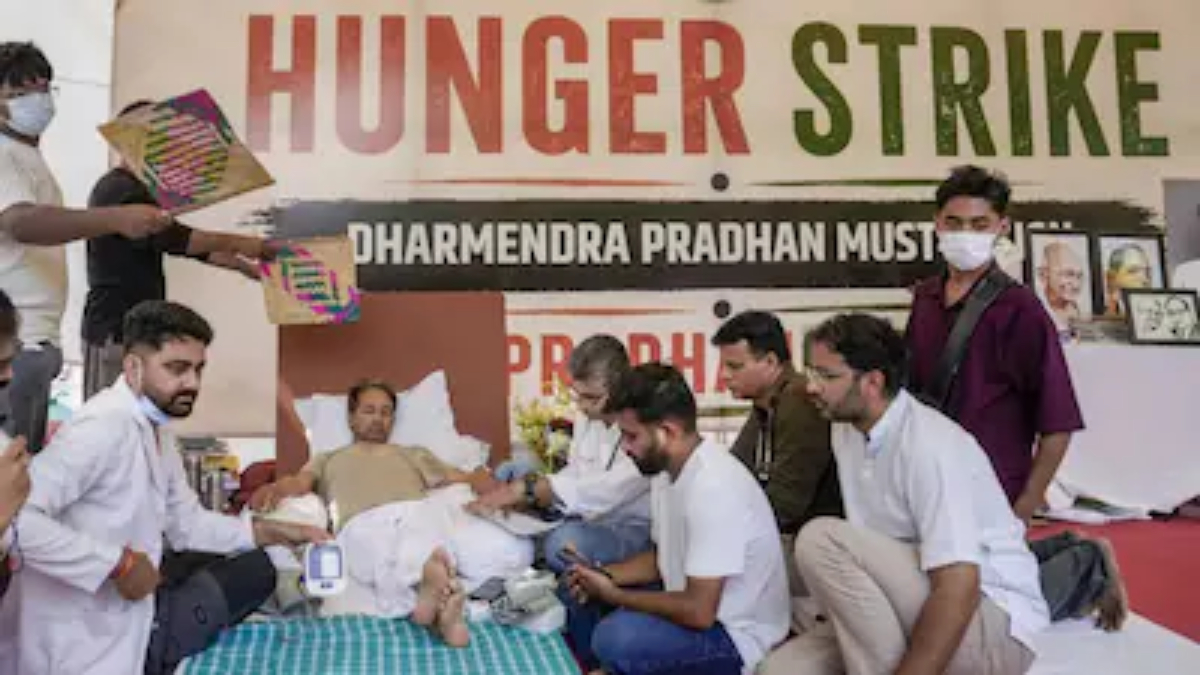
Sonam Wangchuk hunger strike has drawn nationwide attention as more than 160 eminent personalities from Assam have appealed to the activist and education reformer to end his indefinite fast, citing serious concerns over his rapidly deteriorating health. The joint appeal reflects growing anxiety among civil society groups, academics, artists, journalists, and retired officials, who have urged both Wangchuk and the Central government to prioritize dialogue before the situation turns irreversible.
The appeal comes after Wangchuk completed nearly three weeks of fasting at Delhi’s Jantar Mantar, where he has been protesting over issues related to alleged irregularities in competitive examinations and demanding accountability from the Centre. As doctors continue to warn about the risks associated with his prolonged fast, calls for a peaceful resolution have intensified across the country.
Over 160 Assam Luminaries Issue a Joint Appeal
More than 160 distinguished personalities from Assam signed a public statement requesting Sonam Wangchuk to end his hunger strike immediately. The signatories include noted writers, university professors, retired civil servants, former police officials, journalists, artists, lawyers, and social activists.
In their statement, they acknowledged the importance of Wangchuk’s demands and his commitment to public causes. However, they stressed that his life and continued contribution to society are far too valuable to be endangered through an indefinite fast.
The group also expressed disappointment over the Centre’s handling of the situation, arguing that democratic governments should respond to peaceful protests through meaningful engagement rather than prolonged silence. They urged authorities to initiate constructive discussions with Wangchuk and address the issues he has raised before his health worsens further.
Health Condition Raises Serious Alarm
Medical experts monitoring Wangchuk have repeatedly warned that his physical condition has entered a critical stage after weeks without food. According to doctors, he has reportedly lost more than nine kilograms during the course of the fast.
Health specialists have explained that the body’s glucose reserves are exhausted after prolonged fasting, forcing it to consume muscle tissue for energy. Continued fasting under such conditions significantly increases the risk of organ damage, weakened immunity, and other potentially life-threatening complications.
Doctors have advised immediate medical intervention, emphasizing that the longer the hunger strike continues, the greater the possibility of irreversible health consequences.
Why Is Sonam Wangchuk Protesting?
Sonam Wangchuk began his hunger strike to demand accountability over alleged irregularities in national competitive examinations, particularly the NEET paper leak controversy. He has called for greater transparency in the examination system and has demanded the resignation of Union Education Minister Dharmendra Pradhan.
Wangchuk has maintained that his protest is aimed at ensuring fairness for millions of students and restoring public confidence in India’s education system. Despite repeated appeals from supporters and public figures, he has indicated that he would continue the fast until the government provides a meaningful response to his demands.
He has also encouraged citizens to participate peacefully in democratic protests, stating that constructive public participation is essential for institutional reforms.
Nationwide Appeals Continue to Grow
The appeal from Assam is part of a broader nationwide campaign urging Wangchuk to prioritize his health. Several prominent personalities, including writers, filmmakers, lawyers, educationists, and civil society organisations, have appealed to him to discontinue the fast.
The Supreme Court Bar Association also urged Wangchuk to end his hunger strike while emphasizing that the issues he has highlighted deserve serious attention. Public intellectuals across the country have echoed similar sentiments, calling for both compassion and dialogue rather than confrontation.
Many supporters believe that Wangchuk’s message has already reached a national audience and that preserving his health is now of utmost importance.
Sonam Wangchuk’s Hunger Strike Enters Day 20: A Look at India’s Longest Fasts Since 1947
Legal Developments and Government Response
The growing concern over Wangchuk’s health has also reached the judiciary. The Delhi High Court recently agreed to examine a public interest litigation related to his deteriorating medical condition.
During the hearing, the Central government assured the court that Wangchuk’s health would be monitored regularly and that appropriate medical care would be provided whenever necessary. While these assurances have offered some relief, critics argue that monitoring alone cannot replace meaningful engagement with the concerns raised by the activist.
Civil society groups continue to urge the government to open direct communication channels instead of allowing the protest to continue indefinitely.
Calls for Dialogue Over Confrontation
The statement issued by Assam’s eminent personalities places equal responsibility on both Wangchuk and the government. While urging the activist to end his fast to protect his health, the signatories also emphasized that the Centre must engage sincerely with the issues raised through peaceful democratic protest.
They argued that dialogue remains the most effective way to resolve differences in a democracy and warned against allowing prolonged standoffs to endanger human life. Their appeal reflects a broader national sentiment that the current situation requires empathy, responsiveness, and immediate action from all stakeholders.
As Sonam Wangchuk’s hunger strike continues to attract nationwide attention, concern over his deteriorating health has become the central focus of public discussion. The appeal from more than 160 eminent citizens of Assam underscores the urgency of protecting his life while ensuring that the issues he has raised receive the serious consideration they deserve. With medical risks increasing each passing day, many hope that constructive dialogue between the government and Wangchuk will lead to a peaceful resolution that safeguards both democratic values and human life.