

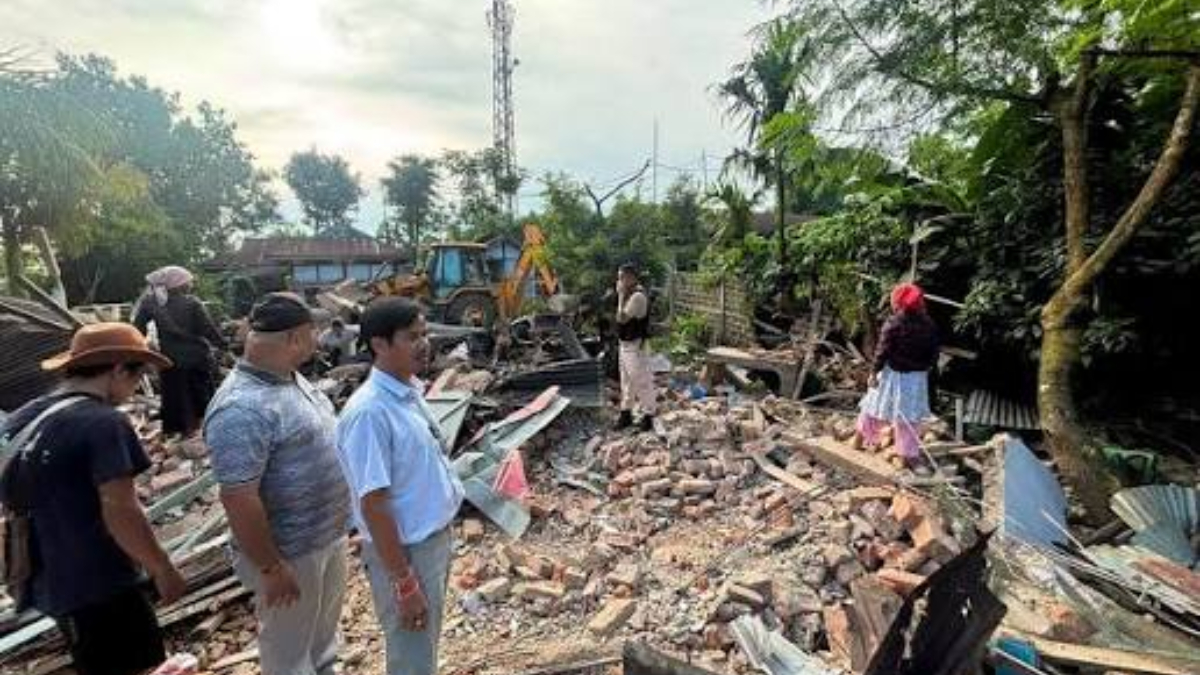
The state government has taken a major step to resolve a severe, decades-long municipal challenge in Dima Hasao district. Eviction begins for Greater Haflong water supply project under AMRUT 2.0, marking a critical transition from planning to active ground enforcement. To clear land for essential infrastructure development, local authorities have launched a targeted eviction drive. This operation aims to remove illegal encroachments along designated distribution pathways and around vital water resources. This decisive action underscores the administration’s commitment to prioritizing large-scale public utilities over illegal settlements, paving the way for a modern utility network.
Clearing Encroachments for Urban Transformation
The decision to initiate eviction drives stems from persistent unauthorized occupations on government-allotted land, which had severely delayed infrastructure layout plans. Haflong, a prominent hill town and the administrative headquarters of the Dima Hasao district, has grappled with an acute water crisis for years.
As eviction begins for Greater Haflong water supply project under AMRUT 2.0, district officials and law enforcement have cleared illegal structures, commercial extensions, and residential settlements built over public right-of-ways. By executing these targeted clearances, the local administration seeks to prevent further project delays and ensure that construction crews can operate without logistical bottlenecks.
Sonam Wangchuk’s Hunger Strike Enters Day 20: A Look at India’s Longest Fasts Since 1947
Infrastructure Blueprint of the Greater Haflong Project
Funded under the central government’s flagship Atal Mission for Rejuvenation and Urban Transformation (AMRUT 2.0), the project features an ambitious scope designed to sustain the town’s expanding population for the next few decades.
Estimated Project Cost:   ₹100.63 Crore
Water Production Goal:   7 Million Liters per Day (7 MLD)
Household Coverage:       10,086 functional tap connections
Pipeline Network Layout:  70.25 Kilometers
The comprehensive infrastructure blueprint relies on sourcing water from a nearby surface source. The raw water will be directed into a modern 7.0 MLD water treatment plant, ensuring that clean, filtered drinking water meets national safety guidelines before distribution. To achieve universal coverage across the hilly terrain, a massive 70.25-kilometer pipeline network will be laid down, which is precisely why clearing encroached roads and pathways has become an absolute necessity for engineers.
Managing Administrative Challenges and Local Welfare
Large-scale urban infrastructure overhauls in hill stations inevitably face significant geographical and sociological hurdles. The North Cachar Hills Autonomous Council (NCHAC), alongside district administrative bodies, emphasizes that these evictions are legal measures intended to safeguard broader public interest.
While the enforcement has drawn mixed reactions from affected settlers, authorities have maintained that adequate public notifications were served prior to the arrival of heavy machinery. The administration is balancing strict code enforcement with welfare oversight, assessing verified, legal residents who may have been displaced due to pipeline zoning errors to prevent absolute homelessness.
Timeline, Maintenance, and Future Goals
Following the official foundation stone-laying ceremony at Haflong’s Lal Field, the implementation contract was formally awarded to the Uday Baishya Group. The contract mandates a strict two-year construction timeline, followed by an additional five-year monitoring and system maintenance contract to guarantee operations remain stable and leak-free. This long-term clause ensures the private contractor remains directly accountable for any structural failures or systemic pressure drops post-launch.
The project represents a crucial component of Assam’s broader urban modernization strategy under the Ministry of Housing and Urban Affairs. In a recent high-level performance review, the state government reported steady progress across 23 active water supply schemes statewide under AMRUT 2.0, confirming that municipal upgrades are being accelerated to meet strict central deadlines. Once fully operational, it will provide continuous tap water access to over 10,000 households, completely transforming daily life and economic stability in Haflong.
Now that eviction begins for Greater Haflong water supply project under AMRUT 2.0, the initial roadblocks are being resolved. The clear zones will enable technical teams to accelerate pipe-laying and plant construction. This project stands as a major milestone for the Dima Hasao region, demonstrating how systematic urban renewal and strict governance can effectively overcome deep-seated municipal shortages.