

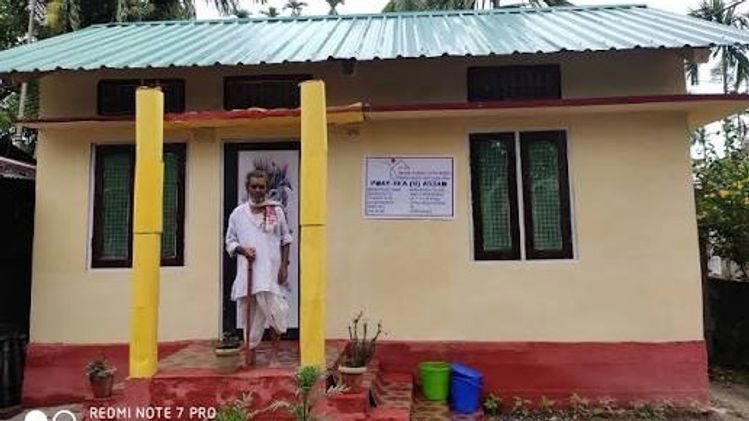
Assam has reached a remarkable milestone in rural development, with nearly 22 lakh families benefiting from the Pradhan Mantri Awaas Yojana-Gramin (PMAY-G), one of the flagship welfare schemes of the Government of India. Chief Minister Himanta Biswa Sarma highlighted the achievement, stating that the initiative has significantly transformed the lives of economically weaker sections by providing them with permanent homes and improved living conditions.
The Chief Minister emphasized that access to safe and durable housing is one of the most important indicators of social and economic progress. He noted that thousands of families who once struggled with inadequate housing now have the dignity and security of owning a pucca house. The achievement reflects the combined efforts of both the Central and Assam governments in ensuring that welfare schemes reach every deserving household across the state.
PMAY-G has become a cornerstone of rural development in Assam, addressing the long-standing housing challenges faced by people living in remote villages, flood-prone regions, and economically disadvantaged communities.
PMAY-G Brings Dignity and Security to Rural Families
The Pradhan Mantri Awaas Yojana-Gramin was launched with the objective of providing affordable and permanent housing to homeless and poorly housed rural families. Under the scheme, eligible beneficiaries receive financial assistance to construct durable houses equipped with basic amenities, thereby improving their quality of life.
In Assam, the implementation of PMAY-G has been particularly impactful due to the state’s geographical and socio-economic challenges. Large sections of the rural population previously lived in temporary bamboo or mud houses that were vulnerable to floods, storms, and other natural disasters. The construction of permanent houses has greatly reduced these vulnerabilities while ensuring greater safety and comfort for families.
Chief Minister Himanta Biswa Sarma stated that housing is not merely about constructing buildings but about restoring dignity to families. A secure home provides children with a stable environment for education, improves health conditions, and strengthens the overall well-being of communities.
The state government has consistently monitored the implementation of the scheme to ensure that assistance reaches eligible beneficiaries in a transparent and timely manner.
Coordinated Efforts Between Centre and State
The success of PMAY-G in Assam has been attributed to close coordination between the Government of India and the Assam government. While the Centre provides financial support and policy direction, the state administration has played a crucial role in identifying beneficiaries, facilitating construction, and ensuring timely completion of projects.
Officials at district, block, and village levels have actively participated in verifying beneficiary lists, supervising construction work, and resolving implementation challenges. The use of digital monitoring systems and direct benefit transfers has also enhanced transparency while reducing delays in fund disbursement.
According to the Chief Minister, the government’s priority has been to ensure that every eligible family receives assistance without unnecessary obstacles. Continuous monitoring and regular review meetings have helped maintain the pace of implementation across districts.
The coordinated administrative approach has enabled Assam to emerge as one of the leading states in implementing rural housing initiatives under PMAY-G.
Housing Scheme Supports Inclusive Rural Development
Beyond providing shelter, PMAY-G has contributed significantly to broader rural development in Assam. The construction of new homes has generated employment opportunities for local labourers, masons, suppliers, and small contractors, thereby supporting rural livelihoods.
The scheme has also encouraged the use of better construction techniques and durable materials, resulting in stronger homes capable of withstanding adverse weather conditions. Many beneficiaries have simultaneously gained access to essential services such as sanitation facilities, electricity connections, drinking water, and clean cooking fuel through convergence with other government welfare programmes.
This integrated approach has improved living standards while contributing to better public health and social development. Families now have safer environments for raising children, protecting elderly members, and maintaining household assets.
Women have emerged as major beneficiaries of the programme, as many houses are registered in their names or jointly with family members. This has strengthened women’s financial security and promoted greater gender equality within rural communities.
Special Focus on Vulnerable and Remote Areas
Assam’s diverse geography presents unique implementation challenges, particularly in remote villages, riverine islands, forest regions, and flood-affected districts. Despite these difficulties, the government has continued to extend PMAY-G benefits to deserving families residing in some of the state’s most inaccessible locations.
Officials have worked extensively to identify eligible households in these areas while ensuring that construction materials and financial assistance reach beneficiaries on time. In flood-prone districts, efforts have also been made to encourage resilient housing designs that can better withstand seasonal natural disasters.
The Chief Minister acknowledged the dedication of field officials, engineers, local administrations, and community workers whose efforts have contributed to the successful implementation of the scheme across difficult terrains.
The government has reiterated its commitment to ensuring that no deserving family is left behind as the housing programme continues to expand.
Transparency and Technology Strengthen Implementation
One of the major reasons behind the successful implementation of PMAY-G in Assam has been the adoption of technology-driven monitoring mechanisms. Beneficiary identification, fund transfers, and construction progress are monitored through digital platforms that enable greater accountability and transparency.
Direct Benefit Transfer (DBT) ensures that financial assistance is credited directly into beneficiaries’ bank accounts, reducing the possibility of leakages or intermediaries. Geo-tagging of houses and digital progress tracking further help authorities monitor construction at every stage.
These technological interventions have accelerated project completion while increasing public confidence in the implementation process. Beneficiaries also receive timely guidance and support throughout the construction period, ensuring that houses are completed according to approved standards.
The use of digital governance reflects the government’s broader commitment to improving the delivery of welfare schemes through transparent and efficient administrative practices.
Government Reaffirms Commitment to Housing for All
Chief Minister Himanta Biswa Sarma reiterated that the state government remains committed to achieving the vision of “Housing for All” by ensuring that every eligible rural family has access to a permanent home. He emphasized that the success of PMAY-G demonstrates the transformative impact of well-implemented welfare programmes on people’s lives.
The government plans to continue identifying eligible households that are yet to receive housing assistance while accelerating ongoing construction projects. Officials have also been instructed to maintain quality standards and ensure that completed houses remain durable and disaster-resilient.
As Assam continues its journey toward inclusive development, PMAY-G stands as one of the state’s most successful welfare initiatives. The achievement of benefiting nearly 22 lakh families represents more than a numerical milestone—it symbolizes improved dignity, enhanced security, and renewed hope for millions of rural residents.
With continued cooperation between the Centre and the state government, Assam is expected to further strengthen its rural infrastructure while empowering communities through sustainable housing development. The success of PMAY-G reflects the government’s commitment to inclusive growth and demonstrates how targeted welfare programmes can bring lasting improvements to the lives of ordinary citizens across the state.