

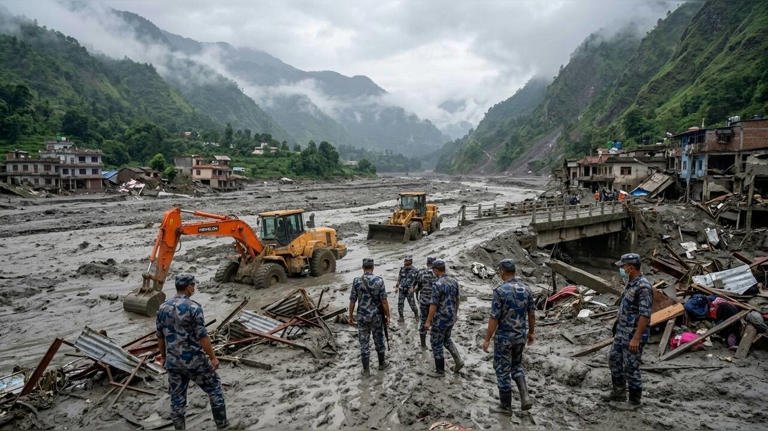
Around 60 tourists from Maharashtra remain untraceable following the devastating floods and flash floods that struck parts of Nepal and Tibet, prompting authorities to intensify efforts to establish their whereabouts and ensure their safety.
The tourists are among a large number of Indian nationals who have been reported missing or unable to contact their families following the disaster. Maharashtra authorities are coordinating with central agencies and concerned authorities to obtain information about the tourists and facilitate their safe return.
The development has caused anxiety among families in the state as rescue and relief operations continue in the affected Himalayan region.
60 Tourists From Maharashtra Yet to Be Traced
According to information available to authorities, around 60 tourists from Maharashtra have not yet been traced following the floods.
The tourists were believed to have been travelling in the affected region when the disaster struck. Disrupted communication networks, damaged roads and difficult terrain have made it challenging to immediately establish contact with everyone who was in the affected areas.
Authorities are working to verify the identities and locations of those who remain uncontactable.
Officials are also coordinating with families and travel groups to collect information that could assist rescue agencies in locating the tourists.
Nepal-Tibet Floods Cause Widespread Destruction
The flash floods caused extensive damage in parts of Nepal and Tibet, with powerful flows of water, mud, rocks and debris sweeping through affected areas.
The disaster damaged roads, bridges and other infrastructure, leaving several areas difficult to access.
The sudden nature of the flooding meant that residents and visitors in vulnerable locations had limited time to respond. The situation was further complicated by the mountainous terrain of the region.
Rescue agencies have been working to reach stranded people and assess the scale of destruction.
Communication Disruptions Complicate Rescue Efforts
One of the biggest challenges following the disaster has been the disruption of communication.
Mobile and internet connectivity has been affected in some areas, making it difficult for tourists to contact their families.
A lack of communication does not necessarily indicate that a person is missing or injured. Some tourists may simply be stranded in locations where phone networks are unavailable.
Authorities are therefore working to distinguish between people who are genuinely missing and those who are safe but temporarily unable to establish contact.
Maharashtra Authorities Coordinate With Central Agencies
The Maharashtra government is monitoring the situation and coordinating with central authorities to trace residents who may have been affected.
Officials are expected to remain in contact with the Ministry of External Affairs and Indian diplomatic missions involved in rescue and evacuation efforts.
Information received from families, travel operators and government agencies can help authorities prepare updated lists of people who are untraceable.
Such coordination is particularly important when affected individuals are spread across different locations on both sides of the Nepal-Tibet border.
Families Await Information
The uncertainty surrounding the whereabouts of the tourists has caused considerable anxiety among their families in Maharashtra.
For relatives, establishing direct contact with their loved ones remains the immediate priority.
Authorities have been working to provide verified information as rescue teams gain access to affected areas.
Families have also been advised to rely on official updates because information circulating through social media can sometimes be incomplete or unverified during a major disaster.
India Steps Up Rescue and Relief Assistance
India has been actively supporting Nepal’s disaster response while simultaneously working to trace Indian nationals.
The Ministry of External Affairs has established mechanisms to coordinate the rescue and evacuation of Indian citizens affected by the floods.
Indian authorities have also offered humanitarian and technical assistance to Nepal as it deals with the extensive destruction.
Specialised rescue teams and medical personnel are being deployed to support relief operations, while essential supplies are being sent to affected areas.
Difficult Himalayan Terrain Hampers Operations
The geographical conditions in the affected region have made rescue operations particularly challenging.
The Himalayas are characterised by steep terrain, narrow valleys and difficult road access. Floodwaters and landslides have further damaged transportation links.
Rescue teams may therefore have to rely on helicopters and other specialised equipment to reach isolated locations.
The destruction of bridges can also prevent emergency vehicles from reaching affected communities, making aerial evacuation an important component of the response.
Tourists Among Those Affected by Disaster
The affected region attracts tourists, pilgrims and travellers from India and other countries.
Some Indian visitors were travelling towards destinations associated with pilgrimage and tourism when the floods occurred.
The sudden disaster has disrupted travel routes and left visitors stranded in areas where accommodation, food and communication services may be limited.
Authorities are therefore working not only to locate missing people but also to assist those who have been rescued and need help returning home.
Need for Accurate Missing-Person Lists
Maintaining accurate records of missing and uncontactable people is essential during a large-scale disaster.
Initial lists can contain people who are temporarily unreachable but later establish contact with their families.
As communication improves and rescue teams reach additional locations, the number of people officially listed as missing may change.
Authorities in Maharashtra will consequently need to regularly update the list of untraceable tourists and verify information received from different sources.
Rescue Efforts Continue
The search for people affected by the floods is continuing as emergency teams assess damaged areas.
Authorities are prioritising locations where reports indicate that people may be stranded or missing.
The safe evacuation of those located will depend on road access, weather conditions and the availability of rescue resources.
For tourists from Maharashtra, establishing contact will be the first indication of their safety, followed by efforts to bring them to secure locations.
Maharashtra Monitoring Situation Closely
The report of around 60 Maharashtra tourists remaining untraceable has brought the impact of the Nepal-Tibet disaster closer to home for families across the state.
The number remains subject to verification as authorities continue to reconcile information and establish contact with affected travellers.
The situation is fluid, and people initially reported as untraceable may be located safely as communication networks and transport links are restored.
Priority Remains Safe Return of Tourists
For Maharashtra authorities and the families of the affected tourists, the immediate priority is to establish the whereabouts of those still uncontactable and facilitate their safe evacuation.
The wider disaster has highlighted the challenges of conducting rescue operations in remote Himalayan areas following sudden flooding.
As Nepal and Tibet continue their emergency response, Indian agencies are working to support rescue efforts and trace nationals caught in the disaster.
The coming days will be crucial as rescue teams gain access to more affected areas and authorities receive updated information.
For the families waiting in Maharashtra, the hope remains that the 60 untraceable tourists will soon be located, confirmed safe and brought back home.