

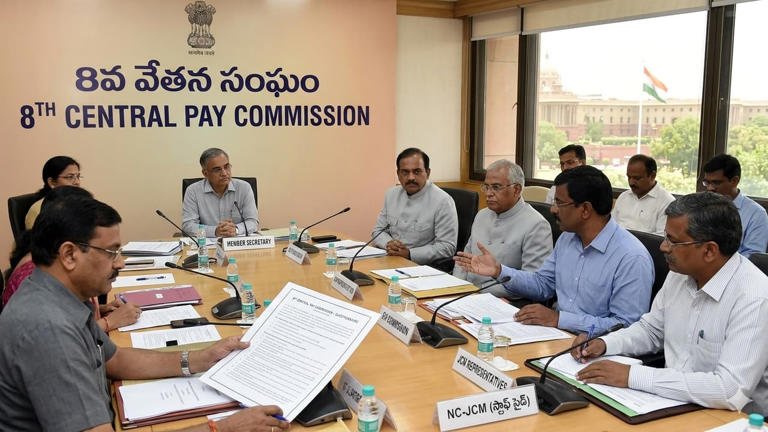
The much-awaited 8th Pay Commission update has once again sparked discussions among central government employees and pensioners across India, with reports indicating that important decisions and possible timelines may emerge in June.
Millions of government employees and retired pensioners have closely followed developments related to the proposed pay revision, which could significantly impact salaries, pensions, allowances, and overall financial benefits.
Although the Centre has not yet issued an official notification regarding the formation or implementation schedule of the 8th Pay Commission, growing speculation about possible timelines has increased expectations among employees.
Experts believe the coming months may prove important for discussions related to pay structure revisions and future salary recommendations.
What Is the 8th Pay Commission?
The Pay Commission is a body constituted by the central government to review and recommend changes in salaries, pensions, and allowances for central government employees and pensioners.
India has witnessed seven Pay Commissions so far. The 7th Pay Commission came into effect in 2016 and introduced major changes in salary structures, fitment factors, and pension benefits.
Now, attention has shifted toward the proposed 8th Pay Commission, which could revise pay scales again in line with inflation, rising living costs, and economic conditions.
If implemented, the commission would affect lakhs of central government employees, defence personnel, and pensioners across the country.
Why Employees Are Awaiting the 8th Pay Commission
Government employees have repeatedly raised concerns regarding inflation, increasing household expenses, and the need for salary revisions.
Many employee unions and associations have urged the Centre to begin discussions on the next Pay Commission at the earliest.
Employees believe revised pay structures could improve financial stability and purchasing power amid rising living costs.
Pensioners are also expecting better retirement benefits and revised pension calculations under any future commission recommendations.
Several employee groups have argued that timely pay revision remains necessary because economic conditions have changed significantly since the implementation of the 7th Pay Commission.
Final Dates May Emerge in June
According to reports and discussions in administrative circles, June may witness important developments regarding the timeline and framework for the 8th Pay Commission.
Sources suggest the government could hold consultations or internal reviews concerning salary revision demands and future planning.
However, officials have not officially confirmed any final dates regarding implementation or formation of the commission.
Experts noted that major policy decisions related to pay commissions usually require extensive financial evaluation and administrative planning.
Therefore, even if discussions progress in June, actual implementation could still take considerable time.
Political observers also believe the issue remains important because salary revisions directly affect a large section of government employees and pensioners.
Possible Salary Hike Expectations
One of the biggest questions among employees concerns the likely salary increase under the proposed 8th Pay Commission.
Although no official formula or recommendation has emerged yet, many reports suggest that basic salaries and allowances may increase significantly if a new pay commission takes shape.
Discussions often focus on the fitment factor, which determines salary revisions for government employees.
Under the 7th Pay Commission, the fitment factor stood at 2.57. Some employee organisations now demand a much higher fitment factor under the next commission.
Experts believe any increase in fitment factor could substantially raise take-home salaries and pension amounts.
However, actual recommendations would depend on economic conditions, government finances, and future committee decisions.
Dearness Allowance Also Important
Apart from salary revisions, Dearness Allowance (DA) remains another major issue for government employees.
The government periodically revises DA to help employees manage inflation and rising costs of living.
Some analysts believe future discussions regarding the 8th Pay Commission may also influence how DA adjustments are structured in the long term.
Employees continue to closely monitor both DA revisions and Pay Commission-related developments because both significantly affect monthly income.
Pensioners are also interested in possible changes in Dearness Relief calculations and pension structures.
Government Yet to Make Official Announcement
Despite increasing discussions and reports, the central government has not yet officially announced the formation of the 8th Pay Commission.
Officials have maintained that no formal proposal has been finalised at this stage.
However, employee unions continue pressing for early action and greater clarity regarding future pay revision plans.
Political analysts believe the government may adopt a cautious approach because salary revisions involve major financial commitments and budgetary planning.
The Centre may also examine broader economic conditions before taking any final decision regarding the commission.
Impact on Economy and Government Spending
Implementation of a new Pay Commission usually has a major impact on government expenditure and the broader economy.
Higher salaries and pensions increase spending power among employees, which can positively affect consumer demand and economic activity.
At the same time, revised pay structures also place additional financial pressure on government budgets.
Experts said policymakers would need to balance employee expectations with fiscal discipline and long-term economic planning.
Several state governments may also eventually revise their own salary structures after central pay commission recommendations.
Employee Unions Continue Demanding Clarity
Various employee associations and unions have continued demanding a clear roadmap regarding the 8th Pay Commission.
They argue that early discussions and timely implementation can help employees plan finances more effectively.
Some unions have also requested consultations regarding salary structures, pension reforms, and inflation-related compensation mechanisms.
Employee representatives believe transparent communication from the government would reduce uncertainty and speculation.
What Happens Next?
For now, government employees and pensioners continue waiting for official confirmation regarding the future of the 8th Pay Commission.
If discussions gain momentum in June, the Centre may eventually outline timelines, consultation processes, or administrative frameworks for the next stage.
However, experts cautioned that formation, recommendation, and implementation of a Pay Commission typically involve lengthy procedures.
Meanwhile, speculation regarding possible salary hikes and revised pension benefits continues to generate widespread interest among millions of employees and retirees across India.
Until an official announcement arrives, all eyes will remain on the Centre for the next major update regarding the proposed 8th Pay Commission and its possible implementation roadmap.