

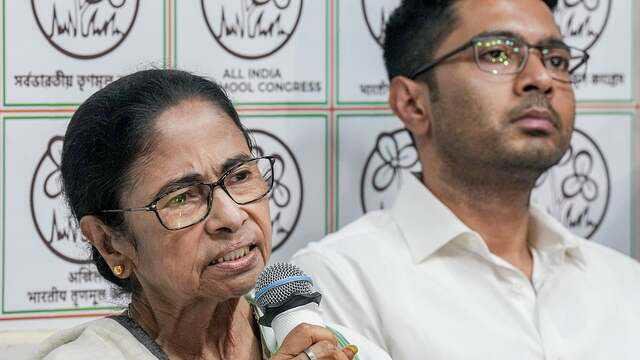
Senior All India Trinamool Congress leader Abhishek Banerjee has alleged large-scale irregularities in the recent election process, claiming that Electronic Voting Machines (EVMs) might have been replaced in certain areas after the party suffered a major electoral setback.
Speaking after the election results, Banerjee questioned the outcome in several constituencies and raised concerns regarding the functioning and handling of EVMs during the polling and counting process. He alleged that suspicious voting patterns and unexpected results had triggered doubts within the party.
Read More: Tripura CM Manik Saha Reviews Public Services And Law And Order
The remarks have intensified political tensions following the elections, with opposition leaders and political observers closely watching the developments. Meanwhile, the BJP strongly rejected the allegations and accused the Trinamool Congress of refusing to accept the public mandate.
Election officials have not responded publicly to the specific allegations at the time of reporting.
Abhishek Banerjee Raises Questions Over EVM Handling
During his remarks, Abhishek Banerjee alleged that irregularities may have taken place during the transportation and storage of EVMs. He claimed that the scale of the defeat in certain constituencies appeared unusual and required closer scrutiny.
Banerjee reportedly said the party had received complaints and concerns from several local leaders and polling agents after the results were declared. According to him, discrepancies between ground-level feedback and final outcomes raised suspicion among party workers.
The TMC leader also questioned whether EVMs used during polling remained secure throughout the election process. Therefore, he demanded greater transparency and accountability regarding the handling of voting machines.
Political observers noted that allegations related to EVM functioning often emerge after closely contested elections in different parts of the country.
However, Banerjee insisted that the concerns raised by his party should receive proper attention and examination.
BJP Rejects Allegations Strongly
Leaders of the Bharatiya Janata Party strongly rejected the allegations made by the Trinamool Congress leader. BJP representatives accused the TMC of making excuses after suffering a major political setback.
Several BJP leaders stated that the election process was conducted under the supervision of the Election Commission of India and followed established procedures. They argued that questioning EVMs without evidence undermines democratic institutions.
Party representatives also claimed that the election results reflected public dissatisfaction with the ruling party’s governance and political approach.
Political analysts noted that disputes over EVMs have become a recurring issue in Indian electoral politics, especially after high-stakes elections.
The BJP leadership maintained that the people of West Bengal had delivered a clear verdict through the democratic process.
TMC Demands Greater Transparency
Following the allegations, several leaders from the All India Trinamool Congress demanded increased transparency regarding the management of EVMs during elections.
Party representatives reportedly called for detailed verification of voting records, machine movement logs, and counting procedures in constituencies where the party suffered unexpected losses.
Some TMC leaders argued that public confidence in elections depends on transparency and accountability. Therefore, they urged authorities to clarify doubts raised after the election outcome.
Observers stated that political parties often seek greater procedural transparency after controversial or surprising election results.
At the same time, experts noted that the Election Commission has repeatedly defended the reliability and security of EVMs used in Indian elections.
Election authorities have consistently maintained that EVMs include multiple layers of technical and administrative safeguards.
EVM Debate Continues In Indian Politics
The debate surrounding EVMs has remained a major political issue in India over the past several years. Multiple political parties across the spectrum have raised concerns regarding electronic voting systems at different times.
Critics often demand increased use of Voter Verifiable Paper Audit Trail (VVPAT) verification and stronger monitoring procedures. Supporters of the current system, however, argue that EVMs have improved efficiency and reduced large-scale electoral malpractices associated with paper ballots.
Political experts noted that allegations regarding EVM manipulation usually intensify after unexpected election outcomes.
The Election Commission of India has repeatedly stated that EVMs used in Indian elections operate through secure standalone systems and cannot connect to external networks.
Election officials have also organised demonstrations and technical briefings in the past to address public concerns regarding EVM security.
Political Tensions Rise After Election Results
The latest allegations have further increased political tensions in West Bengal following the election results. The state has already witnessed heated exchanges between rival political parties over campaign conduct, governance, and post-poll violence.
Observers noted that the strong statements made by Abhishek Banerjee are likely to trigger fresh political confrontations between the BJP and the TMC.
Several opposition parties and political commentators have also entered the debate, with some supporting demands for greater transparency while others criticised attempts to question the election mandate without concrete evidence.
Political analysts stated that election-related controversies often shape public discourse long after polling concludes.
The developments have once again placed the spotlight on the broader national debate regarding electoral reforms and transparency mechanisms.
Election Commission Faces Renewed Scrutiny
The allegations made by TMC leaders have renewed attention on the role of the Election Commission of India in ensuring free and fair elections.
Observers stated that the commission may face increasing pressure to address concerns raised by political parties and reassure voters about the integrity of the electoral process.
Election experts noted that public trust remains essential for democratic systems. Therefore, authorities often respond carefully to allegations involving election procedures and voting technology.
At the same time, analysts warned that repeated accusations without substantial evidence could weaken confidence in democratic institutions.
Political observers believe the Election Commission may continue highlighting existing safeguards and technical procedures designed to protect EVM security and transparency.
Political Debate Expected To Continue
The remarks made by Abhishek Banerjee have intensified the political debate surrounding the recent election results in West Bengal.
The BJP continues defending the electoral outcome as a reflection of public opinion, while the Trinamool Congress insists that concerns regarding EVM handling deserve serious attention.
Observers believe the controversy will likely remain a major political issue in the coming weeks as parties continue trading accusations over the election process.
The developments have once again highlighted how electoral technology, transparency, and political trust remain deeply interconnected in India’s democratic system.
Read More: Assamese in Delhi Back NDA Hat-Trick, Cite Infra Growth and Migration Curbs