

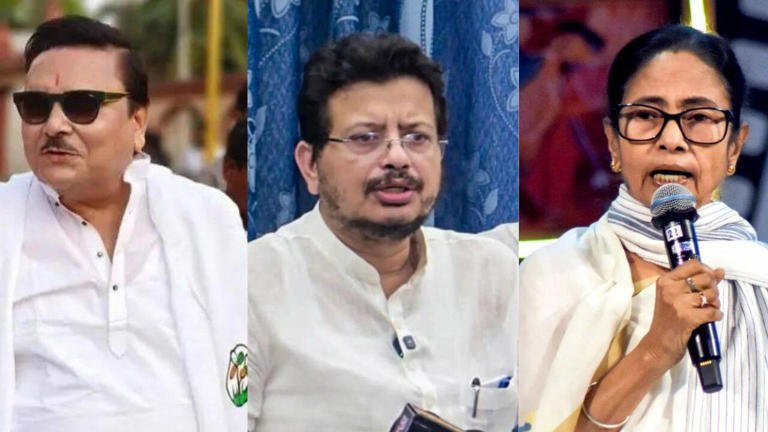
Veteran Trinamool Congress (TMC) leader Madan Mitra has announced his decision to leave the camp led by West Bengal Chief Minister Mamata Banerjee and align himself with a faction headed by Ritabrata Banerjee. The move comes amid growing political tensions within the party, with Mitra claiming that TMC national general secretary Abhishek Banerjee “refused to step aside,” leaving no room for internal reconciliation.
The development has added a new dimension to the evolving political landscape in West Bengal, where reports of differences within the ruling party have continued to generate attention. Mitra’s remarks have intensified speculation about internal divisions, even as the TMC leadership has consistently maintained that the party remains united.
The veteran leader’s decision is expected to trigger fresh political debate, with opposition parties likely to use the latest development to question the ruling party’s internal cohesion.
Madan Mitra Announces Shift
Speaking about his decision, Madan Mitra said he had chosen to leave Mamata Banerjee’s camp and join the faction led by Ritabrata Banerjee.
According to Mitra, efforts to resolve differences within the party did not produce the desired outcome. He alleged that Abhishek Banerjee “refused to step aside,” making it difficult to arrive at a compromise.
The veteran politician said his decision followed careful consideration and reflected his assessment of the current political situation within the party.
His remarks have drawn considerable attention, given his long association with the Trinamool Congress.
Allegations Against Abhishek Banerjee
Mitra’s statement centred on his allegation that Abhishek Banerjee was unwilling to make way for an internal resolution.
Without elaborating further on the circumstances, he suggested that leadership-related differences contributed to his decision to shift political camps.
The comments are likely to fuel further discussion about the role of the party’s leadership and the direction of the organisation.
The Trinamool Congress has not immediately issued a detailed response to Mitra’s allegations.
Joins Ritabrata Banerjee’s Faction
Following his departure from Mamata Banerjee’s camp, Mitra announced that he would now support the faction associated with Ritabrata Banerjee.
The move marks a significant political development, as Mitra has remained one of the more recognisable leaders in West Bengal politics over the years.
Political observers believe his decision could influence discussions within the party, although its broader organisational impact remains to be seen.
The emergence of competing factions has added fresh uncertainty to the state’s political landscape.
Internal Differences Under Spotlight
The latest development has once again brought reports of internal differences within the Trinamool Congress into focus.
While the party leadership has repeatedly asserted that the organisation remains united, recent public statements by some leaders have generated speculation about differing opinions within the party.
Political analysts note that internal disagreements are not uncommon in large political organisations, but public expressions of dissent often attract significant political attention.
Mitra’s decision is expected to intensify these discussions in the coming days.
Opposition Likely to Target TMC
The BJP and the Congress have frequently accused the Trinamool Congress of facing organisational challenges and internal factionalism.
The latest development is likely to provide fresh ammunition to opposition parties, which have consistently criticised the ruling party’s internal functioning.
Political observers expect opposition leaders to use Mitra’s exit to question the TMC’s unity ahead of future political contests.
The Trinamool Congress, however, has previously dismissed similar criticism, maintaining that isolated differences do not weaken the organisation.
TMC Faces Political Challenges
The ruling party continues to face political challenges from both opposition parties and internal criticism as it prepares for future electoral battles.
Senior leaders have repeatedly urged party workers to remain disciplined and focus on strengthening the organisation at the grassroots level.
The leadership has also emphasised governance and public welfare as its primary priorities despite ongoing political controversies.
Whether Mitra’s departure will have a wider political impact remains uncertain.
Leadership Remains Key Talking Point
The latest episode has once again placed the TMC’s leadership structure under public scrutiny.
Political commentators believe leadership dynamics are likely to remain an important issue as parties prepare for upcoming elections and organisational restructuring.
Mitra’s remarks have further intensified debate over the distribution of responsibilities and influence within the party.
However, no official indication has emerged suggesting any immediate changes in the party’s leadership structure.
Political Reactions Expected
Political leaders from across the spectrum are expected to react to Mitra’s announcement in the coming days.
Supporters of the ruling party are likely to defend the leadership, while opposition parties may portray the development as evidence of growing internal dissatisfaction.
Analysts believe the incident could become another point of political confrontation in West Bengal, where competition among major parties remains intense.
The situation is expected to evolve as more leaders respond to the latest developments.
Fresh Twist in West Bengal Politics
Madan Mitra’s decision to leave Mamata Banerjee’s camp and join the faction led by Ritabrata Banerjee has introduced a fresh political twist in West Bengal.
His allegation that Abhishek Banerjee “refused to step aside” has added to ongoing discussions about internal dynamics within the Trinamool Congress. While the party leadership has consistently projected unity, the latest development is likely to keep the focus on organisational issues in the days ahead.
As political reactions continue to emerge, the episode underscores the fluid nature of West Bengal politics, where leadership decisions and internal developments often have a significant impact on the state’s broader political discourse.