

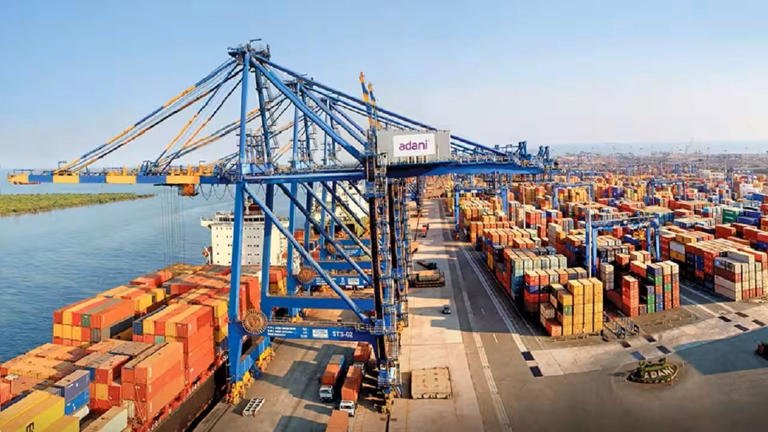
Adani Ports and Special Economic Zone (APSEZ) has entered into a landmark strategic partnership with the Switzerland-based MSC Group to accelerate the expansion and growth of the Vizhinjam International Seaport in Kerala. Under the agreement, MSC’s terminal investment arm, Terminal Investment Limited (TiL), will acquire a 49 per cent stake in Adani Vizhinjam Port Private Limited (AVPPL) through an investment of approximately $1.397 billion, valuing the port at an enterprise value of $2.85 billion. The transaction is being described as the largest foreign private investment in India’s port infrastructure sector.
The strategic collaboration is expected to significantly strengthen Vizhinjam Port’s position as one of the world’s leading deep-water transshipment hubs while enhancing India’s role in global maritime trade. The agreement remains subject to customary regulatory approvals and completion conditions.
Landmark Partnership for India’s Maritime Sector
The agreement marks a major milestone for India’s port infrastructure and maritime logistics industry.
Under the deal, TiL, the container terminal operating arm of the MSC Group, will invest $1.397 billion to acquire a 49 per cent equity stake in AVPPL, while APSEZ will retain majority ownership with a 51 per cent stake and continue to oversee the port’s development and operations.
Officials said the partnership combines Adani Ports’ expertise in infrastructure development with MSC Group’s extensive global shipping network, creating a strong platform for long-term growth.
The transaction also reflects increasing international investor confidence in India’s rapidly expanding logistics and maritime infrastructure.
Third Strategic Collaboration Between Adani and MSC
The Vizhinjam partnership represents the third major collaboration between APSEZ and the MSC Group.
The two companies already work together at container terminals in Mundra and Ennore, where their joint ventures have contributed significantly to cargo handling efficiency and operational growth.
Officials believe the expansion of this partnership to Vizhinjam demonstrates the strong working relationship established between the two organisations over several years.
The latest agreement is expected to further deepen cooperation in India’s rapidly growing port sector.
Vizhinjam Emerging as a Global Transshipment Hub
Vizhinjam Port has quickly emerged as one of India’s most strategically significant maritime infrastructure projects.
Located close to one of the world’s busiest international shipping lanes, the deep-water port is designed to handle ultra-large container vessels without requiring extensive dredging.
Its natural depth and strategic location provide a competitive advantage for international transshipment operations that have traditionally been routed through foreign ports.
Officials believe the MSC partnership will further strengthen Vizhinjam’s position as a preferred transshipment gateway for cargo moving between Asia, Europe, Africa, and the Middle East.
Capacity Expansion Underway
The partnership comes as APSEZ continues a major expansion programme at Vizhinjam Port.
The port currently has an annual handling capacity of approximately 1.6 million twenty-foot equivalent units (TEUs), with expansion work already underway to increase total capacity to around 5.7 million TEUs by the end of 2028.
The ongoing expansion includes additional berths, advanced cargo-handling equipment, modern terminal infrastructure, and enhanced logistics facilities capable of serving next-generation container vessels.
Officials expect the increased capacity to significantly strengthen India’s transshipment capabilities.
Boost to Cargo Volumes
One of the most significant advantages of the agreement is the potential increase in cargo throughput.
As the world’s largest container shipping company, MSC operates an extensive global shipping network connecting hundreds of ports across multiple continents.
Industry experts believe MSC’s direct participation in Vizhinjam will provide greater cargo visibility, improve vessel deployment, and generate higher container traffic through the port.
The collaboration is also expected to strengthen India’s connectivity with East African trade routes and other important international shipping corridors.
Strengthening India’s Logistics Network
The partnership aligns with India’s broader vision of strengthening maritime infrastructure and reducing dependence on overseas transshipment hubs.
Currently, a substantial portion of India’s transshipment cargo is handled through foreign ports before reaching domestic destinations.
Officials believe the continued development of Vizhinjam will help retain more cargo within India, reduce logistics costs, improve shipping efficiency, and strengthen the country’s competitiveness in global trade.
Enhanced port infrastructure is also expected to support manufacturing, exports, and supply chain resilience.
Major Foreign Investment
The investment by MSC’s TiL is being regarded as the single largest foreign private investment in India’s port infrastructure sector.
Apart from strengthening Vizhinjam’s development, the transaction will unlock substantial capital for APSEZ while allowing the company to continue expanding its domestic and international port portfolio.
The deal also highlights the growing interest of international logistics companies in India’s infrastructure sector, supported by rising trade volumes and long-term economic growth.
Officials noted that such strategic investments contribute significantly to strengthening India’s logistics ecosystem.
Economic Benefits for Kerala
The expansion of Vizhinjam Port is expected to generate significant economic benefits for Kerala.
Higher cargo volumes are likely to create employment opportunities across shipping, logistics, warehousing, transportation, customs, and port services.
The project is also expected to stimulate investments in supporting industries, improve regional infrastructure, and strengthen Kerala’s position as a major maritime gateway.
Local businesses, transport operators, and service providers are anticipated to benefit from increased commercial activity associated with the port’s expansion.
Officials believe the project will contribute to both regional and national economic growth.
Regulatory Approvals Still Pending
While the agreement has been formally signed, the transaction remains subject to customary regulatory approvals and fulfilment of agreed conditions before completion.
Both companies have expressed confidence that the necessary approvals will be secured in due course.
Once completed, the strategic partnership is expected to facilitate faster implementation of the port’s expansion plans while leveraging the operational strengths of both organisations.
Officials indicated that project execution would continue alongside the regulatory process.
Strategic Partnership to Shape India’s Maritime Future
The partnership between APSEZ and the MSC Group marks a significant milestone in India’s efforts to develop world-class maritime infrastructure. By combining Adani Ports’ expertise in port development with MSC’s global shipping leadership, the agreement is expected to accelerate Vizhinjam Port’s emergence as a leading international transshipment hub.
The $2.85 billion valuation, backed by MSC’s $1.397 billion investment for a 49 per cent stake, reflects strong international confidence in the port’s long-term potential.
As expansion progresses over the coming years, Vizhinjam is expected to play a pivotal role in strengthening India’s maritime connectivity, increasing cargo handling capacity, improving global trade competitiveness, and supporting the country’s ambition to become a major logistics and shipping hub in the Indian Ocean region.