

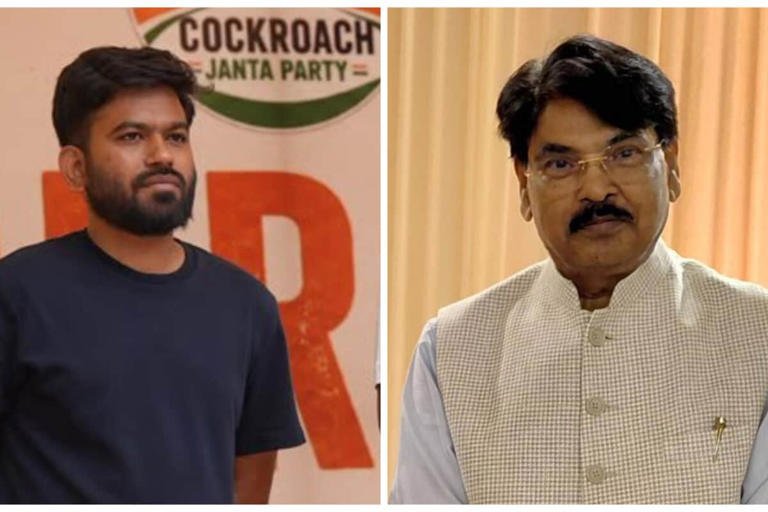
Less than a month after its high-profile agitation demanding the resignation of former Union Education Minister Dharmendra Pradhan, the Cockroach Janta Party (CJP) has turned its attention towards another prominent figure. This time, the group has extended its support to protests seeking the resignation of Bar Council of India (BCI) chairman Manan Kumar Mishra.
The latest controversy has emerged from the row involving NALSAR University of Law in Hyderabad and an initial Bar Council of India decision affecting the enrolment of the university’s 2026 graduating batch. The decision triggered strong criticism from sections of the legal community, student groups and young advocates. Although the BCI subsequently withdrew the contentious direction, calls for accountability have continued, with CJP leaders backing the demand for Mishra’s resignation.
The development has drawn comparisons with CJP’s earlier campaign against Dharmendra Pradhan. However, the circumstances surrounding the two protests are different. While the earlier agitation was linked to examination irregularities and demands for accountability in the education system, the latest campaign centres on the NALSAR controversy and concerns over the BCI’s action against law graduates.
What Triggered the NALSAR Controversy?
The controversy began after objections were raised by some students at NALSAR University of Law over the invitation extended to Chief Justice of India Surya Kant to attend the university’s convocation as chief guest. Reports indicated that hundreds of students supported a request asking the university administration to reconsider the invitation.
The disagreement subsequently drew the attention of the Bar Council of India. In response, the BCI issued a direction that temporarily halted the enrolment of NALSAR’s 2026 graduating batch as advocates, sparking widespread criticism and concern within the legal fraternity. Critics questioned whether an entire batch of students could be subjected to such a measure over the actions or objections of some students.
The move quickly became a major talking point, with several lawyers and legal bodies describing the action as disproportionate. The Bombay Bar Association, for instance, criticised the decision and raised concerns about the manner in which students had been affected.
BCI Withdraws the Controversial Direction
Facing significant criticism, the Bar Council of India later withdrew its earlier communication concerning the enrolment of the NALSAR graduating batch. Reports indicated that the council modified its position, allowing students to proceed with enrolment while further issues surrounding the controversy were addressed separately.
Manan Kumar Mishra also sought to clarify the BCI’s position, maintaining that the council’s objective was to protect the interests and rights of law students and young advocates. He later issued a public message expressing regret to students who may have been offended by his earlier remarks or correspondence and emphasised the importance of dialogue.
However, the withdrawal of the initial direction did not completely end the backlash. For critics, the central question was not only whether the order had been reversed but whether such an action should have been issued in the first place.
This is where the demand for the BCI chief’s resignation gained momentum.
Why Is CJP Supporting the Demand for Manan Mishra’s Resignation?
CJP leaders, including founder Abhijeet Dipke and other prominent members of the group, criticised the BCI’s initial action against the NALSAR graduating batch. They described the move as disproportionate and raised concerns about the consequences of penalising a larger group of students.
The CJP’s intervention came as the All India Young Advocates Association called for a protest demanding Mishra’s resignation. CJP leaders subsequently extended their support to the protest, helping bring greater public attention to the issue.
For CJP, the issue has been framed around accountability and the rights of young people. The group’s leaders have argued that students and young professionals should not face excessive consequences for expressing dissent or participating in democratic discussions.
The campaign has also used the same direct and youth-oriented political style that made the earlier protest against Dharmendra Pradhan highly visible.
From Dharmendra Pradhan to Manan Mishra
The comparison between the two campaigns has become a major part of the current political conversation.
CJP’s earlier agitation at Jantar Mantar focused on the controversy surrounding examination irregularities and the NEET-UG issue. The resignation of Dharmendra Pradhan as Union Education Minister followed weeks of protests and negotiations, after which the group called off its 49-day agitation following government assurances on several demands.
Now, less than a month later, the group has backed another protest, this time involving the country’s top legal regulatory body.
The situations are not identical, and it would be inaccurate to suggest that CJP alone is leading the demand against Mishra. The protest call originated from the All India Young Advocates Association, while CJP has extended its support to the campaign.
Nevertheless, CJP’s involvement has increased public attention on the demand for the BCI chairman’s resignation.
Legal Community Raises Concerns Over BCI Action
The NALSAR controversy has generated a broader debate within the legal community about the powers of regulatory institutions and the rights of students.
Critics have argued that the initial decision to halt enrolment of an entire graduating batch was excessive. Some senior members of the legal fraternity also questioned the legal and administrative basis of the action.
Supporters of the students have maintained that individual accountability, where required, should be distinguished from collective punishment. The controversy has therefore expanded beyond the specific dispute at NALSAR and developed into a wider discussion about freedom of expression, institutional authority and the future of young law graduates.
The BCI’s later withdrawal of the direction reduced the immediate uncertainty surrounding the enrolment of the students. However, the episode has continued to generate questions about how regulatory bodies should respond to student protests and disagreements.
Who Is Manan Kumar Mishra?
Manan Kumar Mishra is the chairman of the Bar Council of India, the statutory body responsible for regulating the legal profession and legal education in the country. He is also a senior advocate and a Rajya Sabha member.
Mishra has served as BCI chairman for several years and has remained an influential figure in India’s legal establishment. The NALSAR controversy, however, has placed him at the centre of intense public and professional scrutiny.
His decision to withdraw the initial order and subsequently communicate with CJP leaders and students indicates an effort to de-escalate the controversy. Yet, protesters and critics continue to argue that accountability should go beyond simply reversing the disputed decision.
What Happens Next?
The protests demanding Manan Kumar Mishra’s resignation are likely to keep the NALSAR controversy in the public spotlight. The BCI’s response, any further developments regarding the university and the reaction of the wider legal community will determine whether the movement gathers further momentum.
For CJP, the campaign also represents another test of its growing influence as a youth-driven political force. Its earlier protest against Dharmendra Pradhan demonstrated its ability to attract public attention and mobilise young people around issues of accountability.
However, the demand for Mishra’s resignation remains just that—a demand supported by protesters and organisations. Whether it results in any institutional or political action will depend on developments in the coming days.
The NALSAR row has already raised larger questions about proportionality, student rights and the exercise of institutional authority. As lawyers, young advocates and student groups continue to voice their concerns, the controversy surrounding the BCI chairman is likely to remain under close watch.