

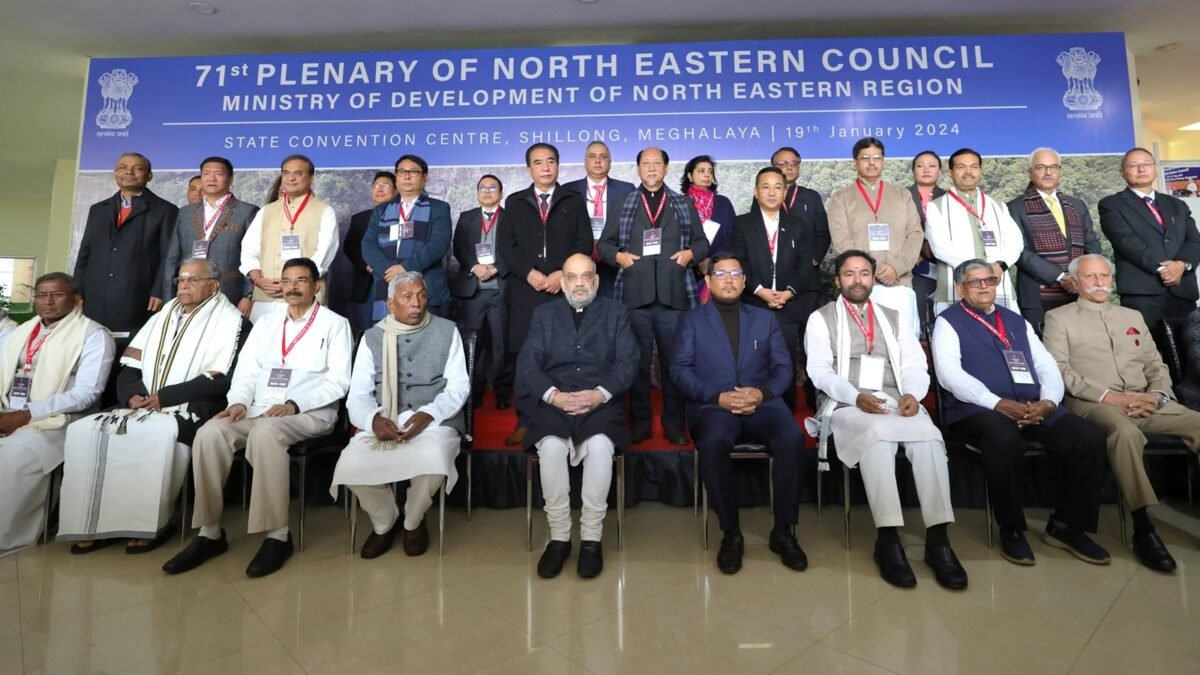
The Northeast opportunities growth narrative received a significant boost during the 73rd North Eastern Council (NEC) Plenary Session in Shillong, where Union Home Minister Amit Shah declared that the region has transitioned from a historical “hotspot of disputes” to a “hotspot of opportunities.” The statement underscored the government’s emphasis on peace, connectivity, infrastructure development, investment, and economic expansion across the eight northeastern states. Moreover, the remark reflected growing confidence in the region’s developmental trajectory and strategic importance.
Assam Cabinet Expansion Set for June 5 as 12 MLAs Prepare to Take Oath
NEC Reviews Outcomes of North East Investment Summit and Bankers’ Conclave
Amit Shah Highlights Regional Transformation
Speaking at the NEC Plenary Session, Amit Shah stated that the Northeast has undergone a remarkable transformation over the years.
Moreover, he emphasized that a region once frequently associated with disputes, connectivity challenges, and developmental gaps is increasingly being recognized for its economic potential, cultural richness, and strategic importance.
Consequently, the statement became one of the key highlights of the gathering.
From Challenges to Opportunities
The phrase “hotspot of opportunities” reflects the government’s vision for a rapidly developing Northeast.
Furthermore, policymakers have increasingly focused on improving infrastructure, promoting investment, enhancing connectivity, and creating employment opportunities throughout the region.
As a result, the Northeast is attracting greater attention from businesses, investors, and development agencies.
Peace and Stability Drive Progress
One of the major factors contributing to Northeast opportunities growth has been the emphasis on peace and stability.
Moreover, improved security conditions and dialogue-based approaches have helped create an environment more conducive to development and investment.
Therefore, stability continues to be viewed as a foundation for long-term progress.
Infrastructure Expansion Accelerates Development
Infrastructure development has emerged as a major driver of regional transformation.
Furthermore, significant investments in roads, railways, airports, bridges, and digital networks have improved accessibility across the Northeast.
Consequently, these projects have strengthened economic integration and opened new avenues for growth.
Connectivity Unlocks Economic Potential
Improved connectivity has played a critical role in linking remote areas to larger markets.
Moreover, better transportation and communication networks facilitate trade, tourism, and business activities while improving access to essential services.
As a result, connectivity remains central to the region’s development strategy.
Rising Investment and Entrepreneurship
The Northeast is increasingly being positioned as a destination for investment and entrepreneurship.
Furthermore, government initiatives aimed at supporting local industries, startups, tourism, and agricultural enterprises have contributed to economic expansion.
Therefore, opportunities for business growth continue to increase across multiple sectors.
Tourism Emerges as a Key Growth Sector
The region’s natural beauty, biodiversity, and cultural diversity have made tourism one of its most promising industries.
Moreover, investments in tourism infrastructure and promotion campaigns are helping attract more visitors from across India and abroad.
Consequently, tourism is becoming an important contributor to regional economies.
Strategic Importance of the Northeast
The Northeast’s geographical location provides significant strategic and economic advantages.
Furthermore, the region serves as India’s gateway to Southeast Asia, creating opportunities for cross-border trade and international connectivity.
As a result, policymakers increasingly view the Northeast as a crucial component of India’s broader growth strategy.
Vision 2047 and Future Aspirations
Amit Shah’s remarks align closely with the objectives of the North East Vision Plan 2047.
Moreover, the long-term roadmap seeks to build on current achievements by promoting sustainable development, economic growth, infrastructure modernization, and human capital development.
Therefore, the “hotspot of opportunities” narrative is expected to guide future policy initiatives.
Looking Ahead
The concept of Northeast opportunities growth reflects a broader ambition to transform the region into a major center of economic activity and innovation.
Furthermore, continued investment, regional cooperation, and effective governance will be essential to sustaining this momentum.
Consequently, stakeholders remain focused on converting emerging opportunities into long-term prosperity.
Conclusion
Amit Shah’s declaration that the Northeast has evolved from a “hotspot of disputes” into a “hotspot of opportunities” highlights the significant changes taking place across the region. Improved infrastructure, stronger connectivity, enhanced stability, and expanding economic prospects have contributed to a new development narrative.
As the Northeast advances toward the goals of Vision 2047, leaders hope to build on these achievements and unlock even greater opportunities for growth, investment, and social progress in the years ahead.
FAQs
What did Amit Shah say about the Northeast?
He stated that the region has transformed from a historical “hotspot of disputes” into a “hotspot of opportunities.”
Where did he make the statement?
He made the remarks during the 73rd North Eastern Council Plenary Session in Shillong.
What factors contributed to this transformation?
Improved infrastructure, connectivity, peace initiatives, investment, and economic development.
Why is the Northeast strategically important?
It serves as India’s gateway to Southeast Asia and offers significant trade and connectivity opportunities.
How does this relate to Vision 2047?
The statement aligns with long-term goals aimed at accelerating development and prosperity across the region.