

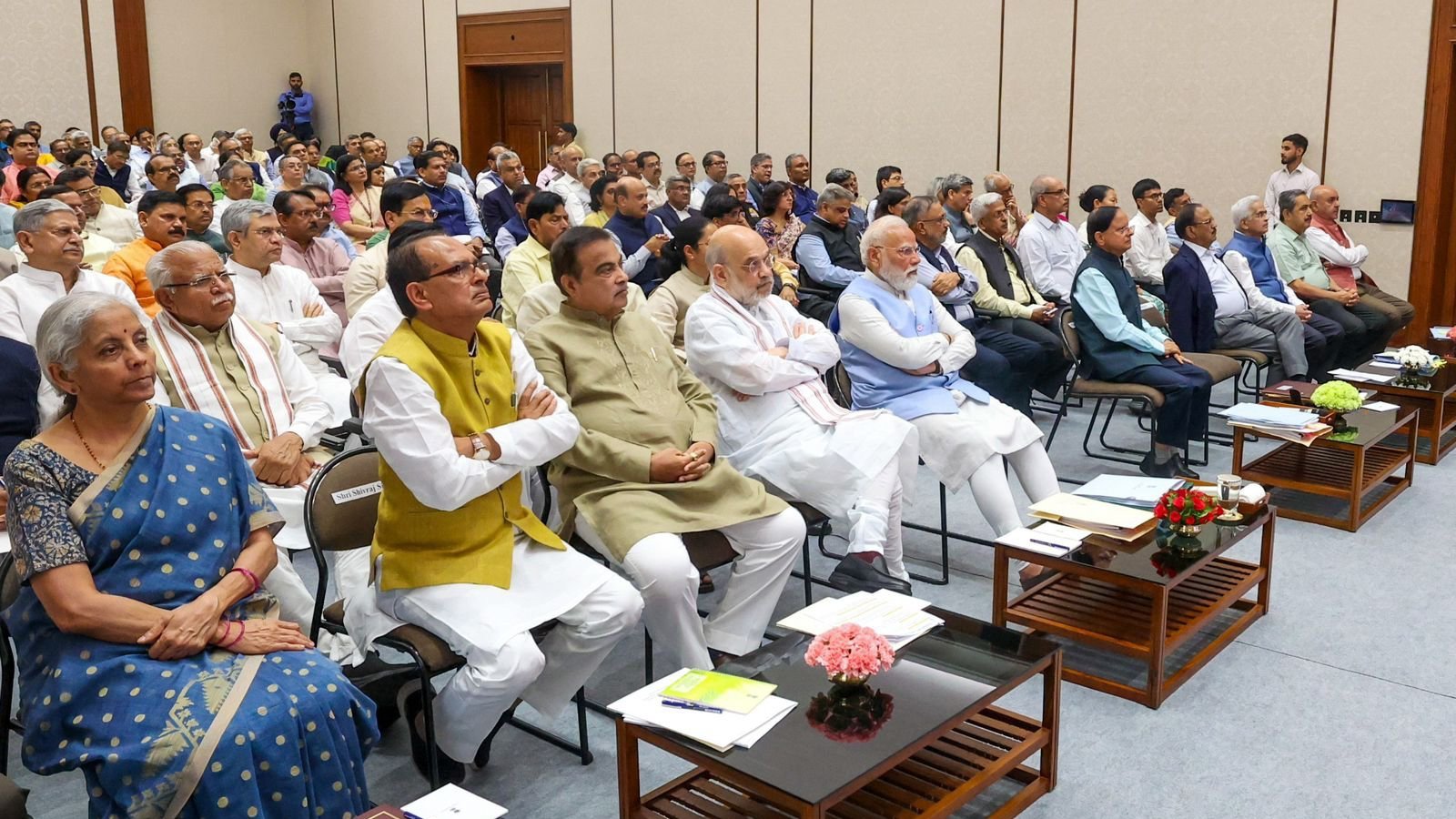
The North East Vision Plan moved closer to realization as governors, chief ministers, and senior central government leaders convened during the 73rd North Eastern Council (NEC) Plenary Session to finalize a comprehensive development roadmap for 2047. The long-term strategy aims to transform the Northeast into a major hub for connectivity, economic growth, innovation, tourism, sustainability, and human development by the centenary year of India’s independence. Moreover, the initiative reflects a coordinated effort to accelerate the region’s progress through collaborative planning and targeted investments.
Amit Shah Says Northeast Has Become a “Hotspot of Opportunities”
NEC 73rd Plenary Session Begins in Shillong Under Amit Shah’s Leadership
Leaders Unite for a Shared Regional Vision
The North East Vision Plan emerged as a key agenda item during high-level deliberations involving governors, chief ministers, and senior policymakers.
Moreover, the meeting provided an opportunity for stakeholders from all northeastern states to align development priorities and establish a common framework for future growth.
Consequently, the discussions reinforced the importance of regional cooperation in achieving long-term objectives.
Vision 2047: A Roadmap for Transformation
The Vision 2047 initiative seeks to create a comprehensive development blueprint for the Northeast over the next two decades.
Furthermore, the plan focuses on transforming the region into a dynamic economic and strategic corridor while improving the quality of life for its residents.
Therefore, policymakers view the roadmap as a crucial guide for future investments and reforms.
Strengthening Infrastructure and Connectivity
Infrastructure development remains one of the primary pillars of the Vision Plan.
Moreover, leaders discussed expanding road networks, railway connectivity, airports, digital infrastructure, and cross-border transportation systems.
As a result, improved connectivity is expected to support trade, tourism, and economic integration throughout the region.
Driving Economic Growth
Economic expansion forms a central component of the North East Vision Plan.
Furthermore, the roadmap emphasizes entrepreneurship, industrial development, agricultural modernization, and investment promotion to generate employment opportunities.
Consequently, policymakers aim to create a stronger and more diversified regional economy.
Focus on Human Development
The Vision Plan also prioritizes education, healthcare, skill development, and social welfare.
Moreover, investments in human capital can help ensure that economic growth translates into improved living standards and broader social progress.
Therefore, enhancing public services remains a key objective of the strategy.
Tourism and Cultural Promotion
The Northeast possesses significant tourism potential due to its natural beauty, cultural diversity, and unique heritage.
Furthermore, leaders discussed strategies to strengthen tourism infrastructure and promote the region as a major destination for domestic and international travelers.
As a result, tourism could become an important driver of economic growth.
Sustainable Development Remains a Priority
Environmental sustainability plays a crucial role in the long-term vision for the Northeast.
Moreover, policymakers emphasized balancing development with conservation to protect the region’s rich biodiversity and ecological resources.
Consequently, sustainable growth principles are expected to guide future projects and investments.
Leveraging Strategic Geographic Advantages
The Northeast’s location provides important opportunities for regional and international connectivity.
Furthermore, enhanced links with neighboring countries can strengthen trade, commerce, and cultural exchanges.
Therefore, the Vision Plan seeks to capitalize on the region’s strategic position as a gateway to Southeast Asia.
Collaborative Planning for Long-Term Success
The participation of governors, chief ministers, and central leaders highlights the importance of coordinated governance.
Moreover, collaborative planning helps ensure that development efforts remain aligned across states and institutions.
As a result, the Vision Plan aims to foster a unified approach to regional progress.
Looking Ahead to 2047
The North East Vision Plan represents an ambitious effort to shape the future of the region over the coming decades.
Furthermore, successful implementation will require sustained investment, policy continuity, and active cooperation among all stakeholders.
Consequently, the roadmap could serve as a foundation for transformative growth leading up to 2047.
Conclusion
The North East Vision Plan reflects a bold and forward-looking strategy for the development of Northeast India. By bringing together governors, chief ministers, and central leaders, the initiative seeks to create a shared roadmap focused on infrastructure, economic growth, human development, tourism, sustainability, and regional connectivity.
As the region moves toward 2047, the vision plan has the potential to accelerate progress, unlock new opportunities, and strengthen the Northeast’s role in India’s future growth story.
FAQs
What is the North East Vision Plan 2047?
It is a long-term development roadmap designed to guide the growth and transformation of Northeast India by 2047.
Who participated in the discussions?
Governors, chief ministers, and senior central government leaders took part in the deliberations.
What are the key focus areas?
Infrastructure, connectivity, economic growth, healthcare, education, tourism, sustainability, and regional cooperation.
Why is the year 2047 significant?
It marks 100 years of India’s independence and serves as a target year for long-term development goals.
How can the Vision Plan benefit the Northeast?
It aims to improve infrastructure, create jobs, strengthen public services, and promote sustainable development.