

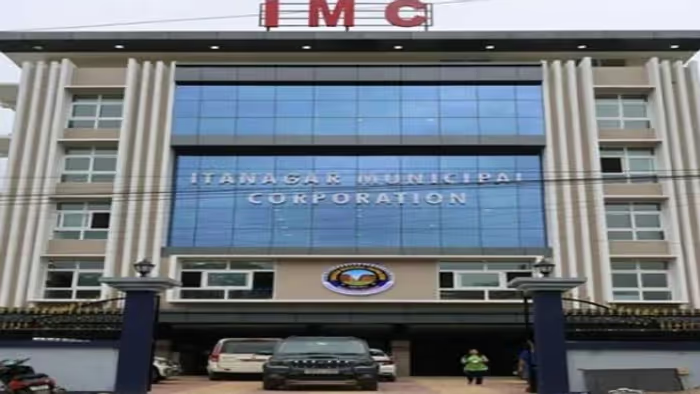
The Anti-Plastic Drive in Itanagar has intensified as the Itanagar Municipal Corporation penalized 45 retail commercial establishments for using banned single-use plastic. The enforcement action aims to improve compliance with plastic restrictions, reduce plastic waste, and encourage retailers to shift toward permitted and more sustainable alternatives.
Heritage Walk Tour: Shillong Groups Launch Guided Walks Covering British-Era Architecture
The Anti-Plastic Drive targets the continued use of banned single-use plastic products in retail establishments across Itanagar. The Itanagar Municipal Corporation has penalized 45 commercial establishments as part of the reported enforcement action.
Single-use plastic can contribute significantly to waste-management challenges because many such products have short usage periods but can persist in the environment. Moreover, plastic waste can enter drainage systems and waterways when people do not dispose of it properly.
The municipal action seeks to strengthen compliance among businesses and reinforce existing restrictions on prohibited plastic products.
However, the available information does not specify the total value of fines collected or the particular plastic products found during the inspections.
Anti-Plastic Drive Targets Retail Compliance
The Anti-Plastic Drive focuses on retail establishments because shops and other commercial outlets can distribute single-use plastic products directly to consumers.
Municipal inspections can help authorities identify businesses that continue to use prohibited materials. Furthermore, enforcement actions can remind retailers that plastic restrictions require consistent compliance rather than voluntary participation alone.
Penalizing 45 establishments demonstrates an active approach to implementing the restrictions.
However, the information provided does not identify whether the 45 establishments received fines, warnings, or other forms of penalties.
Therefore, the precise enforcement measures remain unclear.
The municipality may provide additional details about the violations and penalties through subsequent official communications.
Anti-Plastic Drive Seeks to Reduce Single-Use Waste
The Anti-Plastic Drive aims to reduce the circulation of banned single-use plastic products.
Single-use items often enter the waste stream quickly after purchase. Moreover, reducing their distribution at retail points can limit the amount of such material entering municipal waste systems.
Retailers can contribute to waste reduction by offering permitted alternatives and encouraging customers to use reusable bags and containers where practical.
However, the available information does not specify which alternatives municipal authorities recommend to retailers.
Consequently, businesses may require clear guidance regarding compliant packaging and carry-bag options.
The enforcement action primarily establishes that the municipality is actively monitoring compliance.
Anti-Plastic Drive Strengthens Municipal Enforcement
The Anti-Plastic Drive highlights the role of municipal authorities in enforcing environmental regulations at the local level.
Regular inspections can help authorities identify violations and promote awareness among businesses. Additionally, consistent enforcement can create a more predictable regulatory environment because retailers understand that prohibited products may lead to penalties.
The action involving 45 establishments indicates that municipal officials have undertaken a focused inspection effort.
However, the information provided does not indicate the number of establishments inspected in total.
Therefore, the proportion of businesses found violating the rules cannot be calculated.
The available information also does not establish whether authorities plan additional inspections.
Anti-Plastic Drive Could Improve Urban Waste Management
The Anti-Plastic Drive could support broader waste-management objectives in Itanagar.
Reducing banned plastic use can decrease the amount of difficult-to-manage waste entering municipal collection systems. Furthermore, lower plastic consumption can help reduce the risk of plastic accumulating in streets, drains, and other public spaces.
Municipal waste systems can then focus resources on collecting and processing permitted waste streams.
However, plastic restrictions alone cannot solve all urban waste problems.
Proper collection, segregation, recycling, public awareness, and responsible disposal also remain important parts of effective waste management.
Therefore, the enforcement campaign should be viewed as one component of a broader municipal waste strategy.
Anti-Plastic Drive Encourages Retailers to Change Practices
The Anti-Plastic Drive places responsibility on retailers to review the materials they use and distribute.
Businesses may need to adjust packaging practices and identify alternatives that comply with applicable restrictions. Moreover, retailers can influence consumer behavior by reducing the availability of prohibited products at the point of sale.
Clear communication can help businesses understand which products authorities classify as banned.
However, the available information does not state whether the municipal corporation provided advance notices, awareness sessions, or compliance guidance before the enforcement action.
Consequently, the extent of prior engagement with retailers remains unknown.
Anti-Plastic Drive Requires Continued Public Participation
The Anti-Plastic Drive will depend on participation from retailers and consumers.
Even when shops stop distributing banned plastic products, consumers can continue generating plastic waste through other permitted or improperly disposed materials. Furthermore, businesses and residents need access to practical alternatives if authorities expect long-term reductions in plastic use.
Public awareness can therefore complement enforcement.
However, the information provided does not mention any awareness campaign connected with the latest penalties.
Further initiatives could help explain plastic restrictions and encourage responsible waste practices among residents.
Conclusion
The Anti-Plastic Drive in Itanagar has taken an enforcement-focused approach after the Itanagar Municipal Corporation penalized 45 retail commercial establishments for using banned single-use plastic. The action seeks to strengthen compliance and reduce the circulation of prohibited plastic products.
Moreover, consistent enforcement can encourage retailers to adopt compliant alternatives and support broader municipal waste-management goals. However, the available information does not specify the penalties imposed, the products involved, the total number of establishments inspected, or whether additional inspections will follow.
Overall, the Anti-Plastic Drive represents a significant local enforcement measure against banned single-use plastic. Its long-term effectiveness will depend on continued monitoring, clear guidance for retailers, accessible alternatives, and cooperation from businesses and consumers.
FAQs
1. What is the Anti-Plastic Drive in Itanagar?
The Anti-Plastic Drive is a municipal enforcement initiative aimed at preventing the use of banned single-use plastic products.
2. How many establishments faced action?
The Itanagar Municipal Corporation penalized 45 retail commercial establishments during the reported enforcement action.
3. Why are single-use plastics being restricted?
Restrictions aim to reduce plastic waste and limit the environmental and waste-management problems associated with disposable plastic products.
4. What penalties did the retailers receive?
The available information confirms that the 45 establishments faced penalties but does not specify the exact amount or type of penalty imposed.
5. Can retailers continue using alternative packaging?
Retailers can use packaging that complies with applicable regulations. However, the available information does not specify which alternatives municipal authorities currently recommend.