

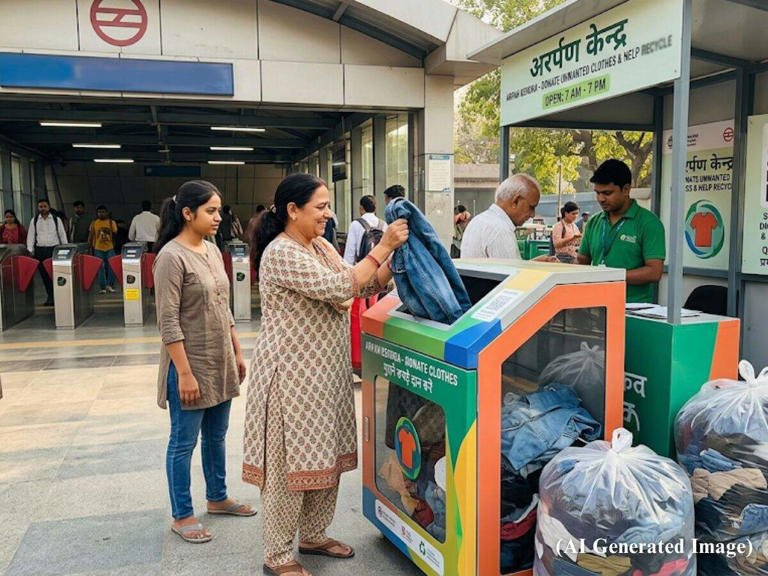
In a step towards promoting sustainable living and responsible waste management, Arpan Kendras have been launched across 10 Delhi Metro stations, providing commuters with a convenient way to donate unwanted clothes instead of discarding them. The donation centres will remain open daily from 7 am to 7 pm, making it easier for people to contribute to clothing reuse and textile recycling while supporting those in need.
The initiative encourages residents to give a second life to garments that are no longer in use but remain wearable. By creating easily accessible donation points at busy Metro stations, the programme aims to reduce textile waste, promote circular fashion, and ensure that usable clothing reaches individuals and communities who can benefit from it.
Officials said the initiative combines environmental responsibility with social welfare by encouraging citizens to donate rather than throw away old garments.
Arpan Kendras Set Up at 10 Delhi Metro Stations
The newly opened Arpan Kendras have been established at 10 Delhi Metro stations to make clothing donation simple and accessible for commuters.
People can drop off unwanted garments during the centres’ operating hours between 7 am and 7 pm. The strategically located donation points allow passengers to contribute while travelling through the Metro network without making a separate trip.
Officials said placing the collection centres inside Metro premises increases convenience and encourages greater public participation in the campaign.
The initiative is expected to become an important part of Delhi’s efforts to promote sustainable waste management and community participation.
Giving Old Clothes a New Purpose
Many households accumulate clothes that are rarely worn but remain in good condition. Instead of allowing such garments to remain unused or end up in landfills, the Arpan Kendras offer an organised platform for donation.
The collected clothes will be sorted before being distributed or processed according to their condition. Wearable garments can benefit underprivileged individuals and families, while damaged textiles may be directed toward recycling and reuse initiatives.
Officials said extending the life of clothing helps reduce unnecessary waste while supporting people who need affordable or free garments.
The programme also promotes the idea that responsible disposal begins with reuse whenever possible.
Tackling the Growing Textile Waste Problem
Textile waste has become a major environmental challenge across the world. Millions of garments are discarded every year, placing increasing pressure on landfills and waste management systems.
Fast-changing fashion trends and rising clothing consumption have contributed significantly to the problem. Many garments are thrown away even though they remain usable.
Officials said donation and recycling represent effective ways to reduce textile waste while conserving valuable natural resources used in clothing production.
By encouraging people to donate unwanted garments, the Arpan Kendras support more sustainable consumption habits.
Promoting a Circular Economy
The initiative aligns with the principles of a circular economy, where products remain in use for as long as possible through reuse, repair, recycling, and responsible disposal.
Instead of following a “use and discard” approach, clothing can continue serving a purpose through donation or recycling.
Officials said extending the lifespan of garments reduces demand for new clothing production, conserving water, energy, and raw materials used by the textile industry.
The programme also encourages citizens to think differently about waste by recognising that many unwanted items still hold value.
Convenient Donation Timings for Commuters
One of the key features of the initiative is its commuter-friendly schedule. The Arpan Kendras operate daily from 7 am to 7 pm, allowing people to donate clothes before or after work, during errands, or while using Metro services.
The extended operating hours make participation convenient for office workers, students, and regular Metro passengers.
Officials hope the easy accessibility will encourage more people to contribute regularly instead of waiting for occasional donation drives.
The permanent collection centres also provide a consistent platform for year-round clothing donations.
Environmental Benefits of Clothing Reuse
Reusing clothing offers several environmental advantages. Every garment that finds a second user reduces the need for manufacturing new clothing, which consumes large amounts of water, energy, and raw materials.
The textile industry is among the world’s major consumers of natural resources and contributes significantly to greenhouse gas emissions.
Officials said increasing clothing reuse through organised donation programmes can help reduce environmental pressure while supporting national sustainability goals.
The initiative also helps divert textiles away from landfills, reducing waste generation and promoting responsible resource management.
Supporting Communities Through Donations
Beyond environmental benefits, the Arpan Kendras also serve an important social purpose. Donated clothing can provide much-needed support to economically weaker individuals, disaster-affected families, and charitable organisations working with vulnerable communities.
Officials said clothing donations represent a simple yet meaningful way for citizens to assist people facing financial hardship.
Garments that are clean and wearable can offer immediate value to those who need them, while damaged items can still contribute through recycling.
The initiative therefore combines social welfare with environmental conservation in a single programme.
Public Participation Key to Success
Authorities believe the success of the initiative depends largely on public participation. Citizens have been encouraged to donate clothes that are clean, wearable, and in good condition.
Officials said even small individual contributions can collectively create a significant positive impact on waste reduction and community welfare.
Public awareness campaigns may also help educate people about responsible clothing disposal and the environmental consequences of textile waste.
The government hopes the initiative will inspire more sustainable lifestyle choices among residents.
Encouraging Responsible Waste Management
The launch of Arpan Kendras reflects a growing emphasis on responsible waste management and sustainable urban living.
As cities generate increasing volumes of waste, initiatives promoting reuse and recycling have become essential for reducing environmental impacts.
Officials said providing convenient donation points within the Metro network demonstrates how public infrastructure can support environmental initiatives while encouraging citizen participation.
The programme may also serve as a model for similar projects in other cities looking to strengthen textile recycling and community-based sustainability efforts.
A Simple Step Towards Sustainability
The opening of Arpan Kendras across 10 Delhi Metro stations offers commuters a practical and convenient way to recycle old clothes through donation.
Operating daily from 7 am to 7 pm, the centres encourage people to extend the life of unwanted garments instead of sending them to landfills. By promoting clothing reuse, reducing textile waste, and supporting communities in need, the initiative contributes to both environmental conservation and social welfare.
As more people participate, the Arpan Kendras have the potential to strengthen Delhi’s sustainability efforts while fostering a culture of responsible consumption and meaningful community support.