

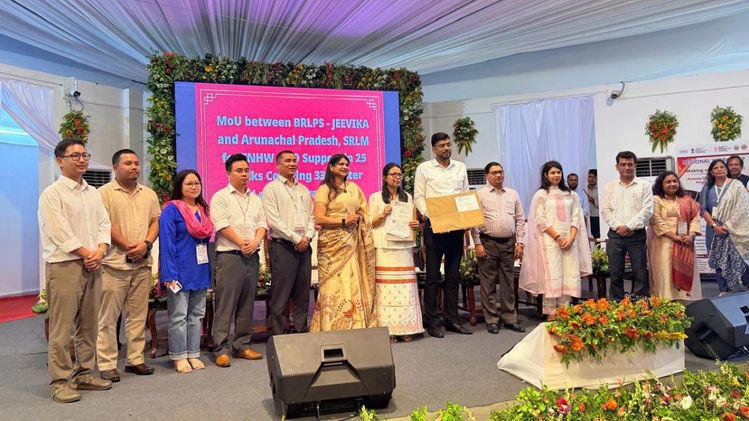
The Arunachal State Rural Livelihoods Mission (ArSRLM) and the Bihar Rural Livelihoods Promotion Society (BRLPS) have signed a Memorandum of Understanding (MoU) to strengthen collaboration in the areas of nutrition, healthcare, and community-based development. The partnership aims to promote the exchange of knowledge, best practices, and successful implementation models that can improve the well-being of rural communities, particularly women and children.
The agreement reflects a shared commitment by both states to enhance the effectiveness of rural livelihood programmes through better nutrition awareness, health interventions, capacity building, and community participation. Officials believe the collaboration will enable both missions to learn from each other’s experiences while improving the delivery of social welfare and livelihood initiatives.
The MoU also reinforces the importance of interstate cooperation in addressing public health and rural development challenges through innovative and sustainable approaches.
Arunachal and Bihar Sign Strategic MoU
The Memorandum of Understanding was signed between the Arunachal State Rural Livelihoods Mission and the Bihar Rural Livelihoods Promotion Society to promote institutional collaboration and knowledge sharing.
Officials said the partnership will facilitate cooperation in designing and implementing programmes that improve nutrition, healthcare, and rural livelihoods. Both organisations will work together to exchange technical expertise, operational strategies, and community-based development models that have proven successful in their respective states.
The collaboration is expected to strengthen programme implementation while encouraging innovation in rural development initiatives.
Focus on Nutrition Improvement
One of the key objectives of the agreement is to improve nutritional outcomes among rural households.
The two livelihood missions will work together to promote awareness about balanced diets, maternal nutrition, child health, and food security through community-led initiatives.
Officials noted that improved nutrition plays a crucial role in reducing malnutrition, enhancing child development, and improving overall public health. The partnership seeks to strengthen existing nutrition programmes while encouraging healthier dietary practices at the household level.
Community participation will remain central to achieving long-term nutritional improvements.
Strengthening Healthcare Initiatives
Healthcare forms another major area of collaboration under the MoU.
The partnership aims to improve community awareness regarding preventive healthcare, maternal and child health, sanitation, hygiene, and early health interventions. Officials said integrating healthcare awareness with livelihood programmes can significantly improve the quality of life in rural communities.
The two missions will also exchange experiences related to community health campaigns, grassroots mobilisation, and behavioural change initiatives that promote healthier lifestyles.
Improved healthcare awareness is expected to contribute to better long-term health outcomes.
Empowering Women Through Self-Help Groups
Self-Help Groups (SHGs) remain at the centre of rural livelihood missions in both Arunachal Pradesh and Bihar.
The collaboration seeks to strengthen the role of women’s SHGs in promoting nutrition, health awareness, financial inclusion, and community development. Women-led groups have played a significant role in implementing government welfare programmes while improving household incomes and social empowerment.
Officials believe strengthening SHGs will enhance community participation and ensure more effective implementation of health and nutrition initiatives.
The partnership also aims to encourage leadership development among rural women.
Exchange of Best Practices
A significant feature of the MoU is the exchange of successful development models between the two states.
Officials said Arunachal Pradesh and Bihar have each implemented innovative community-based programmes that can provide valuable learning opportunities. Through regular interactions, exposure visits, training sessions, and technical workshops, both missions will share practical experiences and operational strategies.
Knowledge exchange is expected to improve programme efficiency while helping both states adopt proven approaches to addressing rural development challenges.
The collaborative framework encourages continuous institutional learning.
Capacity Building and Training
Capacity building forms an important component of the partnership.
Training programmes will be organised for field staff, community resource persons, Self-Help Group members, and implementing agencies to improve their knowledge and skills in nutrition, healthcare, and rural development.
Officials stated that well-trained personnel are essential for ensuring effective implementation of community programmes.
The partnership will also support leadership development and strengthen institutional capacity across both livelihood missions.
Improved training is expected to enhance service delivery at the grassroots level.
Promoting Sustainable Rural Development
The MoU aligns with the broader objective of promoting sustainable and inclusive rural development.
By integrating livelihood generation with health and nutrition interventions, the partnership seeks to improve both economic and social well-being in rural communities.
Officials noted that sustainable development requires coordinated efforts addressing income generation, food security, healthcare, education, and community empowerment simultaneously.
The collaboration is expected to contribute to long-term improvements in living standards across participating communities.
Supporting National Development Goals
The partnership complements several national initiatives related to nutrition, healthcare, women’s empowerment, and rural livelihoods.
Strengthening community participation through Self-Help Groups contributes to broader efforts aimed at improving public health, reducing poverty, and enhancing social inclusion.
Officials said interstate cooperation helps accelerate progress towards national development objectives by enabling states to replicate successful programmes and avoid implementation challenges.
The MoU demonstrates the value of collaborative governance in achieving sustainable development outcomes.
Benefits for Rural Communities
The ultimate beneficiaries of the partnership will be rural households across both states.
Improved awareness regarding nutrition, healthcare, sanitation, and livelihood opportunities is expected to contribute to healthier families, stronger communities, and enhanced economic resilience.
Women, children, and vulnerable populations are likely to receive particular attention through targeted interventions supported by Self-Help Groups and community organisations.
Officials believe that community-led development remains one of the most effective approaches for creating lasting social change.
Towards Stronger Community Development
The signing of the MoU between the Arunachal State Rural Livelihoods Mission and the Bihar Rural Livelihoods Promotion Society marks an important step towards strengthening nutrition, healthcare, and rural development initiatives.
By combining institutional expertise, promoting knowledge sharing, and empowering communities through Self-Help Groups, the partnership aims to improve the quality of life for rural families while supporting sustainable and inclusive development. The collaboration reflects the growing importance of interstate cooperation in addressing complex social challenges through innovative, community-driven solutions.
As the partnership moves into the implementation phase, both states are expected to benefit from stronger institutional capacity, improved programme delivery, and enhanced outcomes in nutrition, health, and rural livelihoods, contributing to healthier and more resilient communities.