

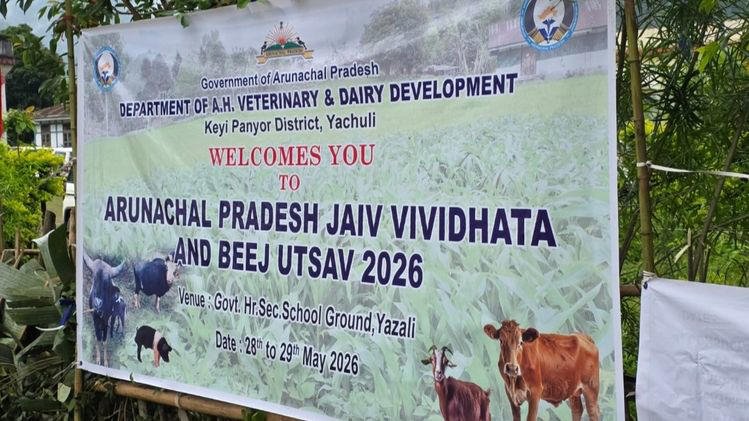
Arunachal Pradesh hosted a unique biohappiness festival in Keyi Panyor district, highlighting sustainable living, environmental harmony, community wellness, and cultural preservation as the district moves toward becoming India’s first “bio-happy district.”
The festival brought together government officials, environmental experts, cultural groups, local communities, and development planners to promote the idea of balancing ecological conservation with human well-being.
Officials said the initiative aims to create a development model that focuses not only on economic growth but also on happiness, environmental sustainability, social harmony, and preservation of indigenous traditions.
The event attracted attention across the Northeast because of its innovative approach toward combining biodiversity, mental wellness, and sustainable development under a community-based framework.
Authorities believe the concept could eventually serve as a model for eco-sensitive and culturally rich regions across India.
What Is a ‘Bio-Happy District’?
Officials described the idea of a “bio-happy district” as a governance and development approach centred around ecological balance, community well-being, and sustainable living.
The concept reportedly combines biodiversity conservation with indicators related to quality of life, mental wellness, environmental protection, cultural identity, and social cohesion.
Authorities said Keyi Panyor’s rich natural environment and strong indigenous traditions make it suitable for such an initiative.
The district administration aims to encourage environmentally responsible lifestyles while preserving local culture and traditional knowledge systems.
Experts noted that the initiative reflects growing interest in alternative development models focused on sustainability and human happiness.
Festival Celebrates Nature and Culture
The biohappiness festival featured cultural performances, traditional music, local cuisine, environmental exhibitions, wellness activities, and awareness programmes focused on sustainable living.
Community groups showcased indigenous practices linked to forest conservation, agriculture, herbal medicine, and eco-friendly lifestyles.
Officials said the festival aimed to strengthen public awareness regarding biodiversity protection and climate-conscious development.
Visitors also witnessed exhibitions highlighting Arunachal Pradesh’s ecological richness, tribal heritage, and sustainable practices followed by local communities.
The event created a platform for dialogue between policymakers, environmentalists, researchers, and residents regarding future development priorities.
Arunachal Promotes Sustainable Development
The Arunachal Pradesh government has increasingly focused on sustainable development and ecological preservation because of the state’s environmental sensitivity and biodiversity richness.
Officials said preserving forests, rivers, wildlife, and traditional lifestyles remains essential for the long-term future of the region.
Authorities believe climate-resilient development strategies are particularly important in northeastern states vulnerable to environmental change.
The biohappiness initiative reflects efforts to combine infrastructure growth and economic progress with ecological responsibility.
Experts noted that northeastern states possess unique opportunities for promoting sustainable tourism, biodiversity conservation, and nature-based development models.
Keyi Panyor Gains National Attention
The initiative has brought national attention to Keyi Panyor district, which is now being projected as a symbol of eco-conscious and community-focused development.
Officials said the district administration plans to continue promoting environmental awareness, wellness activities, and sustainable governance practices.
Authorities also hope the initiative will encourage eco-tourism and responsible visitor engagement in the region.
The district’s scenic landscapes, cultural diversity, and natural environment were prominently highlighted during the festival.
Observers noted that such initiatives can strengthen regional identity while promoting positive environmental practices.
Indigenous Knowledge Highlighted
One of the central themes of the festival involved recognising the role of indigenous communities in environmental conservation.
Local tribal groups shared traditional practices related to forest management, water conservation, agriculture, and natural resource protection.
Experts said indigenous knowledge systems often contain valuable ecological insights developed over generations.
Officials stressed that modern development planning should include and respect traditional environmental practices.
The administration also highlighted the importance of preserving cultural heritage alongside biodiversity.
Wellness and Happiness Discussed
The concept of happiness and mental well-being formed another important focus of the festival.
Organisers said development should not be measured only through economic indicators but also through social harmony, emotional wellness, and environmental health.
Workshops and discussions reportedly focused on stress-free lifestyles, community bonding, physical health, and connection with nature.
Experts argued that environmental sustainability and mental well-being are closely interconnected.
Officials believe the “bio-happy district” initiative can promote healthier and more balanced lifestyles in local communities.
Eco-Tourism Potential Explored
Tourism officials said the initiative could help strengthen eco-tourism opportunities in Arunachal Pradesh.
Nature tourism, cultural tourism, and wellness tourism have gained increasing popularity in environmentally rich destinations.
Authorities believe Keyi Panyor’s biodiversity and cultural heritage can attract visitors interested in sustainable travel experiences.
The administration also stressed the importance of responsible tourism practices that protect local ecosystems and respect indigenous communities.
Experts noted that eco-tourism can support local livelihoods while encouraging environmental awareness.
Climate Awareness Takes Centre Stage
Climate change and environmental protection featured prominently during discussions at the festival.
Experts warned that Himalayan and northeastern ecosystems remain highly vulnerable to changing weather patterns, deforestation, and biodiversity loss.
Officials said initiatives like the biohappiness model encourage communities to adopt climate-conscious practices.
The government also highlighted the need for balancing developmental needs with environmental sustainability.
Environmental planners believe community participation remains essential for long-term ecological conservation.
Arunachal Seeks Alternative Development Model
Political observers said the biohappiness festival reflects Arunachal Pradesh’s attempt to promote a distinct development vision rooted in environmental sustainability and indigenous values.
The state government has increasingly emphasised eco-friendly policies, forest protection, and sustainable tourism initiatives.
Officials believe development models based on ecological balance and social well-being could become increasingly relevant in the future.
The bio-happy district concept may also inspire discussions regarding new approaches to governance and community welfare in other regions.
Future Plans Under Discussion
Authorities indicated that additional programmes, environmental campaigns, and wellness initiatives may follow as part of the bio-happy district vision.
The administration also plans to involve educational institutions, community organisations, and environmental experts in future activities.
Officials hope the initiative will encourage greater public participation in conservation and sustainable living efforts.
Meanwhile, the biohappiness festival in Keyi Panyor has positioned Arunachal Pradesh at the centre of an innovative conversation about sustainability, happiness, and ecological harmony, with the district now aiming to become India’s first officially recognised “bio-happy district.”