

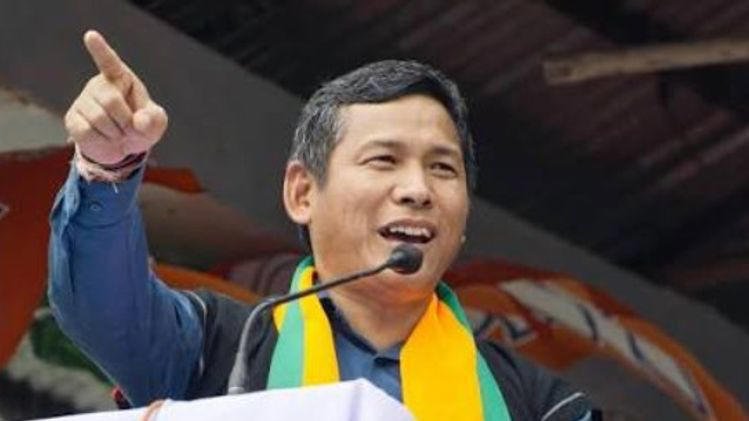
Arunachal Pradesh Minister Ojing Tasing has called for a more flexible and adaptive approach to strengthen rural governance, emphasizing that local administrative systems must evolve to address the unique geographical, cultural, and developmental challenges faced by the state’s villages. The minister stressed that effective governance at the grassroots level is essential for ensuring inclusive growth, efficient service delivery, and sustainable rural development.
Speaking at a programme focused on rural administration and local governance, Tasing highlighted the importance of empowering Panchayati Raj Institutions (PRIs), community leaders, and local administrative bodies to respond effectively to the changing needs of rural communities. He noted that while policies provide a framework for development, their implementation should remain flexible enough to accommodate local realities.
The minister observed that Arunachal Pradesh’s diverse terrain and demographic profile require governance models that are responsive, participatory, and capable of addressing region-specific issues.
Need for Greater Flexibility in Rural Administration
Ojing Tasing underlined that governance cannot follow a “one-size-fits-all” model, particularly in a geographically diverse state like Arunachal Pradesh. Many villages are located in remote mountainous regions where accessibility, infrastructure, and communication challenges differ significantly from those in urban centres.
He stated that local administrations should have the flexibility to modify implementation strategies while remaining aligned with government policies and development objectives. Such an approach would enable authorities to address local priorities more effectively without compromising transparency or accountability.
According to the minister, empowering grassroots institutions with greater administrative flexibility can improve public service delivery and help governments respond more efficiently to emerging challenges.
He also emphasized that development initiatives become more effective when local communities actively participate in planning and decision-making processes.
Strengthening Panchayati Raj Institutions
A major focus of the minister’s address was the role of Panchayati Raj Institutions in promoting democratic governance and rural development. He described local self-governance as the foundation of effective administration, enabling citizens to directly participate in decisions affecting their communities.
The minister encouraged elected representatives at the village and block levels to work closely with government departments in identifying developmental priorities and ensuring timely implementation of welfare schemes.
He stressed that Panchayati Raj Institutions should function not merely as implementing agencies but as active partners in planning, monitoring, and evaluating development programmes.
Strengthening institutional capacity through regular training, administrative support, and financial empowerment, he noted, would further improve governance outcomes across rural Arunachal Pradesh.
Community Participation Essential for Inclusive Growth
Ojing Tasing emphasized that sustainable rural development depends on meaningful participation by local communities. Villagers, traditional institutions, youth groups, women’s organizations, and civil society all have important roles to play in shaping development initiatives.
He noted that policies designed with active community involvement are more likely to address local needs and receive wider public acceptance. Participatory governance also strengthens accountability, transparency, and trust between citizens and government institutions.
The minister encouraged local administrations to maintain continuous dialogue with residents while ensuring that development projects reflect the aspirations and priorities of the communities they serve.
Community participation, he added, creates a stronger sense of ownership, leading to better maintenance and long-term sustainability of public assets and infrastructure.
Addressing Challenges in Remote Areas
Arunachal Pradesh’s unique topography presents significant administrative challenges, with many villages situated in difficult-to-reach mountainous regions. Delivering public services, constructing infrastructure, and implementing welfare schemes often require innovative approaches tailored to local conditions.
The minister acknowledged these challenges and stressed the importance of adopting practical solutions that balance policy objectives with ground realities. Flexible governance mechanisms can help district administrations respond more effectively to logistical constraints, weather-related disruptions, and limited connectivity.
He also highlighted the importance of improving coordination among government departments to ensure timely execution of projects in remote regions.
Investments in road connectivity, digital infrastructure, healthcare, education, and public services, he said, remain critical to improving the quality of life in rural communities.
Technology and Innovation in Rural Governance
The minister highlighted the growing role of technology in improving governance and administrative efficiency. Digital platforms, online monitoring systems, and electronic service delivery have enhanced transparency while making government services more accessible to rural citizens.
He encouraged greater adoption of digital governance tools for programme monitoring, financial management, grievance redressal, and communication between government departments and local bodies.
Technology, he said, should complement traditional governance structures by improving efficiency without replacing the importance of direct engagement with communities.
Officials were also encouraged to build digital capacity at the grassroots level so that local institutions can fully benefit from technological advancements in public administration.
Capacity Building and Leadership Development
Recognizing that effective governance depends on capable leadership, Ojing Tasing stressed the need for continuous capacity-building programmes for elected representatives, government officials, and community leaders.
Training initiatives should focus on administrative procedures, financial management, project planning, public service delivery, and leadership skills. Strengthening institutional knowledge would enable local bodies to implement government schemes more efficiently while ensuring greater transparency and accountability.
The minister observed that investment in human resources is as important as investment in physical infrastructure. Skilled local leadership can significantly improve governance quality and accelerate rural development.
He also encouraged young people to actively participate in governance processes, describing youth engagement as essential for building innovative and future-ready rural institutions.
Commitment to Sustainable Rural Development
The minister reaffirmed the Arunachal Pradesh government’s commitment to strengthening grassroots governance as part of its broader development agenda. He stated that rural governance reforms should focus on creating responsive institutions capable of addressing present challenges while preparing for future opportunities.
Effective collaboration among government departments, Panchayati Raj Institutions, community organizations, and citizens, he noted, is essential for achieving sustainable and inclusive development.
Ojing Tasing’s call for a flexible governance approach reflects the growing recognition that successful public administration must adapt to local conditions while maintaining transparency, accountability, and efficiency. As Arunachal Pradesh continues its developmental journey, stronger grassroots institutions and greater community participation are expected to play a central role in improving rural livelihoods, enhancing public service delivery, and ensuring balanced development across the state’s diverse regions.
By promoting adaptive governance, empowering local institutions, and encouraging collaborative decision-making, the state aims to build resilient rural communities capable of meeting evolving social, economic, and administrative challenges while preserving Arunachal Pradesh’s unique cultural and geographical identity.