

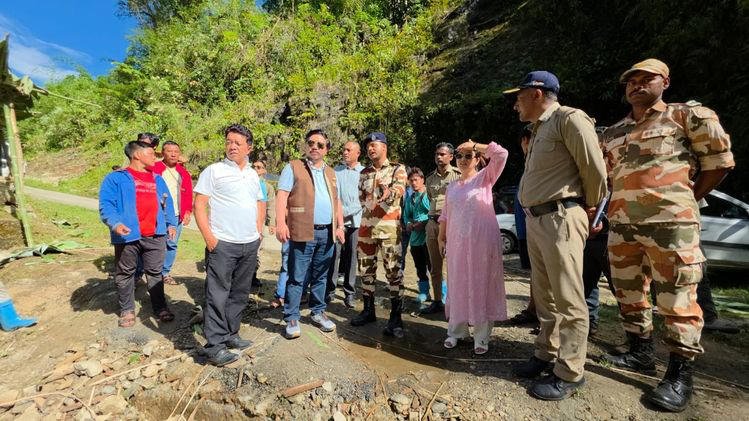
Arunachal Pradesh MLA Pani Taram conducted an extensive aerial and ground survey of flood-affected border areas in Kurung Kumey district to assess the damage caused by recent heavy rainfall and overflowing rivers. The visit was aimed at evaluating the extent of destruction, reviewing ongoing relief efforts, and identifying the immediate needs of residents affected by the floods.
Accompanied by district officials and representatives of various government departments, the MLA inspected several vulnerable locations that have witnessed severe disruption due to the natural calamity. The survey covered remote border villages where road connectivity has been affected, making relief and restoration efforts particularly challenging.
The assessment reflects the government’s continued focus on ensuring timely assistance reaches communities impacted by the floods.
Aerial Survey Provides Comprehensive Assessment
The aerial inspection enabled Pani Taram to obtain a broader view of the flood-affected landscape, including damaged roads, washed-away infrastructure, inundated settlements, and river courses altered by the heavy rains.
Officials accompanying the MLA documented the condition of various locations to help prepare a detailed assessment report for further action. The aerial survey also helped identify areas where access by road remained difficult due to landslides, floodwaters, or damaged bridges.
According to officials, such inspections are crucial for understanding the scale of the disaster and prioritising relief and rehabilitation measures in inaccessible regions.
The aerial reconnaissance was followed by visits to several affected localities for a closer assessment on the ground.
Ground Inspection of Affected Villages
After the aerial survey, the MLA travelled to flood-affected villages to interact directly with residents and review the situation at the community level.
He inspected damaged homes, public infrastructure, roads, bridges, and other facilities impacted by the floods. During the visit, local residents shared their experiences and informed the MLA about the difficulties they have been facing due to disrupted transportation, damaged property, and limited access to essential services.
Officials accompanying the inspection gathered information regarding immediate requirements, including food supplies, drinking water, medical assistance, and restoration of connectivity.
The MLA assured residents that their concerns would be conveyed to the appropriate authorities for necessary action.
Review of Relief and Restoration Measures
Pani Taram also reviewed the relief operations currently being undertaken by the district administration and other government agencies.
Officials briefed him on the distribution of essential supplies, emergency response measures, and ongoing efforts to restore damaged infrastructure. The MLA emphasised the importance of ensuring that relief materials reach even the most remote villages without unnecessary delay.
He directed officials to maintain close coordination among departments involved in disaster response so that assistance could be delivered efficiently and systematically.
The review also focused on restoring road connectivity, repairing damaged public infrastructure, and ensuring uninterrupted access to healthcare and other essential services.
Border Villages Face Significant Challenges
The flood-hit areas surveyed by the MLA include several remote border villages where difficult terrain and limited infrastructure have complicated relief operations.
Heavy rainfall and swollen rivers have damaged roads, bridges, and communication networks, making transportation of relief materials more difficult. Officials noted that restoration work in such regions requires careful planning and sustained logistical support.
Residents have reportedly faced disruptions to daily life, including challenges in accessing markets, schools, healthcare facilities, and government services.
The MLA stressed that border communities require special attention due to their geographical isolation and strategic importance.
Instructions to Officials for Swift Response
During meetings with district officials, Pani Taram directed concerned departments to accelerate damage assessment and restoration work.
He emphasised that accurate documentation of losses would help ensure timely assistance under government relief programmes. Departments responsible for public works, rural development, disaster management, power supply, and drinking water were instructed to work in close coordination to restore normalcy as quickly as possible.
The MLA also urged officials to continuously monitor vulnerable locations in view of the ongoing monsoon season and remain prepared to respond promptly to any fresh emergencies.
Regular communication with village authorities was also stressed to ensure that emerging issues are addressed without delay.
Government Reaffirms Commitment to Relief Efforts
During the survey, Pani Taram reiterated the government’s commitment to supporting flood-affected communities through coordinated relief, rehabilitation, and infrastructure restoration initiatives.
He assured residents that the administration would continue monitoring the situation closely and take all necessary measures to minimise hardship. The MLA stated that protecting lives, restoring essential services, and rebuilding damaged infrastructure remain top priorities for the government.
Officials also assured that all necessary reports from the survey would be submitted promptly to facilitate further assistance and resource allocation wherever required.
Focus on Long-Term Disaster Preparedness
Apart from immediate relief measures, the inspection highlighted the importance of strengthening long-term disaster preparedness in flood-prone regions of Arunachal Pradesh.
Officials discussed the need for resilient infrastructure, improved drainage systems, better road connectivity, early warning mechanisms, and enhanced disaster response capabilities to reduce the impact of future natural disasters.
The MLA observed that investments in disaster-resilient infrastructure would help safeguard both residents and public assets in vulnerable border areas.
The aerial and ground survey conducted by Pani Taram underscores the government’s proactive approach to assessing flood damage and ensuring timely assistance for affected communities in Kurung Kumey. As relief operations continue and restoration work progresses, the administration remains focused on rebuilding infrastructure, improving connectivity, and supporting residents in recovering from the impact of the devastating floods while strengthening preparedness for future natural disasters.