

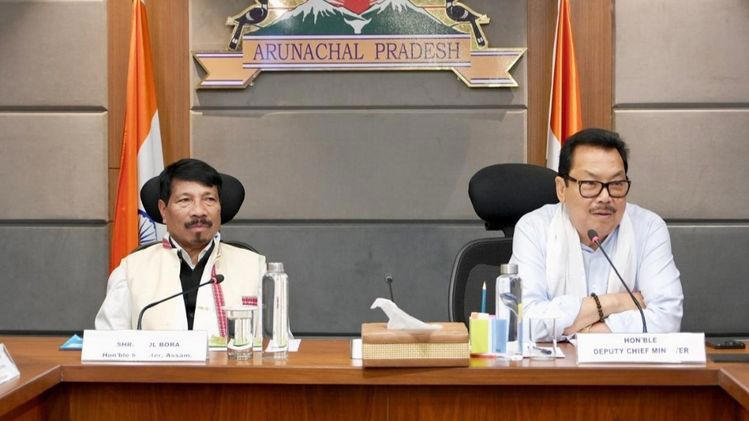
In a significant move aimed at strengthening law enforcement and improving revenue collection, the governments of Arunachal Pradesh and Assam have agreed to enhance cooperation in tackling the illicit liquor trade operating along their inter-state borders. The joint initiative seeks to curb the illegal production, transportation, and sale of liquor while ensuring better compliance with excise regulations and increasing legitimate revenue generation for both states.
Officials from the excise departments of Arunachal Pradesh and Assam recently held discussions on strategies to address challenges posed by the illegal liquor trade, which has long been a concern for authorities due to its impact on public health, law and order, and government revenue. The collaboration is expected to result in stronger surveillance, coordinated enforcement actions, information sharing, and joint operations targeting illegal networks.
The decision reflects a growing recognition that inter-state cooperation is essential to effectively combat organized illicit activities that often exploit administrative boundaries to evade enforcement.
Growing Concern Over Illicit Liquor Trade
The illegal liquor trade remains a major challenge in several parts of the country, particularly in border areas where differing regulations and enforcement mechanisms can create opportunities for unlawful activities. Authorities in both Arunachal Pradesh and Assam have observed instances of unauthorized liquor production, smuggling, and distribution that undermine legal businesses and deprive governments of valuable revenue.
Officials noted that illicit liquor operations often function through complex networks involving transportation routes that cross state boundaries. Such activities not only affect revenue collection but also pose serious risks to consumers due to the possibility of unsafe or unregulated products entering the market.
The increasing sophistication of illegal liquor networks has prompted authorities to adopt more coordinated and intelligence-driven approaches to enforcement.
By working together, both states aim to disrupt these networks and create a stronger regulatory environment.
Strengthening Inter-State Coordination
One of the key outcomes of the discussions was the decision to strengthen coordination between excise officials from Arunachal Pradesh and Assam. Authorities acknowledged that close cooperation is necessary to effectively monitor movement across border regions and prevent illegal liquor consignments from reaching markets.
The proposed framework includes regular communication between enforcement agencies, exchange of intelligence inputs, and coordinated action against individuals and groups involved in illicit activities.
Officials believe that sharing information in real time will significantly improve the ability of both states to identify suspicious activities and take prompt action. Joint monitoring mechanisms are also expected to enhance operational efficiency and reduce opportunities for offenders to exploit jurisdictional gaps.
The collaborative approach reflects a broader trend toward inter-state partnerships in addressing issues that transcend administrative boundaries.
Focus on Increasing Excise Revenue
Apart from law enforcement objectives, the initiative is also expected to contribute significantly to improving excise revenue collection. Excise duties constitute an important source of revenue for state governments and support expenditure on infrastructure, public services, and development programs.
Illegal liquor trade often results in substantial revenue losses because products bypass official taxation and regulatory channels. By reducing the prevalence of unauthorized liquor operations, authorities hope to strengthen legitimate sales and improve compliance with excise laws.
Officials from both states emphasized that increased revenue collection can support broader developmental objectives while creating a more level playing field for licensed businesses operating within the legal framework.
The effort to boost excise revenue is therefore closely linked with the goal of promoting transparency and accountability in the sector.
Joint Enforcement Operations Planned
As part of the enhanced cooperation framework, both states are expected to undertake joint enforcement operations in vulnerable border regions. These operations will focus on identifying illegal production units, intercepting unauthorized transportation, and taking action against individuals involved in smuggling activities.
Authorities have indicated that special attention will be given to areas known for repeated violations or suspicious movement of liquor consignments. Joint teams may conduct inspections, raids, and surveillance exercises aimed at dismantling illegal supply chains.
Officials believe that coordinated operations will have a greater deterrent effect than isolated enforcement actions. The presence of personnel from both states can also improve operational effectiveness and facilitate smoother investigations.
The planned initiatives demonstrate the determination of both governments to address the issue through sustained and comprehensive measures.
Leveraging Technology and Intelligence Gathering
Modern technology is expected to play a significant role in the joint campaign against illicit liquor trade. Officials discussed the importance of utilizing digital monitoring systems, data analytics, and intelligence-based investigations to strengthen enforcement efforts.
Technology can help authorities track suspicious activities, identify patterns of movement, and enhance coordination between agencies. Improved data sharing mechanisms are expected to support faster decision-making and more targeted interventions.
Intelligence gathering will remain a crucial component of the strategy. Authorities plan to strengthen networks that provide information regarding illegal production, storage facilities, transportation routes, and distribution channels.
Officials stressed that a combination of technology and intelligence can significantly improve the ability of enforcement agencies to respond proactively to emerging threats.
Protecting Public Health and Consumer Safety
Beyond revenue considerations, the crackdown on illicit liquor is also aimed at safeguarding public health. Unregulated alcoholic products often pose serious risks because they may be manufactured under unsafe conditions and without quality controls.
Consumption of illicit liquor has, in many instances across the country, resulted in severe health complications and fatalities. Authorities in both states emphasized that protecting citizens from such risks is a key motivation behind the joint initiative.
By strengthening enforcement and encouraging consumers to purchase products from licensed outlets, governments hope to reduce the circulation of unsafe beverages and enhance public safety.
Officials noted that public awareness campaigns may also be undertaken to educate consumers about the dangers associated with illicit liquor consumption.
Supporting Legitimate Businesses
Licensed manufacturers, distributors, and retailers often face unfair competition from illegal operators who evade taxes and regulatory requirements. The illicit liquor trade can distort market conditions and negatively affect businesses that comply with legal standards.
The collaborative efforts of Arunachal Pradesh and Assam are expected to benefit legitimate stakeholders by creating a more transparent and regulated marketplace. Authorities believe that stronger enforcement will encourage compliance and improve confidence among businesses operating within the legal framework.
Officials highlighted that a fair business environment is essential for attracting investment, generating employment, and supporting economic growth in the sector.
The crackdown therefore aligns with broader objectives related to economic development and regulatory governance.
Building a Long-Term Enforcement Framework
Officials from both states have emphasized that the initiative is not intended to be a short-term campaign but rather the foundation of a sustained enforcement strategy. Long-term cooperation mechanisms are expected to be developed to ensure continuous monitoring and effective implementation.
Regular review meetings, information-sharing protocols, and coordinated operational plans may become permanent features of the partnership. Such institutional arrangements can help maintain momentum and adapt strategies in response to evolving challenges.
Authorities also discussed the importance of training personnel, strengthening legal frameworks, and enhancing administrative capacity to support ongoing enforcement efforts.
A long-term approach is considered essential for addressing the root causes of illicit trade and ensuring lasting results.
A Significant Step Toward Better Governance
The decision by Arunachal Pradesh and Assam to work together against illicit liquor trade represents a significant step toward stronger governance and improved regulatory enforcement. By combining resources, expertise, and intelligence, both states aim to tackle a problem that affects public revenue, consumer safety, and lawful business operations.
The initiative demonstrates the value of inter-state cooperation in addressing complex challenges that extend beyond administrative boundaries. It also reflects a shared commitment to improving transparency, strengthening enforcement, and promoting responsible economic activity.
As the collaboration moves forward, authorities are expected to intensify monitoring efforts, undertake joint operations, and implement strategies designed to curb illegal activities effectively. If successful, the initiative could serve as a model for similar partnerships in other regions facing comparable challenges.
Through sustained cooperation and coordinated action, Arunachal Pradesh and Assam hope to create a more secure, transparent, and revenue-efficient excise ecosystem that benefits governments, businesses, and citizens alike.