

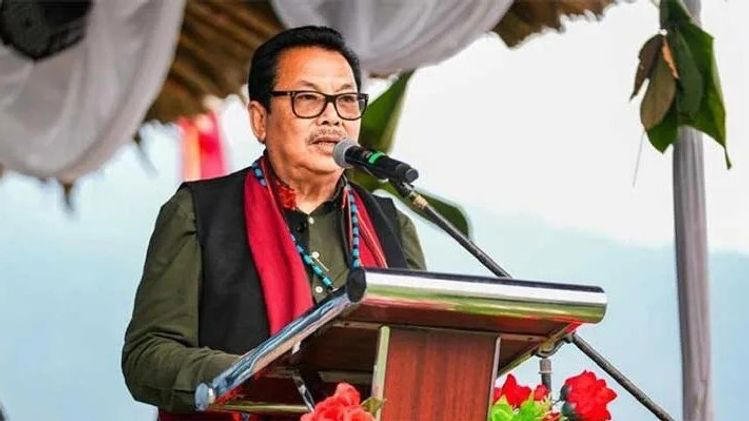
Arunachal Pradesh Deputy Chief Minister Chowna Mein has reaffirmed the state government’s commitment to addressing long-standing forest and land management issues, emphasizing that sustainable solutions are essential for the state’s development while safeguarding the rights and interests of local communities. His remarks come amid ongoing efforts by the government to streamline land governance, improve coordination between various stakeholders, and ensure that developmental initiatives proceed without compromising environmental conservation.
Speaking at a recent gathering, Mein highlighted the complex nature of land and forest-related challenges in Arunachal Pradesh, a state characterized by vast forest cover, diverse indigenous communities, and unique customary land ownership systems. He stressed that the government is actively working to find balanced and practical solutions that respect traditional rights while meeting the requirements of modern governance and economic development.
Addressing a Long-Standing Challenge
Forest and land management have remained among the most significant governance issues in Arunachal Pradesh for decades. The state’s unique legal and customary framework often presents challenges in balancing developmental aspirations with conservation objectives and community rights.
Large portions of Arunachal Pradesh are covered by forests, making environmental protection a critical priority. At the same time, the state requires infrastructure development, improved connectivity, housing projects, educational institutions, healthcare facilities, and industrial investments to support economic growth and improve living standards.
Mein acknowledged that these competing priorities require careful planning and consultation. He noted that the government recognizes the importance of resolving ambiguities related to land ownership, forest boundaries, and developmental clearances, which often delay projects and create uncertainty among stakeholders.
According to him, the administration is committed to creating mechanisms that promote transparency, efficiency, and fairness in the management of land and forest resources.
Balancing Development and Conservation
One of the key messages delivered by the Deputy Chief Minister was the need to strike a balance between environmental conservation and developmental needs. Arunachal Pradesh is home to rich biodiversity and ecologically sensitive landscapes that play a crucial role in maintaining environmental stability not only within the state but across the broader Himalayan region.
Mein emphasized that development should not come at the cost of environmental degradation. Instead, the state government seeks to adopt a sustainable development model that allows economic progress while preserving natural resources for future generations.
He pointed out that responsible land management can help reduce conflicts, improve project implementation, and create opportunities for local communities. By integrating conservation goals into development planning, the government hopes to ensure that growth remains environmentally sustainable and socially inclusive.
Importance of Community Participation
A significant aspect of Arunachal Pradesh’s land governance system is the role played by indigenous communities and traditional institutions. Land ownership and management in many parts of the state are governed by customary practices that have evolved over generations.
Recognizing this reality, Mein stressed the importance of community participation in decision-making processes related to land and forest management. He stated that the government is committed to engaging with local stakeholders, community leaders, and traditional institutions to ensure that policies reflect the aspirations and concerns of the people.
Community involvement, he said, is essential for building trust and ensuring the successful implementation of government initiatives. The administration believes that collaborative approaches can help minimize disputes and create solutions that are both practical and culturally sensitive.
The Deputy Chief Minister noted that local communities have historically played an important role in conserving forests and protecting natural resources. Their knowledge and experience can contribute significantly to sustainable management practices.
Streamlining Land Governance
One of the recurring challenges faced by Arunachal Pradesh has been the complexity of land documentation and administrative procedures. In many areas, traditional ownership systems coexist with modern governance structures, creating challenges in record-keeping, planning, and project execution.
Mein highlighted the government’s efforts to streamline land governance by improving administrative processes and strengthening institutional coordination. These measures are expected to enhance clarity regarding land ownership and usage while reducing delays associated with approvals and documentation.
Improved governance mechanisms could also facilitate investments in infrastructure and economic activities, which are often affected by uncertainties related to land availability and legal clearances. The state government believes that better land management systems will contribute to more efficient implementation of development projects and create a favorable environment for investment.
Supporting Infrastructure and Economic Growth
Arunachal Pradesh has witnessed significant investments in infrastructure over recent years, including roads, bridges, airports, educational institutions, and healthcare facilities. Such projects are vital for improving connectivity and enhancing access to essential services across the state’s remote and mountainous regions.
However, land and forest-related issues have often posed challenges to project implementation. Mein stated that resolving these concerns remains a priority because efficient infrastructure development is crucial for the state’s long-term growth.
The government is working to ensure that developmental projects receive the necessary support while adhering to environmental norms and community interests. By addressing procedural bottlenecks and promoting better coordination among departments, the administration aims to accelerate development without compromising sustainability.
He also noted that effective land management can unlock opportunities in sectors such as tourism, agriculture, horticulture, renewable energy, and small-scale industries, thereby contributing to employment generation and economic diversification.
Vision for Sustainable Development
The Deputy Chief Minister reiterated that the government’s approach is guided by a long-term vision of sustainable and inclusive development. Arunachal Pradesh possesses immense natural wealth and cultural diversity, which must be protected while creating opportunities for progress.
According to Mein, the state’s future depends on its ability to manage resources responsibly and create policies that balance environmental, economic, and social objectives. He emphasized that resolving forest and land management issues is not merely an administrative task but a crucial step toward ensuring equitable development and prosperity.
The government remains committed to adopting innovative approaches, strengthening institutional frameworks, and encouraging stakeholder collaboration to achieve these goals. Through continuous dialogue and policy reforms, the administration hopes to address challenges that have persisted for years.
Moving Forward with Confidence
As Arunachal Pradesh continues its development journey, the resolution of forest and land management issues is expected to play a pivotal role in shaping the state’s future. Chowna Mein’s assurance reflects the government’s determination to tackle these challenges through a balanced and inclusive approach.
By promoting transparency, respecting traditional rights, encouraging community participation, and safeguarding environmental interests, the state aims to create a governance framework that supports sustainable growth. The government’s efforts are expected to strengthen public confidence, facilitate development projects, and enhance the overall quality of life for people across Arunachal Pradesh.
With growing emphasis on responsible resource management and collaborative policymaking, the state is positioning itself to address long-standing concerns while unlocking new opportunities for progress and prosperity in the years ahead.