

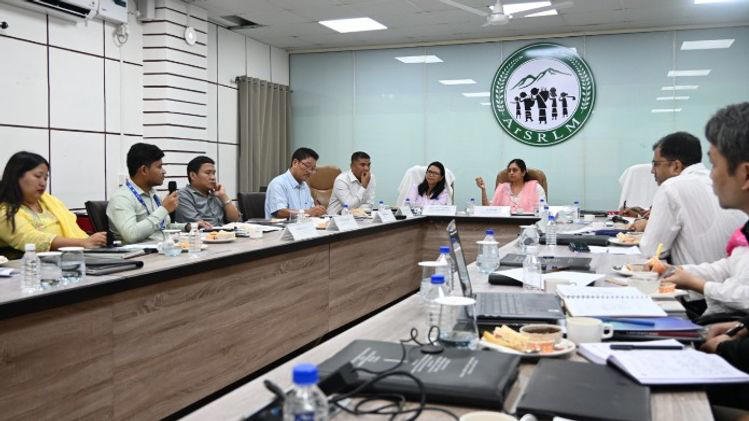
The Arunachal Pradesh government has intensified its efforts to achieve the ambitious goals of the ‘Lakhpati Didi’ initiative by emphasizing stronger inter-departmental coordination and convergence among various government agencies. The move comes as the state seeks to accelerate the economic empowerment of women belonging to Self-Help Groups (SHGs) and ensure sustainable livelihood opportunities across rural regions.
The Lakhpati Didi initiative, launched as part of the broader national mission to strengthen women-led development, aims to enable women associated with SHGs to earn an annual income of at least Rs 1 lakh through diversified livelihood activities. Recognizing the transformative potential of the programme, the Arunachal Pradesh government has stressed the need for different departments to work in close collaboration to maximize resources, eliminate duplication of efforts, and ensure effective implementation at the grassroots level.
Officials believe that achieving the mission’s targets requires more than financial support alone. It demands a comprehensive approach involving agriculture, horticulture, animal husbandry, fisheries, rural development, skill development, industries, and banking institutions working together to create a robust ecosystem for women entrepreneurs.
Convergence Seen as Key to Success
State authorities have identified convergence as one of the most critical components in ensuring the success of the Lakhpati Didi programme. Various departments possess resources, expertise, and schemes that can collectively help women SHG members establish profitable enterprises and improve their household incomes.
Officials noted that while many government programmes already exist to support rural livelihoods, their impact can be significantly enhanced when implemented in a coordinated manner. For instance, women engaged in agriculture can benefit from training and inputs provided by the agriculture department, while marketing support can be facilitated through rural development agencies and cooperative networks.
Such coordinated efforts can help SHG members access better infrastructure, skill enhancement opportunities, financial assistance, and market linkages. The government believes that integrated planning and execution will help women transition from subsistence-level activities to income-generating enterprises capable of delivering sustainable economic benefits.
Empowering Women Through Sustainable Livelihoods
The Lakhpati Didi mission aligns with the broader vision of promoting women-led development and strengthening rural economies. In Arunachal Pradesh, where a significant portion of the population resides in rural and remote areas, empowering women economically is viewed as a crucial step toward inclusive growth.
Women SHGs have already emerged as important drivers of social and economic change in many parts of the state. Through collective action, savings, and entrepreneurship, these groups have helped improve household incomes, strengthen financial inclusion, and encourage community participation in development activities.
The government is now focusing on helping these groups scale up their economic activities by identifying viable livelihood opportunities tailored to local conditions. Activities such as organic farming, horticulture, livestock rearing, fisheries, food processing, handicrafts, weaving, and eco-tourism are being promoted as potential avenues for increasing incomes.
Officials have emphasized that livelihood interventions must be based on local strengths and market demand to ensure long-term sustainability. By leveraging the unique resources and cultural heritage of Arunachal Pradesh, women entrepreneurs can create products and services that appeal to both domestic and external markets.
Strengthening Financial Inclusion and Market Access
Access to finance remains a critical factor in the success of women-led enterprises. To address this challenge, the state government has called for stronger collaboration with banking institutions and financial agencies. Facilitating credit access, improving financial literacy, and ensuring timely disbursement of loans are among the key priorities under the mission.
Financial inclusion is expected to play a vital role in enabling women to expand their businesses, adopt new technologies, and improve productivity. Government departments are also working to ensure that SHGs are linked to various financial schemes and credit facilities available under central and state programmes.
Equally important is the issue of market access. Many rural producers often struggle to reach larger markets, limiting their earning potential. To overcome this challenge, efforts are being made to strengthen value chains, improve branding and packaging, and establish market linkages that connect SHG products with consumers beyond local communities.
The use of digital platforms and e-commerce channels is also being explored as a means of expanding market opportunities for women entrepreneurs. Such initiatives can help rural producers access wider customer bases while increasing the visibility of locally made products.
Capacity Building and Skill Development in Focus
Recognizing that sustainable income generation requires more than financial assistance, the government is placing strong emphasis on capacity building and skill development. Training programmes are being designed to equip SHG members with practical knowledge in entrepreneurship, business management, production techniques, and marketing strategies.
Officials have highlighted the importance of continuous handholding and mentoring to ensure that women entrepreneurs can successfully manage and grow their enterprises. Skill enhancement initiatives are expected to help beneficiaries improve product quality, increase efficiency, and adapt to changing market trends.
In addition to livelihood-specific training, efforts are also being directed toward improving digital literacy and financial management skills. These competencies are increasingly essential in today’s economic environment and can significantly enhance the competitiveness of rural enterprises.
Monitoring Progress and Ensuring Accountability
To achieve the ambitious objectives of the Lakhpati Didi mission, the Arunachal Pradesh government is also focusing on strengthening monitoring mechanisms and accountability frameworks. Regular reviews, data-driven assessments, and coordinated planning meetings are expected to help track progress and identify challenges at an early stage.
Officials have stressed the importance of maintaining accurate records and monitoring income growth among SHG members to measure the effectiveness of interventions. By adopting a results-oriented approach, departments can make informed decisions and implement corrective measures wherever necessary.
The emphasis on accountability is intended to ensure that government resources are utilized efficiently and that beneficiaries receive the intended support in a timely manner.
A Vision for Inclusive Rural Prosperity
The push for stronger inter-departmental coordination reflects Arunachal Pradesh’s commitment to transforming the lives of rural women through economic empowerment. The Lakhpati Didi initiative is not merely an income-generation programme but a broader effort to enhance women’s participation in the economy and strengthen their role in community development.
As the state works toward achieving its targets, collaboration among departments, financial institutions, and community organizations will remain central to the mission’s success. By creating an enabling environment for entrepreneurship and livelihood development, Arunachal Pradesh aims to build a future where thousands of women become financially independent and contribute significantly to the state’s economic growth.
The government’s renewed focus on convergence, capacity building, financial inclusion, and market access signals a comprehensive approach to rural development. If implemented effectively, the initiative has the potential to create lasting socio-economic change and turn the vision of a “Lakhpati Didi” into reality for women across Arunachal Pradesh.