

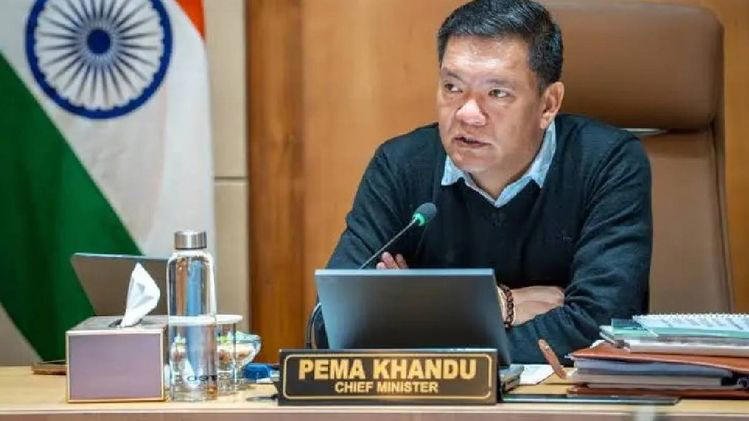
The Arunachal Pradesh government has unveiled Vision 2036, an ambitious long-term development roadmap aimed at skilling 1 lakh young people and supporting 10,000 entrepreneurs as the state works towards creating more employment, strengthening local businesses and building a future-ready workforce.
The initiative places youth development, entrepreneurship and skill creation at the centre of Arunachal Pradesh’s development strategy. The government aims to equip young people with industry-relevant capabilities while creating an ecosystem in which aspiring entrepreneurs can establish and expand businesses.
The roadmap is expected to guide the state’s economic and human resource development priorities over the coming decade.
Vision 2036 Focuses on Youth and Entrepreneurship
Vision 2036 is designed to address two closely connected challenges—creating employment opportunities for young people and strengthening entrepreneurship.
Under the roadmap, the government has set a target of skilling 1 lakh youth. The training is expected to focus on skills that can improve employability across different sectors and prepare young people for emerging opportunities.
At the same time, the government aims to support 10,000 entrepreneurs, providing assistance intended to help individuals convert business ideas into sustainable enterprises.
The dual focus on employment and entrepreneurship is aimed at creating a broader economic ecosystem rather than relying solely on conventional government and private-sector jobs.
One Lakh Youth to Receive Skill Training
Skill development is one of the central pillars of Vision 2036.
The target of training 1 lakh young people reflects the government’s focus on creating a workforce capable of meeting changing industry requirements.
Training programmes could cover sectors with potential for employment within Arunachal Pradesh as well as opportunities outside the state.
The emphasis on practical and industry-oriented skills can help young people improve their prospects in areas such as tourism, technology, construction, healthcare, agriculture, logistics and other emerging sectors.
Support for 10,000 Entrepreneurs
Alongside skill development, the roadmap aims to create opportunities for entrepreneurship.
The government plans to support 10,000 entrepreneurs, potentially through access to finance, training, mentoring, market linkages and other forms of assistance.
Entrepreneurship can be particularly important in a state where geographical challenges and a dispersed population make large-scale industrial development difficult in some areas.
Supporting smaller enterprises can help create local employment while allowing communities to develop businesses based on regional resources and market opportunities.
Focus on Local Business Opportunities
Arunachal Pradesh has considerable potential in sectors such as horticulture, agriculture, tourism, handicrafts and food processing.
Entrepreneurs can play an important role in developing value chains around these sectors.
For example, agricultural and horticultural products can be processed and packaged locally, allowing producers to capture greater value rather than selling raw products.
Similarly, tourism-related enterprises can create employment through homestays, travel services, adventure activities, local cuisine and handicraft sales.
Vision 2036 could provide an opportunity to integrate these sectors into a broader entrepreneurship strategy.
Preparing Youth for Emerging Industries
The employment landscape is changing rapidly, with technology creating new opportunities across sectors.
Arunachal Pradesh’s skill development efforts will therefore need to include digital literacy and emerging technologies alongside traditional vocational skills.
Training in information technology, digital services, artificial intelligence-related applications and entrepreneurship could help young people access a wider range of opportunities.
Remote work and digital businesses may also create new possibilities for young people living in areas that are geographically distant from major urban centres.
Tourism as a Potential Growth Sector
Tourism is likely to remain an important area for employment and entrepreneurship in Arunachal Pradesh.
The state is known for its mountains, rivers, forests, monasteries and diverse indigenous cultures.
Developing sustainable tourism can create opportunities for local communities while generating demand for accommodation, transport, food, handicrafts and guiding services.
Young entrepreneurs could benefit from training in hospitality, digital marketing, adventure tourism and destination management.
Improved infrastructure and responsible tourism practices will be necessary to ensure that the sector grows sustainably.
Strengthening Agriculture and Horticulture
Agriculture and horticulture provide livelihoods for a large section of Arunachal Pradesh’s population.
Vision 2036 could support young people interested in modernising these sectors through agribusiness and value-added enterprises.
Food processing, packaging, cold storage and logistics can help farmers obtain better returns from their produce.
Entrepreneurs can also introduce modern marketing techniques and connect local producers with markets within and outside the state.
Such interventions can create employment while strengthening rural economies.
Importance of Digital Connectivity
Digital connectivity will be crucial to achieving the goals of Vision 2036.
Young people need reliable internet access to participate in online education, skill programmes, digital employment and e-commerce.
Entrepreneurs also depend increasingly on digital platforms to reach customers, access financial services and manage their businesses.
Improving digital infrastructure in remote areas can therefore help ensure that the benefits of the roadmap are not limited to urban centres.
Women and Inclusive Entrepreneurship
An effective entrepreneurship strategy will also need to ensure participation by women and young people from remote communities.
Women-led enterprises can contribute significantly to household incomes and local economic activity.
Self-help groups, cooperatives and community organisations can provide platforms for women to access training, finance and markets.
Ensuring that disadvantaged and geographically isolated communities are included in skill and entrepreneurship programmes will be important for making Vision 2036 broadly inclusive.
Building Industry Partnerships
Government programmes alone may not be sufficient to create employment opportunities for 1 lakh skilled young people.
Partnerships with industries, educational institutions and training providers can help align skill programmes with actual market demand.
Employers can contribute by identifying required skills, providing apprenticeships and offering placement opportunities.
Such partnerships can reduce the gap between classroom training and workplace requirements.
Access to Finance for Entrepreneurs
Access to affordable finance remains a major challenge for new businesses.
Aspiring entrepreneurs may have viable ideas but lack sufficient capital to purchase equipment, establish facilities or expand operations.
Financial assistance, credit support and easier access to formal banking services can help address this problem.
However, funding should ideally be combined with business planning, accounting and marketing support to improve the survival rate of new enterprises.
Challenges in Implementing Vision 2036
The scale of the targets makes implementation a significant challenge.
Training 1 lakh youth will require adequate training institutions, qualified instructors, modern equipment and industry partnerships.
Similarly, supporting 10,000 entrepreneurs will require a sustained ecosystem of finance, mentorship and market access.
Arunachal Pradesh’s difficult terrain also creates logistical challenges in reaching young people in remote communities.
The government will therefore need to ensure that programmes are decentralised and accessible across districts.
Measuring Progress Will Be Important
Clear monitoring mechanisms will be necessary to determine whether Vision 2036 is meeting its objectives.
The government can track not only the number of young people trained but also how many secure employment or establish successful enterprises.
For entrepreneurship programmes, indicators such as business survival, revenue growth, employment generation and market access can provide a better measure of impact than the number of beneficiaries alone.
Regular evaluation can help policymakers identify successful programmes and improve areas that are not delivering expected results.
Vision 2036 Aims to Build Future-Ready Arunachal
The long-term vision reflects the government’s intention to make human capital and entrepreneurship central to Arunachal Pradesh’s economic development.
By skilling 1 lakh youth and supporting 10,000 entrepreneurs, the state aims to create a stronger workforce and encourage more young people to become job creators.
The approach could also help diversify the economy beyond traditional sectors and create opportunities in tourism, technology, agriculture, food processing and services.
Youth Development at Centre of State’s Future
Arunachal Pradesh Vision 2036 represents an ambitious attempt to prepare the state’s young population for future economic opportunities.
The target of 1 lakh skilled youth could significantly expand the state’s talent pool, while support for 10,000 entrepreneurs could create new businesses and employment opportunities.
The success of the roadmap will depend on the quality of training, access to finance, industry participation and the government’s ability to reach young people in remote areas.
If these challenges are addressed effectively, Vision 2036 could help Arunachal Pradesh build a more skilled, entrepreneurial and diversified economy—one in which young people have greater opportunities to find meaningful employment or create businesses of their own.