

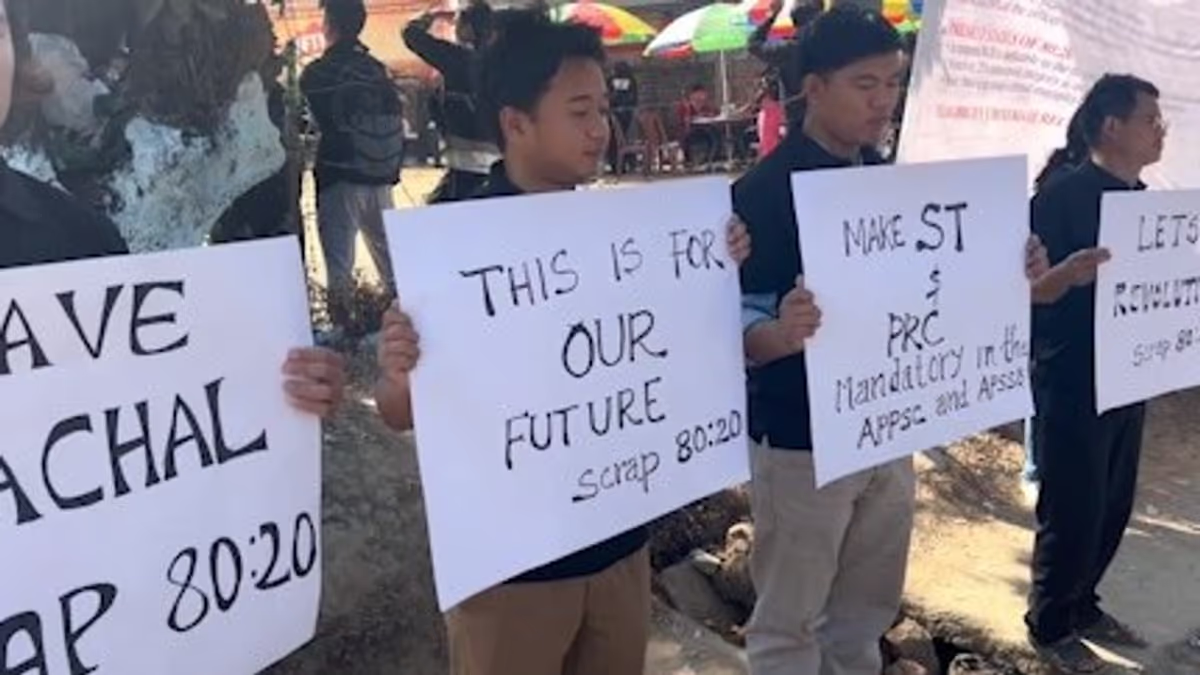
The Arunachal Recruitment Ratio Policy has become the focus of public discussion following renewed debate over the state’s 80:20 recruitment ratio. Moreover, the policy has drawn attention from community organizations, government officials, and employment aspirants seeking greater clarity on its objectives and implementation. Consequently, the discussion has highlighted the importance of transparent recruitment practices, legal compliance, and balanced public employment policies in Arunachal Pradesh.
Assam Launches Urban Drainage Plan to Tackle Guwahati Flash Flooding
Taksing Community Counters False Claims on Arunachal Border Situation
Arunachal Recruitment Ratio Policy and Its Purpose
The Arunachal Recruitment Ratio Policy refers to the state’s recruitment framework that prescribes an 80:20 ratio for certain categories of public employment. Furthermore, the policy has been part of administrative efforts to address representation and recruitment within the state’s public services.
Public recruitment policies are designed to establish clear procedures for government appointments. Consequently, they play an important role in ensuring consistency, transparency, and orderly recruitment.
Moreover, recruitment frameworks are subject to review through established legal and administrative processes. Therefore, policy discussions often involve multiple stakeholders and institutional consultations.
Additionally, recruitment regulations must operate within the applicable constitutional and statutory framework. Thus, periodic review remains an important aspect of governance.
Ongoing Debate Surrounds the Recruitment Policy
The Arunachal Recruitment Ratio Policy has generated discussion following demands from various organizations seeking changes or clarification regarding its implementation. Furthermore, stakeholders have expressed differing viewpoints on the policy’s impact and future.
Public policy debates are a common part of democratic governance. Consequently, governments often consider stakeholder feedback while evaluating existing administrative measures.
Moreover, consultations can help policymakers understand concerns raised by affected groups. Therefore, dialogue remains an important component of policy review.
Similarly, transparent discussions contribute to informed public understanding. Additionally, evidence-based decision-making strengthens institutional credibility.
Recruitment Policies Influence Public Employment
The Arunachal Recruitment Ratio Policy highlights the broader role of recruitment frameworks in shaping public employment and administrative efficiency. Furthermore, well-defined recruitment systems help maintain confidence in government appointments.
Merit, transparency, and procedural fairness remain key principles in public recruitment. Consequently, authorities regularly examine recruitment practices to improve administrative effectiveness.
Moreover, policy reviews may consider legal requirements, administrative needs, and stakeholder perspectives. Therefore, any changes generally follow established governmental procedures.
Similarly, consistent implementation supports equal treatment under applicable rules. Additionally, transparent recruitment processes enhance public trust.
Policy Review Requires Institutional Consultation
The Arunachal Recruitment Ratio Policy discussion underscores the importance of consultation and due process in reviewing public employment policies. Furthermore, government decisions on recruitment frameworks typically involve administrative evaluation, legal considerations, and stakeholder engagement.
Consultative governance promotes balanced and informed policymaking. Consequently, open dialogue can help address concerns while supporting effective administration.
Moreover, institutional processes ensure that policy decisions are examined carefully before implementation. Therefore, transparency remains essential throughout any review process.
Similarly, public participation contributes to constructive policy discussions. Additionally, accountable governance strengthens confidence in administrative reforms.
Conclusion
The Arunachal Recruitment Ratio Policy continues to be debated as stakeholders seek greater clarity regarding the state’s 80:20 recruitment framework. Moreover, the discussion reflects broader questions about public employment, administrative transparency, and policy implementation.
Furthermore, any future review of the policy is expected to proceed through established legal and administrative mechanisms while considering stakeholder views. Consequently, transparent consultation, procedural fairness, and effective governance will remain central to the ongoing discussion surrounding the Arunachal Recruitment Ratio Policy.
FAQs
1. What is the Arunachal Recruitment Ratio Policy?
It refers to the state’s 80:20 recruitment framework applicable to certain categories of public employment.
2. Why is the policy being discussed?
The policy has drawn renewed attention following public debate and demands from some organizations for its review.
3. Can the recruitment policy be changed?
Any modification would generally require review through the appropriate legal and administrative procedures.
4. Why are recruitment policies important?
They help establish transparent procedures, maintain administrative consistency, and guide public employment practices.
5. Why is the Arunachal Recruitment Ratio Policy significant?
It influences public recruitment, administrative governance, and discussions on employment policy within Arunachal Pradesh.