

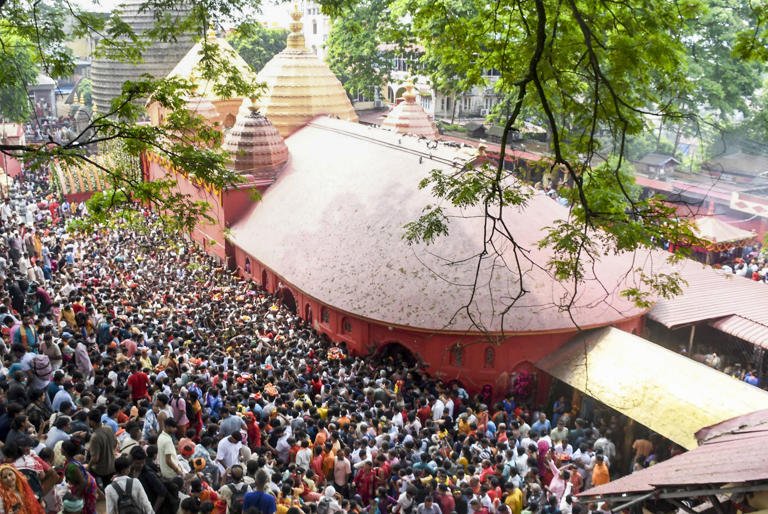
The annual Ambubachi Mela, one of India’s most significant religious gatherings, concluded with the reopening of the revered Kamakhya Temple in Assam, marking the end of the temple’s ritual closure and the beginning of renewed worship. Thousands of devotees, saints, ascetics, and pilgrims from across India and abroad gathered at the Nilachal Hills in Guwahati to witness the sacred reopening of the temple, considered one of the most important Shakti Peethas in Hinduism.
Following three days of ceremonial closure, during which it is traditionally believed that Goddess Kamakhya undergoes her annual menstruation, the temple doors were opened amid elaborate religious rituals, Vedic chants, and devotional ceremonies. The reopening marked the culmination of the Ambubachi Mela, a festival that symbolizes fertility, the creative power of nature, and the divine feminine.
A Sacred Tradition Rooted in Faith
The Ambubachi Mela is deeply rooted in centuries-old Hindu traditions and holds immense spiritual significance for devotees of Goddess Kamakhya. According to religious beliefs, the annual closure of the temple represents the period during which Mother Goddess Kamakhya undergoes her natural cycle, symbolizing fertility, creation, and the regenerative power of nature.
During these three days, regular worship inside the temple remains suspended. Devotees patiently wait for the reopening ceremony, which signifies purification and the resumption of daily rituals.
The reopening is regarded as an auspicious occasion, drawing immense crowds eager to receive blessings and participate in one of India’s most unique religious festivals.
Thousands Gather for the Reopening Ceremony
As the temple gates reopened, thousands of devotees lined up from the early hours of the morning to offer prayers. Pilgrims from different parts of Assam, Northeast India, and other states waited patiently despite long queues to seek the blessings of Goddess Kamakhya.
The atmosphere around the temple was filled with devotional chants, traditional music, and spiritual fervor as priests conducted sacred rituals before allowing devotees inside the sanctum.
Many pilgrims described their visit as a once-in-a-lifetime spiritual experience, believing that prayers offered immediately after the reopening carry special religious significance.
Significance of the Kamakhya Temple
Situated atop the Nilachal Hills overlooking Guwahati, the Kamakhya Temple is among the most revered pilgrimage destinations in India. Unlike many other Hindu temples, Kamakhya does not house a conventional idol. Instead, devotees worship a naturally formed rock crevice believed to symbolize the feminine creative power of Goddess Shakti.
The temple occupies a unique place in Hindu spirituality, particularly within the Shakta tradition, where Goddess worship holds central importance.
Every year, the Ambubachi Mela transforms the temple complex into one of the country’s largest spiritual gatherings, attracting saints, ascetics, scholars, tourists, photographers, and devotees from across the world.
Spiritual Gathering of Saints and Ascetics
One of the distinguishing features of the Ambubachi Mela is the participation of thousands of sadhus, tantrics, naga ascetics, and spiritual practitioners representing various traditions.
The festival provides a rare opportunity for devotees to interact with spiritual leaders, observe ancient rituals, and witness diverse forms of religious practices associated with Tantra and Shakti worship.
Many ascetics spend the festival engaged in meditation, prayers, scriptural discussions, and religious discourses, creating an atmosphere of deep spirituality throughout the temple premises.
Their presence adds to the cultural richness and religious diversity that make the Ambubachi Mela unique among India’s major pilgrimage festivals.
Extensive Arrangements for Pilgrims
With lakhs of devotees visiting the temple during the festival, authorities implemented comprehensive arrangements to ensure the smooth conduct of the event.
Security personnel, volunteers, healthcare workers, disaster response teams, sanitation staff, and traffic management officials worked round the clock to facilitate safe movement of pilgrims.
Temporary shelters, drinking water facilities, medical camps, food distribution centers, and information kiosks were established around the temple complex to assist visitors.
Special transportation services and crowd management measures were also introduced to regulate the large influx of devotees during the reopening ceremony.
Economic Boost Through Religious Tourism
Beyond its religious significance, the Ambubachi Mela provides a substantial economic boost to Assam’s tourism and hospitality sectors.
Hotels, guesthouses, restaurants, transportation providers, local vendors, artisans, and small businesses experience increased economic activity during the festival as thousands of pilgrims and tourists visit Guwahati.
Local markets witness heightened demand for traditional handicrafts, religious offerings, souvenirs, textiles, and regional cuisine, generating seasonal employment opportunities for many residents.
The festival also strengthens Assam’s position as a major destination for spiritual and cultural tourism, attracting domestic and international visitors interested in experiencing the state’s rich religious heritage.
Preserving Cultural and Spiritual Heritage
The Ambubachi Mela serves as an important platform for preserving centuries-old customs, rituals, and cultural traditions associated with Goddess Kamakhya.
Religious scholars emphasize that the festival reflects India’s deep respect for the feminine principle and the natural cycles of life. Unlike many traditions that avoid discussing menstruation, the Ambubachi Mela openly celebrates it as a symbol of fertility, creation, and divine power.
This unique perspective continues to attract researchers, historians, anthropologists, and cultural enthusiasts seeking to understand India’s diverse spiritual traditions.
The festival thus serves not only as a religious gathering but also as a living expression of India’s rich cultural heritage.
Promoting Assam’s Global Cultural Identity
Over the years, the Ambubachi Mela has gained international recognition, drawing visitors from various countries who come to witness its unique blend of spirituality, tradition, and cultural diversity.
Government agencies and tourism authorities have increasingly promoted the festival as an important cultural event that showcases Assam’s heritage on the global stage.
Improved infrastructure, enhanced visitor facilities, digital information services, and better connectivity have further strengthened the state’s capacity to host large-scale religious gatherings while ensuring a positive experience for pilgrims and tourists alike.
The growing popularity of the festival continues to enhance Assam’s image as one of India’s foremost destinations for cultural and spiritual tourism.
Looking Ahead
As the Ambubachi Mela concludes and regular worship resumes at the Kamakhya Temple, devotees return home carrying blessings, sacred offerings, and memories of a spiritually enriching experience.
Authorities are expected to review this year’s arrangements to further improve crowd management, sanitation, transportation, and pilgrim services for future editions of the festival.
Continued investments in infrastructure and tourism development are likely to strengthen Assam’s ability to host one of the country’s largest annual religious gatherings while preserving its sacred traditions.
Conclusion
The reopening of the Kamakhya Temple following the conclusion of the Ambubachi Mela marks the successful completion of one of India’s most revered spiritual festivals. Blending ancient traditions with modern management, the event reflects the enduring faith of millions who gather each year to honor Goddess Kamakhya and celebrate the divine feminine.
Beyond its religious importance, the festival highlights Assam’s cultural richness, strengthens religious tourism, and contributes significantly to the state’s economy. As devotees depart with renewed faith and spiritual fulfillment, the Ambubachi Mela once again reaffirms its place as a timeless symbol of devotion, cultural heritage, and the enduring spiritual traditions of India.