

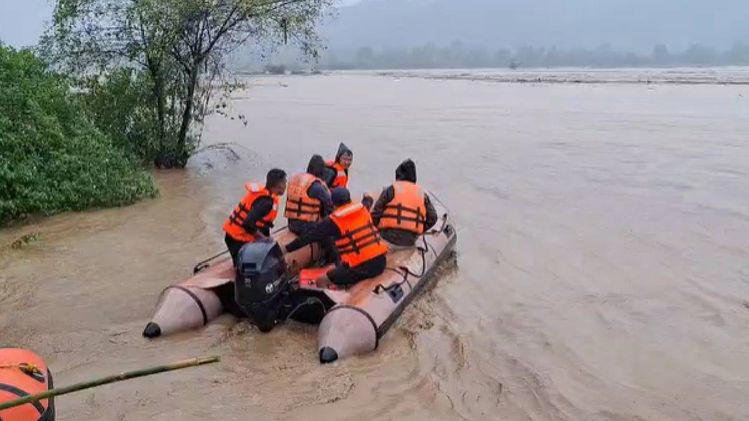
The flood situation in Assam has worsened following continuous heavy rainfall, affecting more than 22,000 people across six districts and disrupting normal life in several areas. Persistent downpours have caused rivers to swell, inundating villages, damaging agricultural land, and affecting transportation networks. Among the major disruptions reported is the impact on rail connectivity in Dhemaji district, where floodwaters and adverse weather conditions have affected train movement.
State authorities, district administrations, and disaster management agencies remain on high alert as rescue and relief operations continue across the affected regions. With weather forecasts predicting further rainfall, officials have urged residents in vulnerable areas to remain cautious and follow safety advisories issued by local authorities.
The government is closely monitoring the evolving flood situation while coordinating efforts to minimise damage and ensure timely assistance to affected communities.
More Than 22,000 People Affected
According to official estimates, the floods have impacted over 22,000 people residing in six districts of Assam. Rising river levels and continuous rainfall have submerged residential areas, agricultural fields, roads, and public infrastructure, forcing many families to seek shelter in safer locations.
Several villages remain partially inundated, affecting access to drinking water, transportation, education, and healthcare services. Local administrations have been working continuously to assess the extent of damage while providing relief materials to those displaced by the floods.
Officials stated that the number of affected people may change depending on rainfall intensity and river conditions over the coming days.
Dhemaji Rail Connectivity Disrupted
One of the most significant impacts of the ongoing floods has been the disruption of rail connectivity in Dhemaji district. Heavy rainfall and waterlogging along railway tracks have affected train operations, causing inconvenience to passengers and disrupting transportation services.
Railway authorities are closely monitoring track conditions and undertaking necessary inspections to ensure passenger safety before normal services are fully restored. Technical teams have been deployed to assess affected sections and carry out repair work wherever required.
Officials are coordinating with state authorities to minimise disruptions while ensuring that transportation infrastructure remains safe and operational despite the challenging weather conditions.
The temporary disruption has also affected the movement of goods and essential supplies, although efforts are underway to restore connectivity at the earliest.
Rivers Continue to Rise
Continuous rainfall across Assam and neighbouring upstream regions has caused water levels in several rivers to rise steadily. Overflowing rivers have breached embankments in some areas, leading to flooding of low-lying villages and agricultural fields.
Floodwaters have entered residential areas in multiple districts, compelling authorities to initiate precautionary evacuations wherever necessary. Residents living near riverbanks have been advised to remain alert and shift to safer locations if water levels continue to rise.
Officials continue to monitor river conditions around the clock while coordinating with meteorological agencies for updated forecasts.
The state administration has warned that additional rainfall could further aggravate the flood situation in vulnerable districts.
Rescue and Relief Operations Intensified
The Assam government has intensified rescue and relief operations to assist flood-affected communities. Teams from the State Disaster Response Force (SDRF), National Disaster Response Force (NDRF), local police, fire services, and district administrations have been deployed to rescue stranded residents and distribute relief materials.
Relief camps have been established in several affected areas to accommodate displaced families. These camps are being provided with food, drinking water, medicines, sanitation facilities, and other essential supplies.
Medical teams have also been deployed to monitor the health of affected populations and prevent outbreaks of water-borne diseases, which commonly occur during flood situations.
Officials stated that rescue operations will continue until every affected family receives necessary assistance.
Damage to Agriculture and Infrastructure
The floods have caused considerable damage to agricultural land, affecting standing crops and disrupting farming activities in several districts. Farmers have expressed concern over crop losses caused by prolonged inundation during the crucial cultivation period.
Apart from agriculture, roads, culverts, embankments, and local infrastructure have also suffered damage due to continuous rainfall and strong water currents. Several rural roads remain submerged, making transportation difficult for both residents and emergency responders.
Power supply and communication services have experienced temporary disruptions in certain locations, although restoration teams are working to repair damaged infrastructure as weather conditions permit.
Authorities have initiated damage assessment exercises to estimate losses and identify priority areas for restoration once floodwaters recede.
Government Maintains High Alert
The Assam government has directed all district administrations to remain on high alert as weather agencies forecast continued rainfall across various parts of the state. Emergency control rooms continue to function round the clock to monitor the evolving situation and coordinate response efforts.
District officials have been instructed to closely observe river levels, inspect embankments, and ensure adequate availability of rescue equipment and relief materials.
The administration has also appealed to citizens to cooperate with rescue teams, avoid unnecessary travel through flooded areas, and immediately report emergencies to local authorities.
Regular coordination meetings are being conducted to review preparedness and ensure rapid response wherever new flooding occurs.
Weather Forecast Raises Concerns
The India Meteorological Department (IMD) has forecast further rainfall across Assam, prompting authorities to maintain heightened preparedness. Meteorologists have warned that additional precipitation could increase river levels, trigger fresh flooding, and worsen waterlogging in low-lying regions.
Residents have been advised to monitor official weather bulletins and avoid crossing flooded roads, rivers, or damaged bridges during periods of intense rainfall.
People living in flood-prone and erosion-prone areas have also been encouraged to remain prepared for evacuation if local administrations issue safety advisories.
Tourists and travellers have been urged to verify weather and transportation conditions before planning journeys to affected regions.
Continued Focus on Relief and Recovery
As Assam continues to face the challenges of the ongoing monsoon, the government’s immediate priority remains protecting lives, providing relief to affected communities, and restoring disrupted infrastructure. Rescue operations, relief distribution, and continuous monitoring of weather conditions remain underway across the six affected districts.
Authorities have assured that every effort is being made to minimise hardship for affected families while restoring transportation, including rail connectivity in Dhemaji, at the earliest possible opportunity.
With more than 22,000 people already affected and further rainfall expected, Assam remains on alert as state agencies, disaster response teams, and local administrations continue working together to manage the evolving flood situation and safeguard communities across the region.