

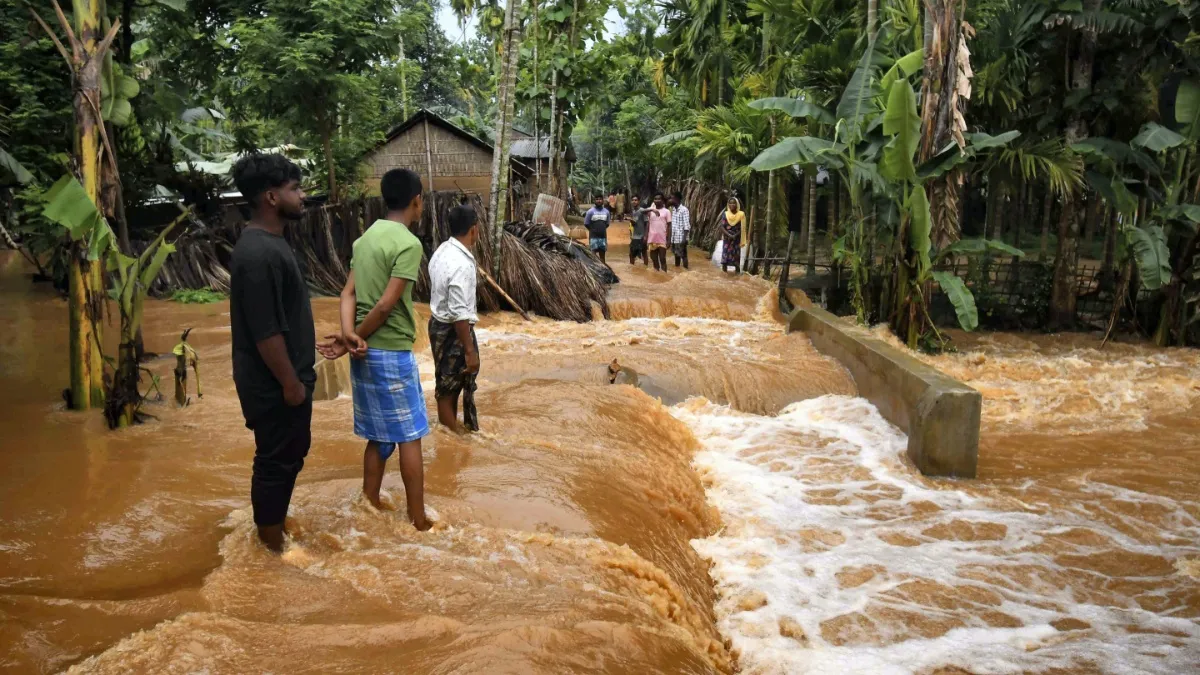
Assam Floods in Raimona National Park: Villages Devastated by Rising Waters
The relentless Assam Floods in Raimona National Park have once again brought misery to the people of Gossaigaon, as swollen rivers spill over their banks, submerging entire villages in the vicinity of this ecologically rich sanctuary. The disaster, which has unfolded over the past week, has displaced hundreds, destroyed crops, and threatened the delicate balance of the park’s wildlife ecosystem.
A Assam Floods Deluge That Shows No Mercy
Heavy monsoon rains, intensified by upstream river swells, have led to unprecedented flooding in parts of Kokrajhar district, particularly near the fringes of Raimona National Park. The park, a relatively new addition to India’s roster of protected areas, has become the unintended stage for one of the worst natural calamities the region has faced in years.
For villagers in the Gossaigaon area, the floods have washed away not just physical possessions but also the stability of daily life. Bamboo huts stand partially submerged, fields of ripening paddy lie ruined under murky waters, and makeshift rafts ferry people and essential supplies between patches of high ground.
Impact on Human Lives in Assam Floods
According to local relief volunteers, more than 1,500 residents from low-lying villages have been forced to evacuate. Government schools and community halls are now doubling as temporary shelters, but resources are scarce.
“We have never seen the water rise this fast,” says Ananda Basumatary, a farmer from a nearby hamlet. “Within a few hours, our entire village was under waist-deep water. We had to carry our children and elderly on our shoulders to reach safety.”
Basic needs such as clean drinking water, food, and medicines are in short supply. NGOs have begun distributing ration kits, but logistical challenges remain due to submerged roads and damaged bridges.
Wildlife in Peril
The Assam Floods in Raimona National Park are not just a human tragedy; they also threaten the park’s rich biodiversity. Raimona, declared a national park in 2021, is home to endangered species such as the golden langur, wild water buffalo, and various hornbill species.
Floodwaters have reportedly forced many animals to move to higher ground, often crossing into human settlements. Forest officials have observed an unusual increase in human-wildlife interactions over the past few days.
“Wild buffaloes and deer are straying close to villages in search of dry land and food,” explains park ranger Rupam Narzary. “We are working to ensure both animals and people remain safe, but the situation is difficult.”
Economic Fallout in Assam Floods
The floods have devastated agricultural output in the region. Farmers, already reeling from previous years of erratic rainfall, now face total crop loss for the season. Paddy fields, vegetable patches, and mustard crops lie flattened under layers of silt and debris.
Small-scale traders and daily wage laborers are also feeling the pinch. With markets closed and transport disrupted, many families are relying solely on relief aid.
Environmental Concerns
Experts warn that the floods could cause long-term ecological damage to Raimona National Park. The inundation may alter soil composition, destroy nesting grounds, and wash away vital vegetation. Contaminated floodwater also poses a risk of spreading disease among wildlife.
Climate scientists attribute the intensity of this year’s flooding to a combination of factors: heavy monsoon rains, deforestation in catchment areas, and inadequate flood control infrastructure.
Relief and Rescue Operations
The district administration, in collaboration with the State Disaster Response Force (SDRF), has launched extensive rescue operations. Inflatable boats are ferrying stranded villagers to safety, while medical teams conduct health check-ups in relief camps.
Chief Minister Himanta Biswa Sarma has assured that immediate relief funds will be released and long-term rehabilitation plans will be put in place. However, many residents remain skeptical, citing delays in previous years’ aid distribution.
Voices from the Ground
In one relief camp, 65-year-old villager Bina Boro sits huddled with her grandchildren. Her voice trembles as she recalls how her family had to abandon their home in the middle of the night. “We could only take what we could carry. The rest… the water took it all,” she says quietly.
Volunteers from youth organizations are working tirelessly, setting up community kitchens and distributing essentials. “The spirit of solidarity here is strong,” says volunteer Pranab Narzary. “But the need is overwhelming.”
A History of Floods in Assam
Flooding is a recurring nightmare for Assam, with the Brahmaputra River and its tributaries swelling each monsoon. Districts like Kokrajhar often bear the brunt due to their low elevation and proximity to major waterways.
However, locals point out that the situation near Raimona National Park has worsened in recent years, possibly due to changes in rainfall patterns and inadequate embankment maintenance.
What Lies Ahead
While the immediate focus remains on rescue and relief, the broader question is how to prevent such devastation in the future. Experts are calling for:
- Improved flood forecasting systems to give villagers more time to evacuate.
- Strengthening embankments along vulnerable stretches of river.
- Restoring wetlands to act as natural buffers against floodwaters.
- Sustainable forestry practices to reduce soil erosion in catchment areas.
READ MORE: Guwahati Airport’s new terminal wins International Architectural Award 2025