

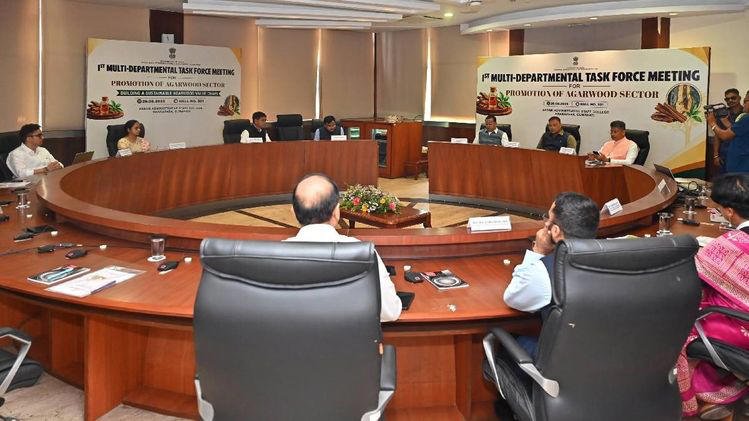
The Assam government has constituted a dedicated task force to monitor the agarwood trade and promote the development of a more organised and regulated sector in the state. The move is aimed at addressing challenges related to illegal activities, improving coordination among stakeholders and strengthening the economic potential of agarwood cultivation and trade.
Agarwood, locally known as sanchi or agar, is a valuable forest product used in the production of perfumes, incense, traditional medicines and other high-value products. Assam has long been associated with agarwood cultivation and possesses significant potential to develop a structured industry around the resource.
The formation of the task force reflects the government’s effort to bring greater oversight to the sector while supporting cultivators, traders and entrepreneurs engaged in the agarwood value chain.
Assam Government Constitutes Agarwood Task Force
The newly formed task force will focus on monitoring activities related to the cultivation, transportation, processing and trade of agarwood.
The initiative is expected to improve coordination between government departments and agencies responsible for regulating the sector. By creating a dedicated mechanism, the government aims to address issues that have affected the growth of the industry and ensure that legal businesses can operate more smoothly.
The task force is also expected to examine challenges faced by agarwood growers and traders and recommend measures to streamline procedures connected with the movement and sale of agarwood products.
The government’s broader objective is to promote a regulated and organised industry capable of contributing to rural livelihoods and economic development while ensuring compliance with relevant laws and regulations.
Focus on Promoting an Organised Agarwood Sector
A major objective behind the formation of the task force is to encourage the transition of the agarwood sector towards a more organised structure.
Despite Assam’s significant potential in agarwood cultivation, the sector has faced challenges linked to fragmented supply chains, regulatory requirements and concerns over illegal trade.
A more organised system could help legitimate cultivators and businesses gain greater access to markets and improve transparency in the movement of agarwood and related products.
The task force is expected to explore ways to strengthen documentation, monitoring and coordination so that legal trade can expand while irregular activities are effectively identified and addressed.
An organised sector could also encourage greater investment in processing, value addition and the development of finished agarwood products within Assam.
Monitoring Trade and Addressing Illegal Activities
The high value of agarwood has made it vulnerable to illegal harvesting and unauthorised trade.
Effective monitoring is therefore expected to be an important responsibility of the new task force. Greater oversight could help authorities distinguish between legally cultivated agarwood and products obtained or transported in violation of applicable regulations.
The government is likely to focus on strengthening systems that allow legitimate growers and traders to conduct business while ensuring that illegal activities are identified.
Better coordination between forest authorities, law enforcement agencies and other concerned departments could play an important role in improving the monitoring process.
The formation of a dedicated task force may also help create a clearer framework for responding to complaints, identifying regulatory gaps and recommending policy improvements.
Agarwood Holds Major Economic Potential for Assam
Agarwood is among the world’s most valuable natural raw materials and is used to produce a variety of high-value products.
The aromatic resin produced in infected or treated Aquilaria trees is particularly valued in the international market. It is used in perfumes, essential oils, incense and traditional practices.
Assam’s climate and agricultural conditions support agarwood cultivation, creating opportunities for farmers and entrepreneurs.
The development of an organised sector could help increase the economic value generated within the state by encouraging local processing rather than limiting activities to the sale of raw materials.
Value addition can create additional employment opportunities and support the growth of small and medium enterprises involved in distillation, fragrance production and other related activities.
Support for Farmers and Cultivators
The formation of the task force could also benefit farmers and cultivators who have invested in agarwood plantations.
Cultivators often require clarity regarding regulations governing the harvesting, transportation and sale of agarwood. Complex procedures can discourage legal trade and create difficulties for small growers.
A coordinated approach could help simplify processes, improve awareness and create clearer channels for growers to access markets.
By addressing regulatory and logistical challenges, the government hopes to encourage more farmers to participate in the legal agarwood economy.
A stronger organised sector could also improve opportunities for farmers to connect directly with processors and buyers, reducing dependence on informal networks.
Need for Sustainable and Regulated Growth
While promoting the economic potential of agarwood, the government will also need to ensure that growth takes place in a sustainable and legally compliant manner.
Agarwood has historically faced concerns related to the exploitation of wild resources. Promoting cultivation and maintaining proper documentation can help reduce pressure on naturally occurring trees while supporting legal commercial production.
The task force is expected to play an important role in ensuring that the expansion of the sector remains consistent with environmental and regulatory requirements.
A balanced approach could help Assam develop a commercially successful industry while protecting forest resources and promoting responsible cultivation practices.
Coordination Between Stakeholders
The agarwood industry involves a wide range of stakeholders, including farmers, plantation owners, traders, processors, exporters and government agencies.
One of the challenges in developing an organised sector is ensuring effective coordination among these different groups.
The task force could provide a platform for identifying common concerns and recommending measures that improve communication between the government and industry participants.
Stakeholder consultations may help authorities understand practical problems faced by cultivators and businesses and develop solutions suited to the realities of the sector.
Greater coordination could also support the creation of a more transparent supply chain, improving confidence among buyers and encouraging investment in the industry.
Boosting Value Addition and Market Opportunities
Assam’s agarwood sector has the potential to move beyond cultivation and raw material trade towards greater processing and value addition.
The production of agarwood oil, perfumes, incense and other finished products can generate higher economic returns and create additional employment opportunities.
A more organised industry could attract investment in processing facilities and specialised businesses.
It may also help Assam establish stronger connections with national and international markets for legal and certified agarwood products.
The task force’s efforts to improve regulation and transparency could therefore contribute to making the sector more attractive to investors and established businesses.
A Step Towards a Stronger Agarwood Industry
The formation of the task force marks an important step in Assam’s efforts to harness the economic potential of agarwood while addressing concerns related to monitoring and regulation.
By focusing on legal trade, better coordination, sustainable cultivation and value addition, the government is seeking to create a more organised framework for the industry.
The success of the initiative will depend on how effectively the task force works with farmers, traders, forest authorities and other stakeholders.
If implemented effectively, the new mechanism could help remove barriers faced by legitimate businesses while strengthening action against illegal activities.
With its strong potential for cultivation, processing and export-oriented value addition, the agarwood sector could become an increasingly important contributor to Assam’s rural and forest-based economy.
The government’s decision to establish a dedicated task force signals a move towards closer monitoring and structured development, with the aim of ensuring that Assam’s agarwood trade grows as a transparent, sustainable and organised sector.