

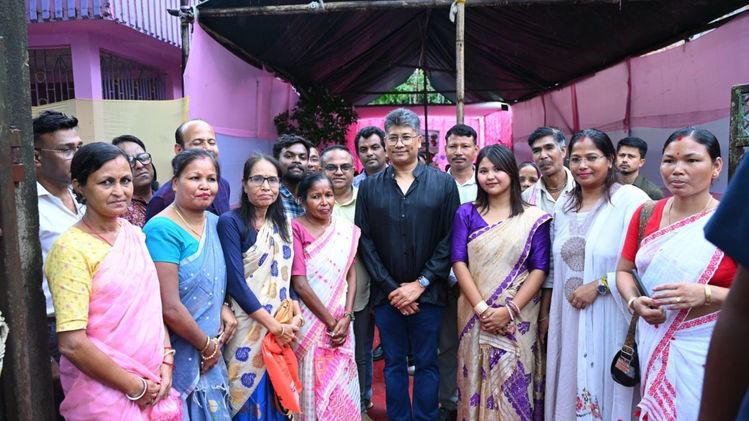
Assam Minister for Agriculture and Irrigation Pijush Hazarika visited the Junbeel Farmer Producer Company (FPC), where he explored new agricultural and food-based ventures being undertaken by the organisation and interacted with its members.
During the visit, Hazarika distributed finger millet seeds among members of the Farmer Producer Company and visited its women-run hatchery, one of the latest initiatives taken up by the group. The Junbeel FPC currently brings together around 520 members engaged in agriculture, entrepreneurship and value-added food enterprises.
Minister Interacts With Junbeel FPC Members
During his interaction with the members, Hazarika learned about their experiences in developing enterprises and expanding opportunities through agriculture and food-based activities.
The visit highlighted the growing role of Farmer Producer Companies in encouraging farmers and rural communities to move beyond conventional agricultural practices and explore value addition, processing and entrepreneurship.
Members of the Junbeel FPC are involved in producing and promoting a range of traditional and value-added products, including Komal Saul, pithas and cakes. These activities are helping connect agricultural production with food processing and local entrepreneurship.
Finger Millet Seeds Distributed Among Members
A key part of the minister’s visit was the distribution of finger millet seeds among the members of the Junbeel FPC.
The initiative is expected to encourage the cultivation of millet and support crop diversification among farmers associated with the producer company. Millets have increasingly gained attention as climate-resilient crops with nutritional value and potential for value-added processing.
The distribution of seeds also reflected the broader focus on creating new agricultural opportunities and helping farmers explore crops that can contribute to improved incomes and diversified farming systems.
Women-Run Hatchery Emerges as New Venture
Hazarika also visited the women-run hatchery established as part of the Junbeel FPC’s expanding range of enterprises.
The hatchery represents an effort to create new livelihood opportunities for women through agriculture and allied sectors. Women-led entrepreneurship has become an important component of rural economic development, particularly when communities are able to establish enterprises linked to local resources and markets.
The minister appreciated the efforts of the group in promoting entrepreneurship among women and developing ventures that can generate sustainable economic opportunities at the grassroots level.
Focus on Value Addition in Agriculture
One of the major features of Junbeel FPC’s activities is its focus on converting agricultural produce into value-added products.
Instead of limiting income opportunities to the sale of raw agricultural commodities, value addition can enable farmers and producer groups to develop processed and marketable products. The production of traditional food items such as Komal Saul, pithas and cakes reflects the potential of combining local agricultural resources with food processing and entrepreneurship.
Such initiatives can also help preserve traditional food practices while creating new commercial opportunities for rural producers.
Hazarika’s visit underlined the importance of encouraging farmers and rural entrepreneurs to explore such ventures as part of Assam’s wider agricultural and rural development efforts.
Millet Processing Unit Planned Under AIF
The Junbeel Farmer Producer Company is also planning to establish a millet processing unit under the Agriculture Infrastructure Fund (AIF).
The proposed facility could support value addition by enabling the processing of millet and the development of products with greater market potential. Processing infrastructure is considered important for helping producer groups move up the agricultural value chain and reduce their dependence on the sale of unprocessed produce.
The proposed millet processing unit could also create additional opportunities for members involved in cultivation, processing and marketing.
The plan reflects the growing interest in building agricultural infrastructure that supports local enterprises and strengthens the link between farmers and markets.
Push for Women-Led Agricultural Entrepreneurship
Hazarika appreciated the Junbeel FPC’s efforts to strengthen women-led entrepreneurship and promote innovative agricultural enterprises.
The participation of women in ventures such as the hatchery and food-based enterprises demonstrates the potential of collective organisations in creating opportunities beyond traditional farming.
Farmer Producer Companies can provide members with a platform to collaborate on production, processing and business development. By bringing together farmers and entrepreneurs, such organisations can help improve access to resources, infrastructure and market opportunities.
The Junbeel FPC’s initiatives also demonstrate how agriculture can be linked with allied activities and small-scale enterprises to create diversified sources of livelihood.
Strengthening Rural Enterprises Through Agriculture
The visit by the Assam Agriculture and Irrigation Minister highlighted the potential of agricultural entrepreneurship in strengthening rural economies.
With 520 members associated with the Junbeel FPC, the organisation has emerged as a platform for exploring collective enterprises and new agricultural opportunities. From millet cultivation and food processing to women-led hatchery operations, the group’s initiatives reflect an effort to diversify rural livelihoods.
As Assam continues to encourage value addition and entrepreneurship in agriculture, initiatives such as those undertaken by the Junbeel FPC could play an important role in connecting farmers with emerging opportunities in processing and agri-business.
Hazarika’s visit and interaction with the members highlighted the government’s focus on supporting innovative agricultural ventures and encouraging farmers to explore sustainable and income-generating opportunities beyond conventional farming.