

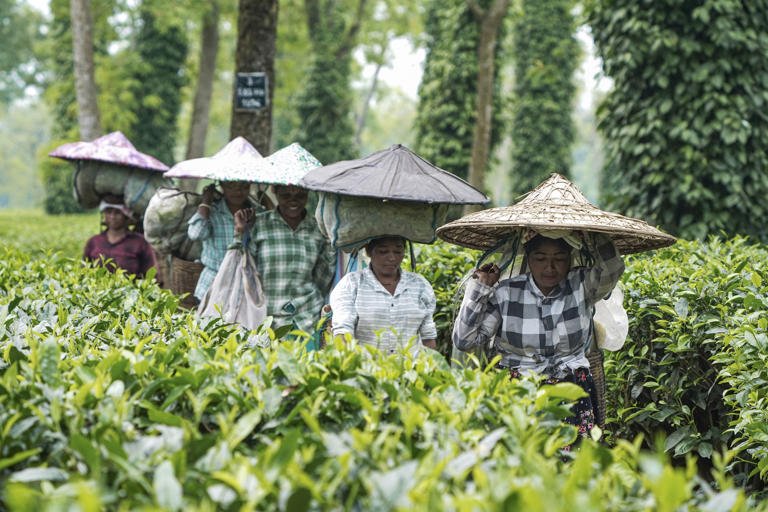
In a major initiative aimed at strengthening Assam’s tea sector, small tea growers across the state will now be able to access government welfare schemes and agricultural benefits through the issuance of Farmer IDs. The move is expected to integrate thousands of tea cultivators into the formal agricultural support system, enabling them to receive financial assistance, subsidies, insurance coverage, and other government-backed services more efficiently.
The initiative reflects the Assam government’s commitment to recognising small tea growers as an integral part of the state’s agricultural economy. By bringing them under the Farmer ID framework, the administration seeks to improve transparency, streamline benefit delivery, and ensure that eligible cultivators receive timely assistance.
Officials believe that the programme will significantly enhance the livelihoods of small tea growers while promoting sustainable growth in Assam’s globally renowned tea industry.
Recognition for Small Tea Growers
Small tea growers have emerged as one of the most important contributors to Assam’s tea production over the past several decades. Thousands of farming families cultivate tea across different districts, supplying green leaves to bought-leaf factories and contributing substantially to the state’s tea output.
Despite their growing importance, many small tea growers have traditionally faced challenges in accessing government welfare programmes designed primarily for conventional agricultural farmers.
The introduction of Farmer IDs aims to bridge this gap by formally recognising tea growers within the broader agricultural support system, enabling them to benefit from various government initiatives available to registered farmers.
Officials described the decision as an important milestone for Assam’s tea-growing community.
Improving Access to Government Schemes
With the introduction of Farmer IDs, eligible small tea growers are expected to gain easier access to a wide range of government programmes. These may include agricultural subsidies, financial assistance, crop-related support, insurance schemes, training programmes, credit facilities, and technology-driven agricultural services.
The digital identification system will help simplify beneficiary verification while reducing administrative delays in delivering welfare benefits.
Officials stated that creating an accurate database of tea growers will improve policy implementation and enable more targeted support based on the specific needs of the sector.
The initiative is also expected to reduce paperwork and improve transparency in benefit distribution.
Boost for Assam’s Tea Economy
Tea remains one of Assam’s most significant agricultural commodities and a major contributor to the state’s economy. Small tea growers account for a substantial share of green leaf production and have become increasingly important in sustaining overall tea output.
The government believes that strengthening the financial security and productivity of these growers will contribute directly to the long-term growth of the tea industry.
By improving access to institutional support, the Farmer ID initiative is expected to encourage greater investment in quality cultivation, improved farming practices, and sustainable production methods.
Officials noted that stronger support for small growers ultimately benefits the entire tea value chain.
Promoting Digital Agriculture
The introduction of Farmer IDs also aligns with broader efforts to modernise agriculture through digital governance. Digital identification systems enable governments to maintain accurate farmer databases, improve service delivery, and reduce duplication in welfare schemes.
Officials explained that digital platforms facilitate quicker verification, direct benefit transfers, and improved monitoring of government programmes.
The Farmer ID system will help integrate tea growers into modern agricultural administration while supporting data-driven policymaking for the sector.
The initiative reflects the growing role of technology in transforming agricultural governance across the country.
Supporting Sustainable Tea Cultivation
Government officials have emphasised that sustainable tea cultivation remains a priority for Assam’s agricultural development strategy. The availability of Farmer IDs is expected to improve growers’ access to technical guidance, scientific cultivation practices, soil health management, climate-resilient farming techniques, and quality improvement programmes.
Training initiatives conducted through agricultural and tea development agencies will further help cultivators adopt modern farming methods while improving productivity and environmental sustainability.
Officials believe that strengthening extension services will contribute to better yields, improved leaf quality, and enhanced income for tea-growing families.
The initiative supports both economic development and environmental responsibility.
Financial Inclusion for Tea Growers
One of the major objectives of the Farmer ID programme is to improve financial inclusion among small tea growers. Registered farmers may benefit from easier access to institutional credit, agricultural loans, crop insurance, and other financial services available under various government schemes.
Officials noted that financial inclusion enables cultivators to invest in better agricultural inputs, irrigation, mechanisation, and farm improvements while reducing dependence on informal sources of credit.
The initiative is expected to strengthen the financial resilience of tea-growing households and encourage long-term investment in the sector.
Improved financial access also contributes to greater economic stability in rural communities.
Strengthening Rural Livelihoods
The tea sector provides employment and livelihood opportunities to a large number of families across Assam. By extending government benefits to small tea growers, the administration aims to improve rural incomes and promote inclusive agricultural development.
Officials stated that better institutional support for growers will have positive multiplier effects on rural economies through increased agricultural investment, higher productivity, and improved purchasing power.
The Farmer ID initiative complements broader government efforts to strengthen agriculture, rural infrastructure, and farmer welfare across the state.
Authorities remain optimistic that the programme will contribute to sustained rural economic growth.
Government Reaffirms Commitment to Tea Sector
The Assam government has reiterated its commitment to supporting the tea industry through policies that benefit both plantation workers and small tea growers. Officials have emphasised that the state’s tea sector requires continuous innovation, institutional support, infrastructure development, and market expansion to remain globally competitive.
By extending Farmer IDs to tea growers, the government seeks to create a more inclusive agricultural ecosystem where all eligible cultivators can access welfare programmes on an equal footing.
The administration will continue working with tea industry stakeholders, grower associations, and agricultural institutions to ensure effective implementation of the initiative.
A Transformative Step for Assam’s Tea Growers
The decision to extend Farmer IDs to Assam’s small tea growers marks a significant milestone in recognising their contribution to the state’s agricultural and economic development. By integrating tea cultivators into the formal agricultural welfare framework, the initiative promises improved access to government benefits, financial services, technical assistance, and modern farming support.
The programme is expected to strengthen the livelihoods of thousands of tea-growing families while enhancing productivity, sustainability, and competitiveness across the sector. As Assam continues to modernise its agricultural governance through digital initiatives, the inclusion of small tea growers reflects a broader commitment to inclusive development, efficient service delivery, and long-term growth of one of the state’s most iconic industries. With stronger institutional support, Assam’s tea growers are well positioned to contribute even more significantly to the state’s rural economy and global reputation as a leading tea producer.