

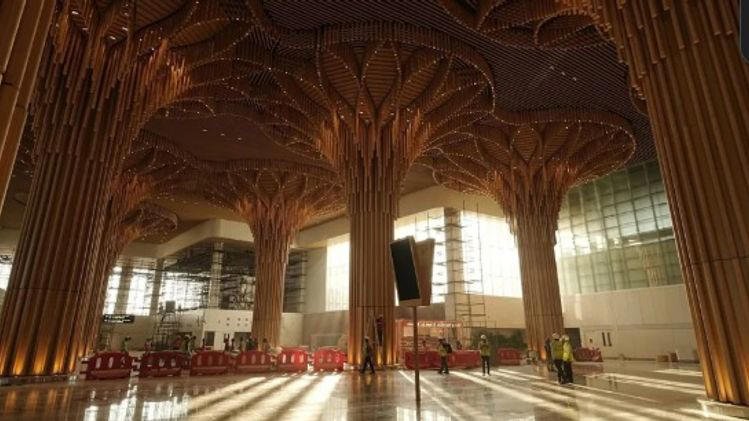
The Assam government is set to develop a 4-kilometre cultural corridor connecting Lokpriya Gopinath Bordoloi International (LGBI) Airport with Dharapur, a project designed to showcase the state’s rich cultural heritage, traditions, history, and artistic legacy. The initiative is expected to transform one of the key entry routes to Guwahati into a vibrant cultural gateway that offers visitors an immediate glimpse into Assam’s unique identity.
The proposed corridor will combine infrastructure development with cultural representation, creating a visually appealing and informative experience for travelers arriving in the state. Officials believe the project will not only beautify the route but also strengthen Assam’s image as a destination known for its cultural diversity and historical significance.
The initiative forms part of broader efforts to promote tourism, preserve heritage, and enhance urban infrastructure. Authorities have emphasized that the corridor will serve as a symbolic introduction to Assam, highlighting the traditions and achievements that have shaped the state’s history over centuries.
The project is expected to become an important landmark in Guwahati and contribute to the city’s growing role as a major gateway to Northeast India.
Creating a Cultural Gateway to Assam
The road connecting LGBI Airport to Dharapur serves as one of the busiest entry points for visitors arriving in Assam. Thousands of travelers, including tourists, business delegates, government officials, and international visitors, use the route every day.
Recognizing its strategic importance, the government has envisioned the corridor as more than a transportation link. Instead, it aims to transform the stretch into a cultural showcase that reflects the spirit and identity of Assam.
Officials noted that first impressions often shape visitors’ perceptions of a destination. By integrating cultural elements into the corridor, the state hopes to create a memorable experience from the moment travelers enter Assam.
The project is expected to feature artistic installations, heritage-inspired designs, landscaping, and visual representations of Assam’s cultural traditions, providing a distinctive character to the route.
Showcasing Assam’s Rich Heritage
Assam possesses a rich cultural heritage that reflects centuries of history, diverse communities, and vibrant traditions. The proposed corridor will highlight various aspects of this heritage through carefully designed displays and public art installations.
Officials stated that the project aims to celebrate traditional art forms, indigenous cultures, historical landmarks, literature, music, dance, and craftsmanship. Elements inspired by Assam’s renowned cultural symbols are expected to form an integral part of the corridor’s design.
The initiative will provide an opportunity to showcase the state’s unique identity to visitors who may be experiencing Assam for the first time. It will also serve as a source of pride for residents by highlighting the cultural achievements and traditions that define the region.
Authorities believe that such public spaces can play an important role in preserving cultural memory and promoting awareness among younger generations.
Boosting Tourism Through Cultural Infrastructure
Tourism promotion is one of the key objectives behind the development of the cultural corridor. Assam has emerged as an increasingly popular destination due to its natural beauty, wildlife, religious sites, tea gardens, and cultural attractions.
Officials noted that tourism today extends beyond traditional sightseeing. Visitors increasingly seek immersive experiences that allow them to understand the culture and heritage of a destination. The cultural corridor aims to address this growing demand by offering an introduction to Assam’s cultural landscape.
The project is expected to complement existing tourism initiatives and encourage visitors to explore more of the state’s historical and cultural attractions. By creating an engaging entry experience, authorities hope to strengthen Assam’s appeal among domestic and international tourists.
Tourism experts believe that investments in cultural infrastructure can contribute significantly to destination branding and visitor engagement.
Enhancing the Visual Appeal of Guwahati
The cultural corridor is also expected to contribute to urban beautification and infrastructure improvement in Guwahati. As the largest city in Northeast India, Guwahati serves as a major commercial, educational, and transportation hub.
Officials emphasized that modern cities increasingly focus on integrating cultural identity into urban planning. Public spaces, roads, and transport corridors can serve not only functional purposes but also act as platforms for cultural expression.
The project will likely include landscaping, decorative lighting, artistic features, and improved public amenities designed to enhance the visual appeal of the route. These improvements are expected to create a more welcoming environment for both residents and visitors.
Authorities believe that aesthetically designed public spaces contribute to civic pride and improve the overall urban experience.
Promoting Indigenous Art and Craft Traditions
One of the notable aspects of the corridor is its potential to highlight indigenous art and craft traditions. Assam is home to numerous communities with rich artistic and cultural practices that have been passed down through generations.
Officials indicated that local artisans and cultural practitioners may play an important role in the project. Incorporating traditional motifs, sculptures, murals, and design elements can provide visibility to indigenous art forms while supporting cultural preservation.
The initiative may also create opportunities for local artists to contribute to public infrastructure projects and showcase their work to a wider audience. Such efforts can help sustain traditional crafts and encourage greater appreciation of Assam’s artistic heritage.
The government views cultural preservation as an essential component of sustainable development and community empowerment.
Reflecting Assam’s Diverse Communities
Assam’s identity is shaped by its remarkable diversity. The state is home to numerous ethnic groups, languages, traditions, and cultural practices that together form a vibrant social fabric.
The cultural corridor aims to reflect this diversity by representing different aspects of Assam’s cultural landscape. Officials stressed that inclusivity will be a key consideration in the project’s design and implementation.
By showcasing the contributions of various communities, the corridor can serve as a symbol of unity and shared heritage. It will provide visitors with insights into the multicultural character of the state while fostering a sense of belonging among residents.
The initiative is expected to highlight how diversity has enriched Assam’s cultural and historical development over the years.
Strengthening Cultural Awareness Among Youth
Beyond tourism and beautification, the corridor is expected to play an educational role. Public cultural spaces often serve as accessible platforms for learning and awareness, particularly for younger generations.
Officials noted that exposure to cultural symbols, historical narratives, and artistic expressions can help foster greater appreciation of heritage. The corridor may encourage students and young people to learn more about Assam’s traditions and cultural achievements.
Educational institutions and cultural organizations may also use the space for awareness activities and heritage-related programmes. Such engagement can strengthen cultural continuity and ensure that traditional knowledge remains relevant in contemporary society.
The project aligns with broader efforts to promote cultural literacy and preserve heritage for future generations.
Supporting Economic and Social Development
Large-scale cultural infrastructure projects often generate economic and social benefits beyond their primary objectives. The development of the corridor is expected to create opportunities for designers, artists, contractors, landscapers, and cultural practitioners.
Officials stated that improved tourism infrastructure can contribute to local economic growth by attracting more visitors and supporting related industries. Increased tourist activity often benefits hospitality businesses, transport services, retail establishments, and local entrepreneurs.
The project may also encourage further investment in public infrastructure and urban development initiatives in the surrounding areas. Authorities believe that cultural projects can serve as catalysts for broader economic and social progress.
By combining heritage promotion with infrastructure development, the corridor seeks to deliver both cultural and economic value.
A Landmark Initiative for Assam’s Cultural Identity
The proposed 4-kilometre cultural corridor from LGBI Airport to Dharapur represents a significant step in Assam’s efforts to celebrate and promote its rich heritage. By transforming a major transportation route into a cultural showcase, the state aims to create a distinctive gateway that reflects its history, traditions, and diversity.
The project highlights the growing recognition that culture can play a central role in urban planning, tourism promotion, and public engagement. Through artistic installations, heritage-inspired design, and community representation, the corridor is expected to become a landmark feature of Guwahati’s landscape.
As Assam continues to strengthen its position as a leading destination in Northeast India, initiatives such as the cultural corridor can help reinforce its identity while contributing to economic growth and social development. For visitors arriving in the state, the journey from the airport to the city may soon become an immersive introduction to the culture, creativity, and heritage that define Assam.