

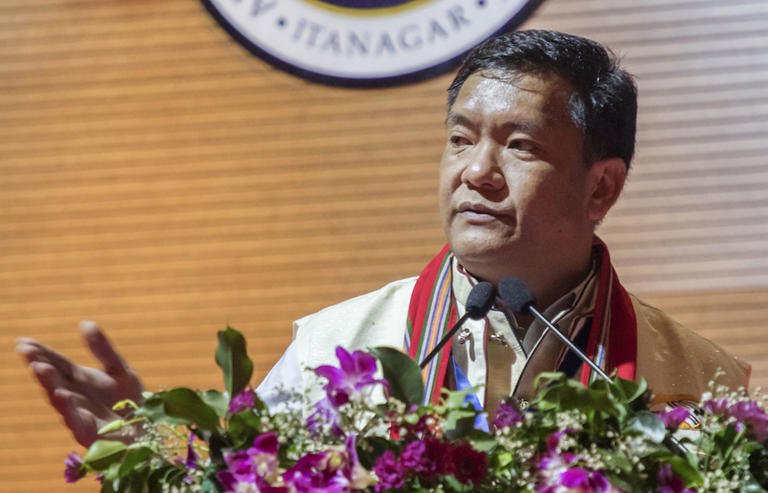
Arunachal Pradesh Chief Minister Pema Khandu has emphasized the immense economic potential of bamboo, stating that the resource can become a major driver of growth, employment generation, and sustainable development in the state. Speaking at a programme focused on rural development and entrepreneurship, Khandu highlighted bamboo’s role as a versatile and renewable resource capable of transforming livelihoods and strengthening the state’s economy.
The Chief Minister noted that Arunachal Pradesh possesses abundant bamboo resources and favorable natural conditions for cultivation and processing. With growing domestic and international demand for bamboo-based products, he said the state has an opportunity to establish itself as a major hub for bamboo production, value addition, and exports.
Khandu stressed that unlocking the full potential of the bamboo sector would require coordinated efforts involving government agencies, entrepreneurs, farmers, cooperatives, and industry stakeholders.
Bamboo Holds Strategic Importance for Arunachal
Arunachal Pradesh is home to extensive bamboo forests and diverse bamboo species, making it one of the most resource-rich states in the country. The Chief Minister pointed out that bamboo has traditionally been an integral part of life in many indigenous communities, serving various purposes ranging from housing and handicrafts to agriculture and daily household needs.
Today, bamboo is increasingly being recognized as a commercially valuable resource with applications in construction, furniture manufacturing, paper production, textiles, packaging, bioenergy, and sustainable consumer products.
Khandu stated that the state’s natural advantage in bamboo cultivation provides a strong foundation for building a vibrant and competitive bamboo-based economy.
Economic Potential of the Bamboo Sector
The Chief Minister emphasized that bamboo offers significant economic opportunities across multiple sectors. Unlike many traditional resources, bamboo grows rapidly and can be harvested sustainably, making it a reliable source of income for farmers and rural communities.
By promoting bamboo cultivation and processing, Arunachal Pradesh can create value chains that generate employment, encourage entrepreneurship, and attract investment. The bamboo sector has the potential to contribute substantially to rural incomes while supporting broader economic diversification.
Officials believe that a well-developed bamboo industry can become a key contributor to the state’s long-term economic growth strategy.
Creating Employment and Livelihood Opportunities
One of the most important advantages of the bamboo sector is its ability to generate employment across different stages of production and processing. From cultivation and harvesting to manufacturing and marketing, bamboo-related activities can create jobs for thousands of people.
Khandu highlighted the potential for rural communities, particularly youth and women, to benefit from bamboo-based enterprises. Small-scale industries producing furniture, handicrafts, decorative items, and construction materials can provide sustainable livelihood opportunities while supporting local economies.
The Chief Minister stressed that promoting bamboo entrepreneurship can help reduce unemployment and encourage self-reliance among rural populations.
Supporting Rural Development
Bamboo cultivation is particularly suited to rural and remote regions where alternative economic opportunities may be limited. The Chief Minister noted that strengthening the bamboo sector aligns with the government’s broader objective of promoting inclusive and sustainable rural development.
Farmers can integrate bamboo cultivation into existing agricultural systems, providing an additional source of income while improving land utilization. Bamboo plantations can also contribute to soil conservation and environmental protection, making them valuable from both economic and ecological perspectives.
Officials view the sector as a practical means of enhancing rural prosperity while preserving natural resources.
Focus on Value Addition and Processing
While Arunachal Pradesh has abundant bamboo resources, Khandu emphasized the importance of moving beyond raw material production and focusing on value addition. Processing bamboo into finished products can significantly increase its market value and generate higher returns for producers.
The Chief Minister encouraged investments in bamboo processing units, manufacturing facilities, and skill development programmes aimed at strengthening the industry’s value chain. Products such as engineered bamboo, furniture, flooring materials, handicrafts, and eco-friendly packaging offer substantial market potential.
Developing local processing capacity is expected to help the state capture a larger share of the economic benefits associated with bamboo production.
Sustainable and Environment-Friendly Resource
Bamboo is widely recognized as one of the most sustainable natural resources available today. It grows quickly, requires relatively low maintenance, and can be harvested without causing long-term environmental damage when managed responsibly.
Khandu highlighted bamboo’s role in promoting environmentally sustainable development. Bamboo plantations help prevent soil erosion, support biodiversity, and contribute to carbon sequestration, making them valuable tools in addressing environmental challenges.
The growing global emphasis on sustainability and eco-friendly products has further increased the attractiveness of bamboo-based industries.
Expanding Market Opportunities
The demand for bamboo products has expanded significantly in recent years due to changing consumer preferences and increasing awareness of sustainable alternatives. Markets for bamboo furniture, construction materials, textiles, paper products, and eco-friendly packaging continue to grow both domestically and internationally.
The Chief Minister noted that Arunachal Pradesh has the potential to benefit from these trends by developing a strong bamboo industry capable of serving diverse markets. Improved transportation infrastructure and connectivity can help facilitate the movement of products and improve access to consumers.
Officials are also exploring opportunities to promote bamboo exports and strengthen market linkages for local producers.
Government Support for Bamboo Development
The state government has been implementing various initiatives aimed at promoting bamboo cultivation, processing, and entrepreneurship. These efforts include awareness programmes, financial assistance, training workshops, and support for bamboo-based enterprises.
Khandu emphasized that continued policy support will be essential for unlocking the sector’s full potential. Collaboration between government agencies, research institutions, industry stakeholders, and local communities is expected to play a crucial role in driving growth.
Authorities are also focusing on skill development and capacity building to ensure that producers and entrepreneurs can effectively participate in the expanding bamboo economy.
Bamboo and the Future of Green Growth
The Chief Minister described bamboo as a key component of Arunachal Pradesh’s vision for sustainable and green economic development. As governments and businesses around the world increasingly prioritize environmentally responsible growth, bamboo offers opportunities that align with both economic and ecological objectives.
The development of a robust bamboo industry can contribute to job creation, rural development, environmental conservation, and industrial diversification simultaneously. This makes bamboo uniquely positioned to support the state’s broader development goals.
Khandu stressed that investing in bamboo today could yield long-term benefits for future generations while strengthening the state’s economic resilience.
A Resource with Transformational Potential
Pema Khandu’s remarks underscore the growing recognition of bamboo as a strategic resource capable of driving economic transformation in Arunachal Pradesh. With abundant natural resources, favorable climatic conditions, and rising market demand, the state possesses many of the ingredients necessary to build a thriving bamboo-based economy.
By focusing on cultivation, value addition, entrepreneurship, and market development, Arunachal Pradesh can create sustainable livelihoods while strengthening its position in emerging green industries. The sector’s ability to combine economic growth with environmental sustainability makes it particularly attractive in today’s development landscape.
As the state continues to explore new opportunities for growth and diversification, bamboo is increasingly being viewed not merely as a traditional resource but as a powerful engine for future prosperity. With the right investments and policy support, it has the potential to become one of the most significant contributors to Arunachal Pradesh’s economic development in the years ahead.