

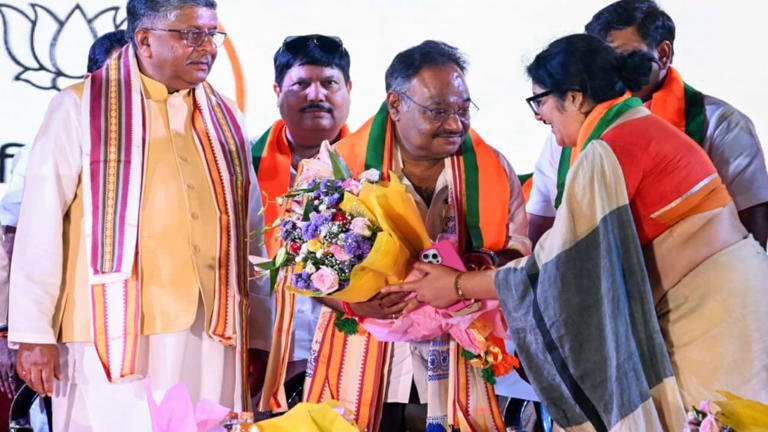
West Bengal BJP president Samik Bhattacharya has called for stronger action against illegal infiltration and urged authorities to adopt a stricter approach toward immigration enforcement, making sharp political remarks during a public interaction on the issue.
Addressing the matter, Bhattacharya argued that the government should focus on identification and legal action instead of extending benefits to individuals staying in the country illegally. His remarks, including the statement “don’t feed free biryani,” quickly became a political talking point and triggered reactions across the state’s political landscape.
The comments come amid continuing political debate in West Bengal over border management, immigration policy, and administrative response to alleged illegal entry.
Samik Bhattacharya Calls for Stronger Action Against Illegal Infiltration
Speaking on the issue, Samik Bhattacharya said that immigration enforcement should remain a priority and called for stronger administrative measures to identify and act against illegal infiltration.
According to his remarks, authorities should strengthen verification mechanisms and ensure that legal procedures move forward efficiently. He argued that delayed action increases pressure on administrative systems and creates challenges for governance and border management.
Bhattacharya also stated that political approaches should focus on enforcement and compliance with legal frameworks rather than welfare-based responses in cases involving individuals found to be staying illegally.
His comments added to the broader political discussion surrounding immigration and border-related administration in the state.
Statement Sparks Political Discussion in West Bengal
The BJP leader’s remarks generated immediate political attention because of the language used and the larger issue being addressed.
Supporters viewed the comments as a call for stricter implementation and stronger border management, while political opponents criticised the tone and approach of the statement.
Political observers noted that immigration remains one of the recurring issues in West Bengal’s political discourse because of the state’s geographical position and continued debate over border administration.
The latest comments have therefore added another layer to ongoing discussions regarding governance priorities and enforcement mechanisms.
The issue is expected to remain politically relevant in the coming months.
Border Management Continues to Remain Political Focus
West Bengal has frequently witnessed political debate around border security and immigration-related administration.
Political leaders across parties have continued to raise concerns regarding identification processes, administrative preparedness, and institutional coordination.
According to observers, discussions around infiltration often expand into wider conversations involving governance, resource allocation, and implementation of existing laws.
Bhattacharya’s remarks once again brought attention to these issues and reinforced the BJP’s stated position on stronger enforcement measures.
Authorities continue to emphasise that immigration-related action remains subject to legal and administrative procedures.
The issue therefore remains both political and procedural in nature.
BJP Emphasises Verification and Enforcement Measures
During his remarks, Bhattacharya stressed the importance of verification and legal action as central components of immigration management.
According to the BJP’s position, administrative systems should focus on identification and follow due process wherever action becomes necessary.
Political observers noted that enforcement-based messaging often becomes a prominent issue during periods of heightened political activity.
The discussion also reflected broader debates regarding how states manage immigration-related concerns while balancing legal obligations and administrative responsibilities.
Bhattacharya maintained that stronger institutional coordination remains necessary for effective implementation.
His comments aligned with the party’s continued emphasis on stricter border administration.
Immigration Debate Gains Political Attention
The issue of illegal infiltration continues to attract political attention in West Bengal and frequently appears in public debate.
Observers stated that border states often experience stronger political engagement on matters linked to immigration, documentation, and administrative preparedness.
Political leaders continue to present differing approaches regarding enforcement, welfare, and governance responses.
The latest remarks have renewed discussion on how immigration issues should be addressed and what role state institutions should play.
The conversation has also extended into questions of policy implementation and long-term administrative planning.
As political responses continue, the issue remains part of wider governance discussions.
Enforcement and Governance Remain Central Themes
Political observers stated that discussions surrounding immigration often become linked to broader themes of governance and public administration.
According to analysts, parties frequently frame such issues through different policy priorities and administrative approaches.
Bhattacharya’s remarks reflected the BJP’s position on stronger enforcement and stricter implementation.
At the same time, immigration-related action continues to remain subject to established legal procedures and administrative review.
Observers believe the issue will continue to shape political narratives in the state.
Remarks Add Momentum to Ongoing Political Debate
Samik Bhattacharya’s call for stronger action against infiltrators and his remarks regarding welfare support have added fresh momentum to political discussions in West Bengal.
The comments have brought renewed attention to immigration policy, border management, and administrative enforcement.
Political observers believe the issue will continue to remain part of public and political discourse as parties debate approaches to governance and implementation.
As discussions continue, attention remains focused on political responses, administrative measures, and how immigration-related concerns shape future debate in West Bengal.