

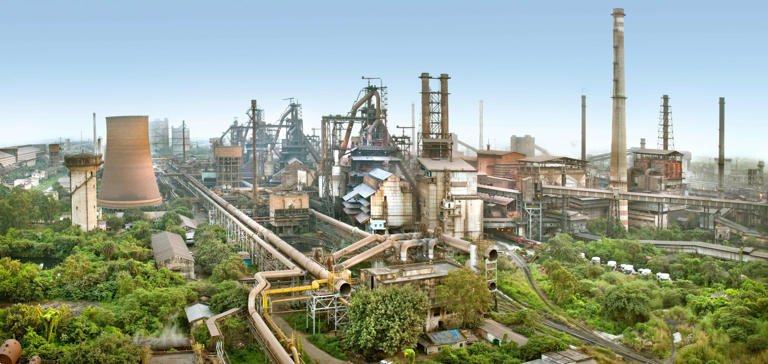
West Bengal is expected to receive nearly Rs 4,000 crore in financial assistance from the Asian Development Bank (ADB) and the Korea Eximbank (KEXIM) to strengthen industrial corridor infrastructure and accelerate economic development across the state. The proposed funding is aimed at improving industrial connectivity, logistics, transportation, and essential infrastructure, reinforcing the state’s efforts to attract investment and boost manufacturing.
Officials believe that the planned financial support will significantly enhance West Bengal’s industrial ecosystem by creating better connectivity between industrial clusters, ports, highways, rail networks, and urban centres. The initiative forms part of the state’s broader strategy to improve ease of doing business, generate employment, and position itself as a preferred investment destination in eastern India.
The proposed funding is also expected to contribute to long-term economic growth by facilitating sustainable industrial expansion while supporting modern infrastructure development.
Major Investment in Industrial Infrastructure
The proposed Rs 4,000 crore funding represents a significant investment in West Bengal’s industrial infrastructure. The loans are expected to finance various projects focused on improving road connectivity, logistics facilities, industrial parks, drainage systems, power supply, and supporting public infrastructure within designated industrial corridors.
Officials believe that modern infrastructure remains one of the most important requirements for attracting both domestic and foreign investment.
Improved industrial corridors can reduce transportation costs, enhance supply chain efficiency, and facilitate faster movement of raw materials and finished products, thereby increasing the competitiveness of industries operating within the state.
The investment is expected to strengthen West Bengal’s role as an emerging manufacturing and logistics hub.
Strengthening Industrial Corridors
Industrial corridors serve as integrated development zones designed to connect manufacturing centres with transportation infrastructure and markets. By improving connectivity between production facilities, ports, airports, and highways, industrial corridors facilitate efficient industrial growth and economic expansion.
The proposed projects in West Bengal aim to create well-planned industrial ecosystems equipped with reliable infrastructure, utilities, and logistics services.
Authorities expect these corridors to attract investments across sectors including manufacturing, engineering, food processing, textiles, electronics, chemicals, logistics, and renewable energy.
The development of industrial corridors is also expected to encourage balanced regional growth by expanding industrial activity beyond major urban centres.
Role of ADB and KEXIM
The Asian Development Bank and the Korea Eximbank have been important partners in financing infrastructure projects across Asia. Their financial assistance often supports projects that improve transportation, urban infrastructure, industrial development, energy systems, and sustainable economic growth.
The proposed loans for West Bengal reflect growing international confidence in the state’s infrastructure development initiatives and long-term industrial potential.
Officials noted that funding from international financial institutions enables governments to undertake large-scale infrastructure projects while adopting global standards in planning, implementation, and project management.
Such partnerships also facilitate the transfer of technical expertise and best practices in infrastructure development.
Boosting Manufacturing and Investment
Improved industrial infrastructure is expected to enhance West Bengal’s attractiveness as a destination for manufacturing investment. Reliable transportation networks, better logistics, uninterrupted utilities, and efficient industrial zones play a crucial role in influencing business decisions.
Officials believe that strengthened infrastructure will encourage both existing industries and new investors to expand operations within the state.
Industrial corridors are expected to support sectors with significant employment potential while promoting innovation, value addition, and export-oriented manufacturing.
The improved business environment could also strengthen the state’s competitiveness in attracting private sector investments from both Indian and international companies.
Employment Generation and Economic Growth
One of the major expected benefits of industrial corridor development is the creation of employment opportunities. Infrastructure projects generate jobs during both the construction and operational phases while supporting numerous allied industries.
As new industrial units become operational, additional employment opportunities are expected in manufacturing, logistics, warehousing, transportation, maintenance, retail, hospitality, and various service sectors.
The growth of industrial activity can also stimulate entrepreneurship among small and medium enterprises supplying goods and services to larger industries.
Officials anticipate that the multiplier effect of infrastructure investment will contribute significantly to the state’s overall economic development.
Improving Logistics and Connectivity
Efficient logistics infrastructure has become increasingly important in modern industrial development. Delays in transportation, inadequate roads, and limited logistics facilities often increase production costs and reduce industrial competitiveness.
The proposed projects are expected to improve connectivity between industrial estates, highways, ports, railway terminals, and airports, enabling smoother movement of goods across domestic and export markets.
Better logistics infrastructure will also reduce transit times, improve supply chain reliability, and support the growth of export-oriented industries operating in West Bengal.
Enhanced connectivity is expected to benefit businesses while improving overall regional economic integration.
Supporting Sustainable Development
Modern industrial infrastructure increasingly incorporates sustainability principles that balance economic development with environmental responsibility.
Officials indicated that infrastructure projects supported through international financial institutions often emphasize environmentally sustainable construction practices, climate resilience, efficient resource management, and improved urban planning.
Industrial corridor development is expected to integrate green infrastructure wherever feasible while promoting efficient land use, energy conservation, and environmentally responsible industrial operations.
Sustainable planning helps ensure long-term economic growth while minimizing environmental impacts.
Enhancing Ease of Doing Business
The proposed infrastructure investments align with West Bengal’s broader efforts to improve the ease of doing business and create a more investor-friendly environment.
Reliable infrastructure reduces operational challenges for industries while improving efficiency in project implementation and business expansion.
Authorities continue to focus on simplifying administrative procedures, improving industrial services, enhancing digital governance, and strengthening institutional support for investors.
Combined with improved physical infrastructure, these reforms are expected to encourage greater investment across multiple sectors.
Long-Term Vision for Industrial Development
The proposed funding forms part of West Bengal’s long-term vision of transforming the state into a major industrial and logistics hub in eastern India.
Future development plans include expanding industrial clusters, promoting export-oriented industries, strengthening transportation networks, encouraging technological innovation, and supporting small and medium enterprises.
Officials believe that continued investment in infrastructure will play a vital role in maintaining sustainable economic growth while creating opportunities for future generations.
By integrating industrial development with modern infrastructure planning, the state aims to achieve balanced and inclusive economic progress.
Conclusion
The proposed Rs 4,000 crore funding from the Asian Development Bank and Korea Eximbank represents a significant opportunity for West Bengal to strengthen its industrial infrastructure and accelerate economic development. Through improved industrial corridors, enhanced logistics, better connectivity, and modern public infrastructure, the state seeks to create an environment conducive to investment, manufacturing, and employment generation.
If implemented successfully, the projects are expected to improve industrial competitiveness, support regional development, and reinforce West Bengal’s position as a key economic gateway in eastern India. The collaboration with international financial institutions also reflects confidence in the state’s development strategy and its commitment to building sustainable, world-class infrastructure for long-term economic growth.