

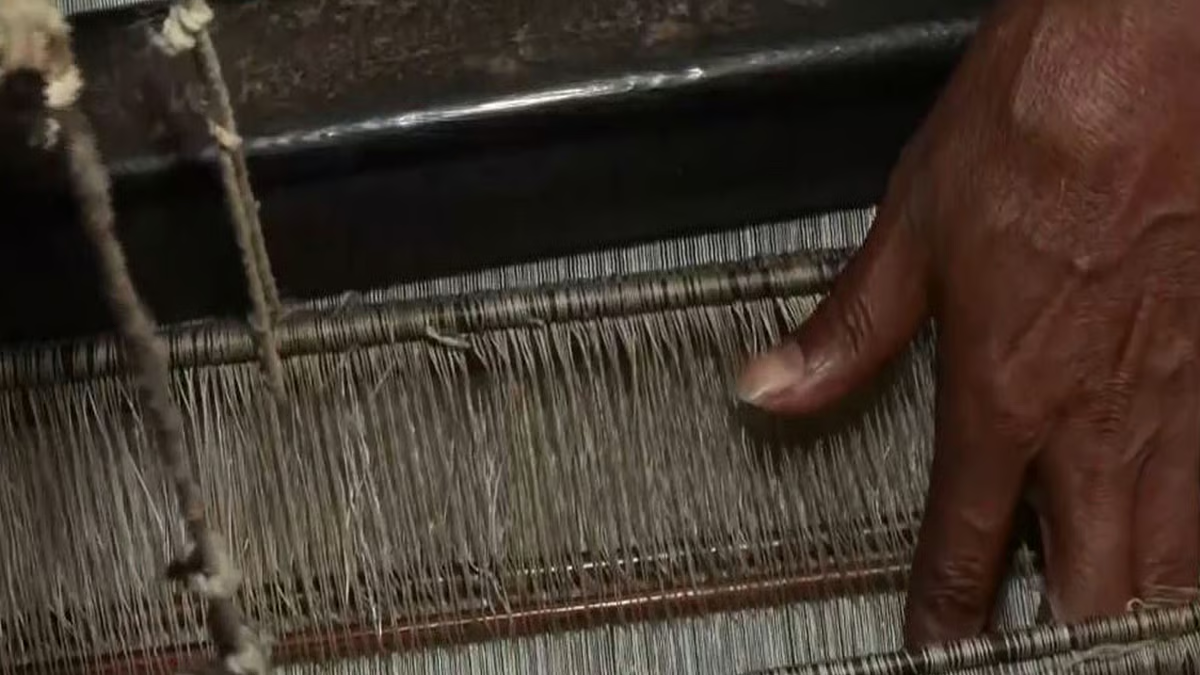
Bengal silk weaver credit scheme initiatives gained momentum after the government announced a new credit support program aimed at strengthening traditional silk weaving communities under the Micro, Small and Medium Enterprises (MSME) framework. Meanwhile, officials from the MSME and textile departments stated that the scheme is designed to improve access to affordable credit, support production capacity, and modernize traditional handloom and silk weaving clusters across West Bengal. The announcement immediately drew attention from artisan groups, cooperative societies, and rural entrepreneurs because silk weaving remains a crucial source of livelihood in several districts of the state. Additionally, administrative agencies reportedly intensified coordination involving financial institutions, beneficiary identification, and cluster-based implementation strategies.
The development emerged amid broader efforts to support traditional industries and promote rural entrepreneurship. Furthermore, economic experts observed that MSME-focused credit programs increasingly play a key role in sustaining heritage-based industries in India.
Siliguri Commercial Property Market Witnesses Sharp Growth
Kolkata Hospitals Expand Rural Healthcare Outreach
Government Launches Dedicated Credit Support for Silk Weavers
State authorities formally introduced the new credit scheme targeting silk weavers engaged in traditional and small-scale production systems. Bengal silk weaver credit scheme discussions therefore rapidly expanded across textile, rural development, and financial inclusion sectors.
Meanwhile, officials explained that eligible artisans may receive easier access to loans and working capital support through simplified banking procedures under MSME guidelines. Additionally, financial institutions reportedly collaborated with government departments to streamline loan disbursement and reduce procedural delays.
Textile and MSME representatives emphasized that traditional silk weaving clusters require sustained financial support to remain competitive in evolving markets. Furthermore, policymakers highlighted that improved credit access may help artisans invest in raw materials, tools, and modernized production techniques.
Earlier, many weaving communities reported challenges involving limited credit access, high-interest informal borrowing, and inconsistent market demand. Consequently, the latest initiative generated optimism among silk producers across rural and semi-urban clusters.
At the same time, authorities continued mapping weaving clusters for targeted implementation of the scheme.
Traditional Silk Weaving Remains a Key Rural Industry
The scheme carries significant importance because silk weaving continues to be a vital cottage industry across West Bengal. Bengal silk weaver credit scheme implementation therefore holds broader economic and cultural relevance.
Meanwhile, industry experts observed that districts involved in silk production support thousands of artisan households dependent on handloom weaving and textile craftsmanship. Additionally, silk products from Bengal maintain strong demand in domestic and export markets due to their traditional designs and quality craftsmanship.
Several textile economists noted that rising production costs and competition from machine-made textiles have placed pressure on traditional weaving communities. Furthermore, fluctuations in raw material prices and limited modernization have impacted productivity levels.
Rural development researchers also emphasized that MSME-based credit systems frequently help strengthen small industries by enabling investment in equipment and working capital. Consequently, financial support initiatives gained importance within heritage industry preservation strategies.
However, artisan associations stressed the need for market linkage support along with credit assistance to ensure long-term sustainability.
Financial Inclusion and Banking Access Strengthened
Authorities highlighted that the new scheme aims to expand financial inclusion among traditional weaving communities. Bengal silk weaver credit scheme therefore became closely linked with broader rural banking and MSME empowerment initiatives.
Meanwhile, banking institutions reportedly simplified loan application processes and introduced outreach programs to assist artisans in documentation and registration. Additionally, digital banking platforms and financial literacy initiatives may improve access to formal credit systems.
Financial policy experts observed that MSME credit expansion plays a crucial role in integrating informal workers into formal economic systems. Furthermore, improved banking access often reduces dependency on informal lenders and strengthens financial stability.
Several development analysts highlighted that digital financial systems increasingly support transparency and efficiency in welfare delivery and credit distribution. Consequently, rural financial inclusion gained renewed policy attention alongside artisan support programs.
At the same time, officials continued conducting awareness campaigns regarding eligibility criteria and application procedures.
Modernization and Skill Development Support Expected
The credit initiative may also support modernization and skill development among silk weaving communities. Bengal silk weaver credit scheme planning therefore extends beyond financial assistance into capacity building and industry upgrading.
Meanwhile, officials indicated that artisans may use credit support for upgrading looms, improving dyeing techniques, and enhancing product quality to meet evolving market demand. Additionally, training programs and design innovation initiatives may strengthen competitiveness in domestic and global markets.
Textile development experts observed that combining financial support with skill development frequently improves productivity and income stability in traditional industries. Furthermore, innovation in design and production methods often enhances market relevance for heritage crafts.
Several industry specialists highlighted that consumer demand for handmade and sustainable textile products continues increasing globally. Consequently, silk weaving clusters may benefit from improved branding and export opportunities.
However, experts emphasized that sustained institutional support will be necessary to ensure long-term industry transformation.
Employment and Rural Economy Expected to Benefit
The scheme is expected to generate positive impacts on employment and rural economic stability. Bengal silk weaver credit scheme outcomes therefore carry significance for broader socio-economic development.
Meanwhile, policymakers stated that strengthening MSME clusters often leads to job creation, income growth, and improved rural livelihoods. Additionally, enhanced production capacity may increase demand for allied sectors such as dyeing, packaging, and textile logistics.
Economic researchers observed that traditional industries frequently serve as backbone employment sources in rural economies, particularly for women and family-based enterprises. Furthermore, improved credit access may encourage entrepreneurship within weaving communities.
Several labor economists highlighted that MSME-driven development models play a key role in balancing regional economic disparities. Consequently, artisan-focused financial programs gained importance within inclusive growth strategies.
At the same time, local stakeholders continued urging market expansion initiatives to ensure stable demand for silk products.
Conclusion
Bengal silk weaver credit scheme initiatives gained strong momentum after the government launched a dedicated MSME credit support program aimed at strengthening traditional silk weaving communities across West Bengal. Meanwhile, officials emphasized that improved access to affordable finance, modernization support, and skill development may help sustain heritage-based industries facing economic challenges. Experts highlighted that the scheme could significantly improve financial inclusion, rural employment, and production capacity within silk weaving clusters. Ultimately, observers believe the initiative may play a key role in preserving traditional craftsmanship while strengthening the state’s rural MSME economy.
FAQs
What is the Bengal silk weaver credit scheme?
It is a government MSME initiative providing credit support to traditional silk weavers.
Who will benefit from the scheme?
Traditional silk weavers and small-scale artisan communities across West Bengal.
How will the scheme help artisans?
It provides easier access to loans for raw materials, tools, and production upgrades.
Why is the scheme important?
It supports a traditional industry facing rising costs and market competition.
Will it support modernization?
Yes, credit may be used for upgrading tools and improving production techniques.
How does it impact rural economy?
It may improve employment, income stability, and MSME sector growth in rural areas.