

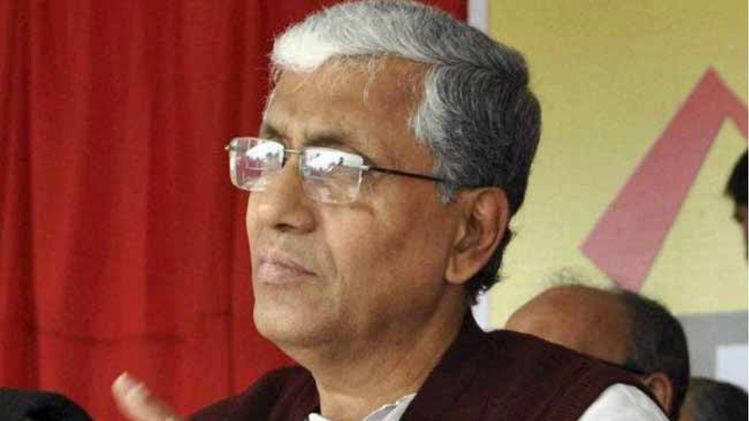
Former Tripura Chief Minister and veteran CPI(M) leader Manik Sarkar has accused the Bharatiya Janata Party (BJP) of using the citizenship issue as a political strategy to remain in power indefinitely. Addressing a public gathering, Sarkar alleged that the ruling party has repeatedly raised citizenship-related matters to influence public opinion while diverting attention from pressing issues such as unemployment, inflation, rural development, and the welfare of ordinary citizens.
The senior Left leader claimed that questions surrounding citizenship have become a recurring feature of political discourse and alleged that they are being used to consolidate electoral support rather than resolve long-standing concerns through transparent and inclusive policymaking. He urged the government to focus on governance, economic development, and public welfare instead of relying on divisive political narratives.
The remarks come amid continuing political debate over citizenship-related issues, which have remained a significant subject of discussion in several Northeastern states.
Sarkar Criticises BJP’s Political Strategy
Speaking during the programme, Manik Sarkar alleged that the BJP has consistently used the citizenship issue as a political instrument to strengthen its electoral position. According to him, repeated emphasis on the issue has shifted public attention away from concerns directly affecting people’s daily lives.
The former Chief Minister argued that democratic governance should prioritise employment generation, education, healthcare, agriculture, and infrastructure development. He maintained that governments should be judged primarily by their performance in improving the socio-economic conditions of citizens rather than by politically charged campaigns.
Sarkar said the Opposition would continue raising issues related to governance and public welfare both inside and outside the legislature.
Employment and Economic Issues Highlighted
A major focus of Sarkar’s address was the employment situation in Tripura. He claimed that many young people continue to face challenges in securing stable employment despite completing their education and professional training.
The CPI(M) leader urged the government to formulate policies that encourage industrial investment, strengthen agriculture, support small businesses, and expand employment opportunities across various sectors. He argued that sustainable economic development requires long-term planning rather than short-term political messaging.
Sarkar also called for greater investment in skill development and entrepreneurship to help create diversified livelihood opportunities for the state’s youth.
Citizenship Debate Remains Politically Significant
Citizenship-related issues have remained an important political subject in several Northeastern states over the past few years. Different political parties have expressed varying views on policies relating to citizenship, migration, and identity, often making the subject a central issue during elections and public campaigns.
Sarkar alleged that the BJP continues to use the issue to maintain political relevance and mobilise electoral support. He argued that sensitive matters involving citizenship should be addressed through constitutional processes, transparent policymaking, and broad public consultation.
The former Chief Minister maintained that lasting solutions require dialogue and legal clarity rather than political polarisation.
Call for Greater Focus on Governance
The veteran Left leader emphasised that governments should concentrate on improving governance and public service delivery. He said issues such as healthcare, education, infrastructure, agricultural development, and employment deserve greater administrative attention.
According to Sarkar, strengthening public institutions and expanding welfare programmes are essential for improving the quality of life of citizens. He urged policymakers to adopt development-oriented approaches that directly benefit ordinary people across both urban and rural areas.
He argued that economic growth and social welfare should remain at the centre of public policy.
CPI(M) Reiterates Opposition Role
Sarkar stated that the CPI(M) would continue performing its role as a responsible Opposition by questioning government policies and highlighting issues affecting the people of Tripura. He observed that democratic systems function effectively when Opposition parties hold governments accountable while offering constructive alternatives.
He said the party remains committed to raising concerns relating to unemployment, inflation, education, healthcare, farmers’ welfare, and social justice through democratic means.
The former Chief Minister also appealed to party workers to maintain close contact with the public and actively engage with local issues affecting communities across the state.
BJP Highlights Development Agenda
The BJP has consistently maintained that its policies are aimed at ensuring inclusive development, improving infrastructure, strengthening border security, expanding welfare schemes, and promoting economic growth. Government leaders have highlighted investments in road connectivity, digital infrastructure, healthcare, education, housing, and employment initiatives as evidence of their development-focused governance.
The ruling party has also defended its approach to citizenship-related matters, stating that its policies are implemented within the framework of the Constitution and existing laws. BJP leaders have maintained that national security, legal processes, and administrative transparency remain central to their governance agenda.
Political differences over these issues continue to shape public debate in Tripura and across the Northeast.
Political Debate Continues in Tripura
Observers note that discussions surrounding citizenship, employment, and development remain among the most prominent political issues in Tripura. While the ruling party emphasises governance, infrastructure, and welfare programmes, Opposition parties continue to question government priorities and implementation of policies.
Political analysts believe these debates reflect broader democratic engagement, where competing visions for development, governance, and public policy are presented before the electorate. Such discussions are expected to remain central to political discourse as parties continue interacting with voters on issues affecting the state’s future.
The exchange of differing viewpoints remains a key feature of democratic politics in the state.
Importance of Democratic Dialogue
Sarkar stressed that democratic institutions are strengthened when diverse political opinions are expressed peacefully and constructively. He encouraged citizens to actively participate in public discussions while evaluating government policies on the basis of governance, transparency, and developmental outcomes.
He also reiterated the importance of safeguarding democratic values through open dialogue, constitutional processes, and respect for differing viewpoints. According to the veteran leader, healthy political debate contributes to better policymaking and greater public accountability.
Observers noted that continued engagement between the government, Opposition, and civil society remains important for addressing the complex socio-economic challenges facing the state.
Looking Ahead
Former Tripura Chief Minister Manik Sarkar’s remarks have once again brought citizenship, governance, and employment into the spotlight of the state’s political discourse. His allegations that the BJP is using the citizenship issue to remain in power reflect the continuing differences between the ruling party and the Opposition over policy priorities and governance.
As Tripura continues pursuing economic development and social progress, political debate over employment, public welfare, citizenship, and governance is expected to remain active. While the government continues to highlight its development initiatives, the Opposition maintains its focus on accountability and socio-economic concerns.
The evolving political discourse underscores the importance of democratic engagement, where competing perspectives on governance and development continue to shape public opinion and influence policy discussions in Tripura.