

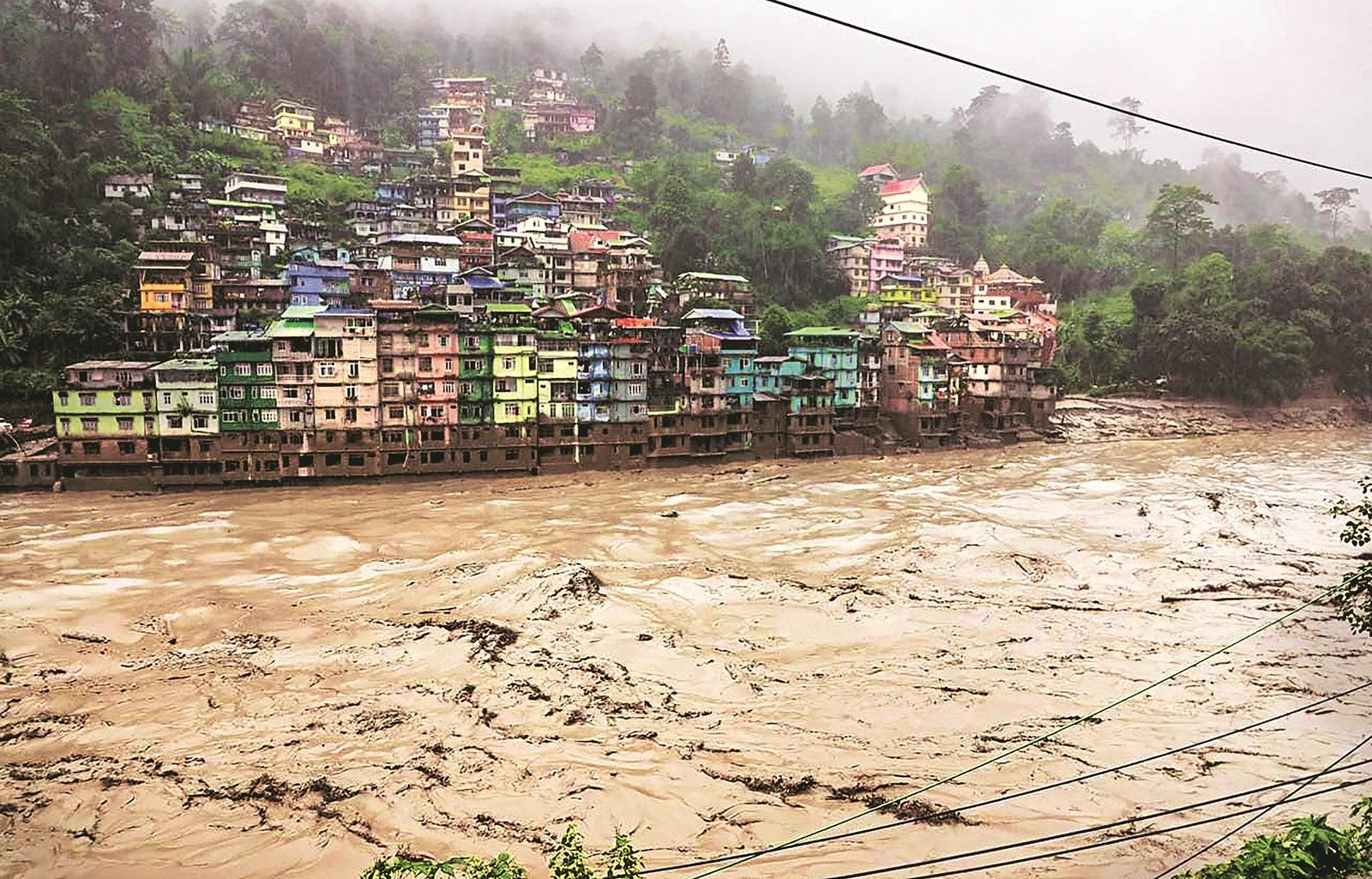
The Brahmaputra River water levels have crossed warning marks at several key gauge stations in Dibrugarh district, raising concerns over the flood situation in Upper Assam. Continuous rainfall across Assam and neighboring regions has contributed to the rise in river levels. Authorities are closely monitoring the situation as water levels continue to increase. Meanwhile, disaster management agencies remain on alert to respond to any emergency developments. Residents in vulnerable areas have also been advised to stay cautious.
Guwahati Traffic Police Introduce New AI-Integrated Signal Systems to Tackle Peak Hour Congestion
Brahmaputra River Water Levels Rise Above Warning Levels in Dibrugarh
The Brahmaputra River water levels have recorded a significant increase at multiple gauge stations in Dibrugarh district. According to flood monitoring authorities, the rising trend has intensified due to persistent rainfall during the ongoing monsoon season. Consequently, officials have begun tracking the river’s behavior more frequently.
Dibrugarh serves as one of the most important monitoring points along the Brahmaputra. The gauge station at Dibrugarh has a warning level of 105.70 meters, while historical records show that the highest flood level reached 106.48 meters in 1998. Therefore, any sustained rise in water levels attracts close attention from authorities.
Meanwhile, several tributaries and associated rivers in Upper Assam have also witnessed increasing water levels. As a result, officials are maintaining constant surveillance to assess the overall flood situation. Furthermore, local administrations are coordinating with disaster response agencies to ensure preparedness.
The Brahmaputra is one of the largest rivers in the world and regularly experiences flooding during the monsoon months. Hence, monitoring stations play a critical role in issuing timely alerts and minimizing risks.
Authorities Intensify Monitoring and Preparedness Measures
Government agencies have strengthened flood-monitoring activities following the rise in Brahmaputra River water levels. Moreover, the Water Resources Department and disaster management authorities are reviewing updates from gauge stations regularly.
Public safety advisories have also been issued in areas vulnerable to flooding. Consequently, residents living near riverbanks have been urged to remain alert and follow instructions issued by local authorities.
Meanwhile, emergency response teams including SDRF and other agencies remain prepared to provide assistance if conditions deteriorate. Furthermore, district administrations have continued to evaluate the situation based on rainfall patterns and river-level reports.
Although the current situation remains under observation, authorities have emphasized the importance of precautionary measures. Therefore, continuous monitoring will remain crucial over the coming days.
Historical Flood Trends Highlight Dibrugarh’s Vulnerability
Dibrugarh has experienced several major floods in the past, particularly during years of intense monsoon rainfall. Consequently, the district remains one of the most flood-prone regions in Assam.
Historical records maintained by the Assam Water Resources Department indicate that the Brahmaputra’s highest flood level at Dibrugarh reached 106.48 meters in September 1998. Therefore, current readings are often compared with previous benchmarks to assess potential risks.
Moreover, heavy rainfall in upstream areas frequently affects water discharge levels in the Brahmaputra. As a result, sudden rises in river levels can lead to inundation in low-lying areas. The river’s vast basin and braided channels further contribute to recurring flood events.
Similarly, previous monsoon seasons have witnessed flood situations in Dibrugarh and other parts of Upper Assam. Consequently, flood preparedness has become an essential aspect of regional disaster management.
Monsoon Conditions Continue to Influence River Behavior
The monsoon season between June and October traditionally brings increased rainfall across northeastern India. Therefore, rivers such as the Brahmaputra experience considerable fluctuations in water levels during this period.
Continuous precipitation in Assam and neighboring states has contributed to the present rise in water levels. Meanwhile, meteorological conditions remain an important factor in determining the extent of flooding in the coming weeks.
Furthermore, experts have noted that the Brahmaputra basin is naturally susceptible to seasonal flooding. Consequently, regular assessments of rainfall and river discharge remain necessary to predict changes effectively.
Nevertheless, timely warnings and coordinated action by authorities can help reduce the impact on affected communities. Hence, monitoring systems and emergency preparedness remain key elements in managing flood-related risks.
Conclusion
The rise in Brahmaputra River water levels at several gauge stations in Dibrugarh has prompted authorities to maintain heightened vigilance. Moreover, continuous rainfall and monsoon conditions continue to influence the river’s behavior.
Historical flood records indicate that Dibrugarh remains highly vulnerable to seasonal flooding. Therefore, regular monitoring and preparedness measures have become increasingly important for the district.
As the Brahmaputra River water levels continue to be closely observed, authorities are expected to issue further updates based on changing weather conditions and gauge station readings. Consequently, precautionary measures remain essential during the monsoon season.
FAQs
1. Why are Brahmaputra River water levels rising in Dibrugarh?
Continuous rainfall across Assam and neighboring regions has contributed to the increase in river levels.
2. What is the warning level of the Brahmaputra at Dibrugarh?
According to official records, the warning level at Dibrugarh is 105.70 meters.
3. What was the highest recorded flood level in Dibrugarh?
The highest recorded level was 106.48 meters in September 1998.
4. Why is Dibrugarh vulnerable to floods?
Its location along the Brahmaputra and the impact of heavy monsoon rainfall make the district highly flood-prone.
5. Which agencies monitor Brahmaputra River water levels?
The Water Resources Department, disaster management authorities, and related agencies monitor the river continuously.