

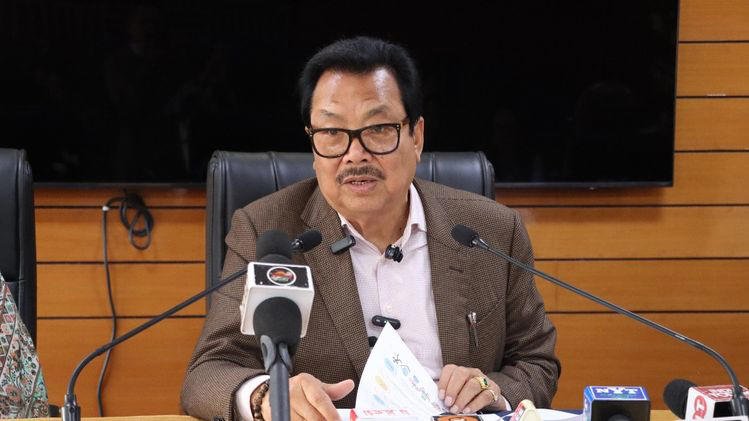
The budget push for border states reflects a clear long-term vision for national security, infrastructure development, and inclusive growth, Arunachal Pradesh Deputy Chief Minister Chowna Mein said while reacting to recent budgetary announcements. He stated that the focus on border regions shows the Centre’s commitment to integrating remote areas into the national development framework.
According to the deputy chief minister, border states like Arunachal Pradesh play a strategic role in India’s security and economic future. Therefore, sustained investment rather than short-term measures is essential. The budget push for border states, he said, addresses this requirement by prioritising connectivity, livelihoods, and basic infrastructure in frontier regions.
Chowna Mein noted that earlier development efforts often overlooked border areas due to difficult terrain and logistical challenges. However, the current policy approach recognises that strong border regions strengthen the entire nation.
Read More: AI Maps Landslide Hotspots Across Meghalaya
Budget push for border states reflects strategic thinking
The budget push for border states, according to the deputy chief minister, reflects strategic thinking that goes beyond annual financial planning. He said the allocation signals a shift toward long-term capacity building in regions that share international boundaries.
Border states require sustained funding for roads, bridges, power supply, and digital connectivity. These investments not only improve civilian life but also support national security preparedness. Chowna Mein said the budget acknowledges this dual role of development and security.
He added that improved infrastructure in border areas ensures faster movement of goods, services, and emergency response. Over time, this strengthens both economic activity and administrative efficiency.
Infrastructure development at the core
Infrastructure forms the backbone of the budget push for border states. The deputy chief minister highlighted allocations for road networks, border connectivity projects, and rural infrastructure as critical components of the budget.
In Arunachal Pradesh, terrain often limits access to markets, healthcare, and education. Improved roads and bridges reduce isolation and encourage investment. Chowna Mein said infrastructure development also creates local employment and supports small businesses.
He stressed that border infrastructure must remain durable and climate-resilient. Given the region’s vulnerability to landslides and extreme weather, the budget’s focus on sustainable construction methods holds particular importance.
Boost to livelihoods and local economies
The budget push for border states also aims to strengthen livelihoods and local economies. Chowna Mein said development cannot succeed unless people see tangible economic benefits. Therefore, the budget supports agriculture, horticulture, tourism, and small-scale industries in border regions.
In Arunachal Pradesh, traditional livelihoods depend heavily on natural resources. The deputy chief minister said targeted investment can help communities adopt modern practices while preserving ecological balance. Value addition, market access, and skill development will play a key role in this process.
Tourism also holds strong potential in border states. Improved connectivity and infrastructure can attract visitors, generate income, and promote cultural exchange. Chowna Mein said the budget recognises tourism as a sustainable growth driver.
Strengthening social infrastructure in border areas
Beyond physical infrastructure, the budget push for border states focuses on social infrastructure such as healthcare, education, and housing. Chowna Mein said quality public services help retain population in remote areas and prevent distress migration.
Healthcare facilities in border regions often face shortages of staff and equipment. Budgetary support for hospitals, primary health centres, and telemedicine can bridge this gap. Similarly, investment in schools and hostels improves educational access for children in remote villages.
The deputy chief minister said these measures strengthen trust between citizens and the state. When people experience improved quality of life, they feel more connected to national development goals.
National security and civilian development link
Chowna Mein emphasised that the budget push for border states recognises the close link between national security and civilian development. Well-developed border areas support better surveillance, logistics, and emergency response.
He said that when local communities enjoy economic stability and infrastructure, they become partners in safeguarding borders. This people-centric approach strengthens national security in a sustainable manner.
The deputy chief minister added that development-led security reduces long-term costs. Instead of relying only on military presence, strong civilian infrastructure ensures stability and resilience.
Arunachal’s expectations from budget implementation
While welcoming the budget push for border states, Chowna Mein stressed the importance of effective implementation. He said timely fund release, coordination between agencies, and local participation determine outcomes on the ground.
Arunachal Pradesh expects focused attention on last-mile connectivity and village-level infrastructure. The deputy chief minister said local governments and community institutions must play an active role in planning and monitoring projects.
He also called for flexibility in implementation, given the unique challenges of border terrain. Customised solutions, rather than uniform templates, will ensure better results.
Long-term vision for border state development
The budget push for border states, Chowna Mein said, reflects a long-term vision rather than a one-time initiative. Sustained investment over multiple years can transform remote regions into growth engines.
He expressed confidence that consistent policy support will reduce regional disparities and strengthen national unity. Border states, once seen as peripheral, can emerge as strategic hubs for trade, tourism, and cultural exchange.
The deputy chief minister said Arunachal Pradesh remains committed to working closely with the Centre to translate budgetary intent into real outcomes.
Conclusion
The budget push for border states sends a strong signal about India’s development priorities. According to Arunachal Pradesh Deputy Chief Minister Chowna Mein, the focus on long-term infrastructure, livelihoods, and social services reflects a mature and strategic approach to governance.
By integrating border regions into the national growth story, the budget strengthens both security and economic resilience. For states like Arunachal Pradesh, this approach offers an opportunity to overcome historical challenges and build a more connected, prosperous future.
As implementation progresses, the success of the budget push for border states will depend on sustained commitment, coordination, and community participation. If executed effectively, it can redefine development in India’s frontier regions and reinforce their role in the nation’s long-term progress.
Read More: BJP–TMP Tie-up Limited to Assembly Polls, No Alliance for TTAADC: Tripura CM