

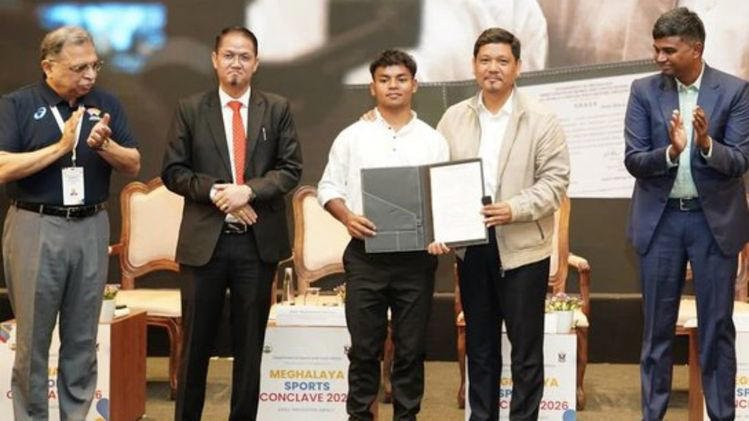
Meghalaya has achieved a significant milestone in its sports development journey as accomplished canoeist Pynshngain Kurbah became the first beneficiary of the state’s sports quota policy. The achievement marks an important moment not only for the athlete but also for the broader sporting ecosystem that the state government has been working to strengthen in recent years.
The recognition of Kurbah under the sports quota policy demonstrates the government’s commitment to rewarding sporting excellence and creating meaningful opportunities for athletes who bring distinction to the state. Officials described the development as a major step toward encouraging young sportspersons to pursue competitive sports with greater confidence and determination.
The policy aims to provide deserving athletes with opportunities beyond the playing field, acknowledging the dedication, discipline, and sacrifices required to achieve success in competitive sports. By offering tangible benefits, the government hopes to create an environment where sports can emerge as a viable career path for talented individuals.
Kurbah’s achievement has generated enthusiasm among athletes and sports enthusiasts across Meghalaya, who view it as a positive sign for the future of sports in the state.
Sports Quota Policy Reaches an Important Milestone
The selection of Pynshngain Kurbah as the first beneficiary represents a major milestone in the implementation of Meghalaya’s sports quota policy. The initiative seeks to recognize athletes who have excelled at national and international competitions while contributing to the state’s sporting reputation.
Officials believe that sports quota policies play an important role in supporting athletes who dedicate years of effort to representing their state and country. Competitive sports often require intense training schedules, financial sacrifices, and unwavering commitment.
By extending employment and career opportunities through the policy, the government aims to provide athletes with greater stability and long-term security. Such support can help them continue pursuing excellence while also planning for their future beyond active competition.
The successful implementation of the policy sends a strong message that sporting achievements receive recognition and support from the state administration.
Pynshngain Kurbah’s Journey in Canoeing
Pynshngain Kurbah has earned recognition through consistent performances in canoeing, a sport that demands exceptional endurance, technical skill, and mental resilience. Over the years, he has represented Meghalaya in various competitions and has contributed significantly to the state’s presence in water sports.
His journey reflects the determination required to succeed in a discipline that often receives less public attention compared to mainstream sports. Despite challenges, Kurbah continued to pursue excellence and establish himself as a notable athlete.
Officials noted that his achievements serve as an inspiration for aspiring sportspersons across Meghalaya. His success demonstrates that dedication and hard work can create opportunities even in specialized sporting disciplines.
The recognition under the sports quota policy represents not only an individual accomplishment but also acknowledgment of years of commitment to athletic excellence.
Government Focus on Supporting Athletes
The Meghalaya government has increasingly emphasized sports development as part of its broader youth empowerment strategy. Officials believe sports can contribute significantly to personal growth, community development, and economic opportunities.
Over the past few years, the state has invested in infrastructure, training facilities, athlete support programmes, and sporting events. These efforts aim to create an ecosystem that enables athletes to perform at higher levels and compete successfully on larger platforms.
The sports quota policy forms an important component of this strategy. By creating pathways for employment and career advancement, the government seeks to encourage more young people to take up sports seriously.
Officials stated that athletes often dedicate a significant portion of their lives to training and competition. Therefore, providing long-term support and recognition remains essential for sustaining sporting excellence.
The policy demonstrates the government’s commitment to ensuring that athletes receive opportunities both during and after their competitive careers.
Encouraging Youth Participation in Sports
One of the key objectives of the sports quota policy is to inspire greater youth participation in sports. Young athletes often face uncertainty regarding future career prospects, particularly in disciplines that do not receive extensive commercial support.
By offering tangible incentives and employment opportunities, the government aims to address these concerns and encourage more young people to pursue their sporting ambitions.
Officials believe success stories such as Kurbah’s can motivate aspiring athletes across the state. When young sportspersons see athletes receiving recognition and career opportunities, they gain confidence in pursuing their own goals.
The policy also reinforces the message that sports can provide pathways to personal and professional growth. As a result, more students and youth may choose to engage in organized sports and competitive activities.
The government expects the initiative to contribute to a stronger sporting culture throughout Meghalaya.
Strengthening Meghalaya’s Sports Ecosystem
The recognition of Pynshngain Kurbah reflects the broader transformation taking place within Meghalaya’s sports ecosystem. The state has emerged as an increasingly active participant in various sporting disciplines and continues to produce talented athletes.
Officials have emphasized that athlete development requires more than training facilities alone. A comprehensive support system must include coaching, infrastructure, financial assistance, exposure opportunities, and career support.
The sports quota policy helps fill an important gap by addressing long-term career concerns. Athletes can focus more effectively on their performance when they have confidence about future opportunities.
Moreover, such policies help create a sustainable sports ecosystem where success receives recognition and support. This approach encourages continuous participation and contributes to higher standards of performance.
The government views sports development as an investment in human capital and social progress.
Recognizing Excellence Beyond Medals
While medals and championships remain important indicators of success, officials emphasized that the sports quota policy recognizes broader contributions made by athletes.
Sportspersons often serve as role models who inspire communities and promote positive values such as discipline, perseverance, teamwork, and leadership. Their achievements contribute to state pride and encourage greater participation in sports.
The recognition of Kurbah reflects appreciation for these contributions. Officials noted that athletes play an important role in representing Meghalaya on national and international stages.
The policy therefore seeks to reward not only competitive success but also the dedication and commitment required to achieve excellence.
By acknowledging these efforts, the government hopes to create a culture that values and celebrates sporting achievement across different disciplines.
Sports as a Tool for Youth Empowerment
The Meghalaya government continues to position sports as a powerful tool for youth empowerment. Sports help develop confidence, resilience, leadership skills, and physical well-being among young people.
Officials believe that investments in sports can produce benefits that extend far beyond competition. Sporting activities promote social inclusion, community engagement, and healthy lifestyles.
The success of athletes such as Pynshngain Kurbah demonstrates the potential that exists among Meghalaya’s youth. With the right support systems, many more athletes can achieve success and contribute to the state’s development.
The sports quota policy complements other initiatives aimed at strengthening youth opportunities and creating pathways for talent development.
As participation grows, the government expects sports to become an increasingly important component of Meghalaya’s development strategy.
A New Chapter for Sports Development in Meghalaya
Pynshngain Kurbah’s recognition as the first beneficiary of Meghalaya’s sports quota policy marks the beginning of a new chapter in the state’s sporting journey. The achievement symbolizes the government’s commitment to supporting athletes and building a stronger sports ecosystem.
The milestone demonstrates that sporting excellence can lead to meaningful opportunities and long-term recognition. It also reinforces confidence among athletes who aspire to represent Meghalaya at higher levels of competition.
Officials believe the policy will encourage greater participation, motivate emerging talent, and strengthen the state’s sporting culture. By creating pathways that reward dedication and achievement, Meghalaya aims to nurture future generations of athletes.
As the sports quota policy continues to benefit deserving sportspersons, the state expects to witness increased enthusiasm, stronger performances, and broader participation across disciplines. The recognition of Pynshngain Kurbah stands as a powerful example of how strategic support can transform sporting aspirations into lasting success.