

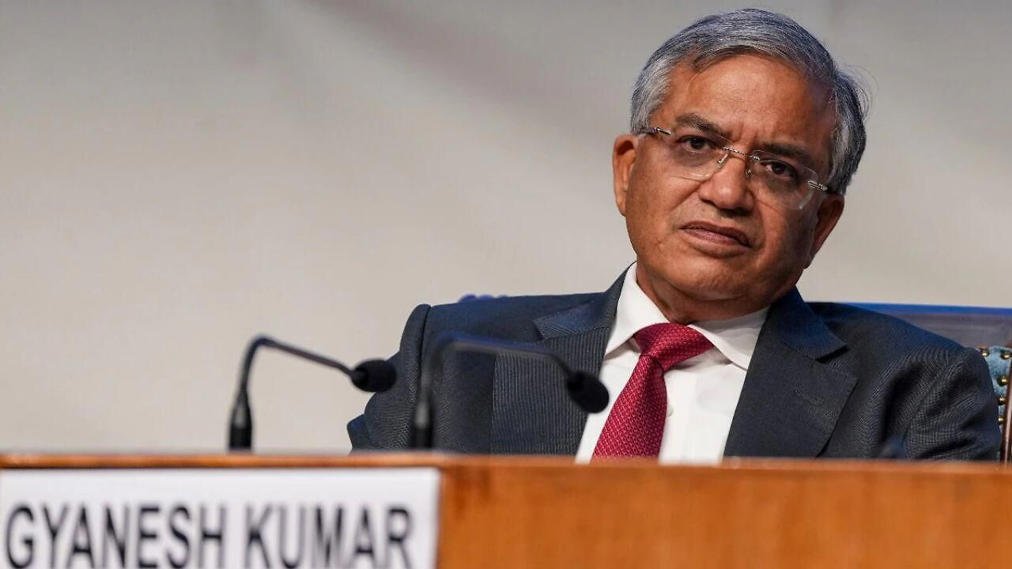
The Supreme Court has agreed to hear next week a public interest litigation seeking to restrain Chief Election Commissioner Gyanesh Kumar from functioning as CEC.
The petition comes amid the ongoing controversy over the Special Intensive Revision (SIR) of electoral rolls.
A bench led by Chief Justice of India Surya Kant agreed to list the plea after senior advocate Vikas Singh mentioned the matter for urgent hearing on Tuesday, September 29.
The petition has sought Kumar’s suspension. It also challenges the manner in which certain decisions were allegedly taken by the Election Commission.
Plea Challenges Decision-Making Process
The petition raises questions about decisions taken by the poll panel during the SIR exercise.
According to reports, the plea alleges that some decisions were taken without the approval of the other two Election Commissioners.
It seeks judicial scrutiny of the Election Commission’s decision-making process. The petition also seeks a declaration that decisions taken without the required concurrence are invalid.
The allegations remain part of the petition and have not been established by the Supreme Court.
Meanwhile, the Election Commission has rejected claims of a split within the poll panel.
ECI Says SIR Decisions Were Unanimous
The legal challenge comes shortly after the ECI issued a clarification on the SIR controversy.
The Commission said its final decisions on the electoral-roll revision were unanimous. It also explained that internal discussions can include questions, suggestions and written observations from individual commissioners.
The ECI has maintained that such internal deliberations do not indicate a formal disagreement over the final decisions.
The clarification followed reports about objections allegedly raised by the two other Election Commissioners.
The Commission’s statement has since become a major part of the political debate surrounding the SIR exercise.
Earlier Petition Sought Action Against CEC
The latest plea follows another legal challenge filed before the Supreme Court.
Advocate Shailendra Mani Tripathi, through advocate Chand Qureshi, filed a petition seeking action against Kumar over alleged violations of statutory duties.
That petition challenged decisions, guidelines and software modifications allegedly introduced during the SIR process. It also sought an independent investigation into alleged voter deletions.
The petition further questioned changes linked to Form 6, which voters use to seek inclusion in electoral rolls.
The Election Commission, however, has maintained that its SIR-related decisions were taken collectively.
Congress and Opposition Parties Demand Action
The Supreme Court development comes as Opposition parties continue their campaign against the CEC.
Congress has demanded Kumar’s resignation and has organised protests across the country. Other Opposition parties have also raised concerns about the SIR process and the functioning of the Election Commission.
The INDIA bloc is scheduled to meet on September 30. The parties are expected to discuss the Election Commission, SIR and possible coordinated action.
The issue has therefore moved beyond individual party protests and into a wider political and legal debate.
Questions Over SIR Remain
The SIR exercise has become a major point of disagreement between the Election Commission and several Opposition parties.
Opposition leaders have raised concerns about changes to voter rolls and the procedures used during the revision.
The ECI has defended the process and rejected allegations that its final decisions lacked collective approval.
The Supreme Court’s decision to hear the latest petition will now bring the dispute before the judiciary.
Hearing Expected Next Week
The Supreme Court has not yet ruled on the allegations raised in the petition.
The upcoming hearing will allow the court to consider the petition seeking action against Gyanesh Kumar and scrutiny of the Election Commission’s decision-making process.
For now, the matter remains at the stage of judicial consideration. The allegations against the CEC have not been judicially established.
The hearing next week could provide further clarity on the legal questions surrounding the SIR exercise and the powers and functioning of the Election Commission.