

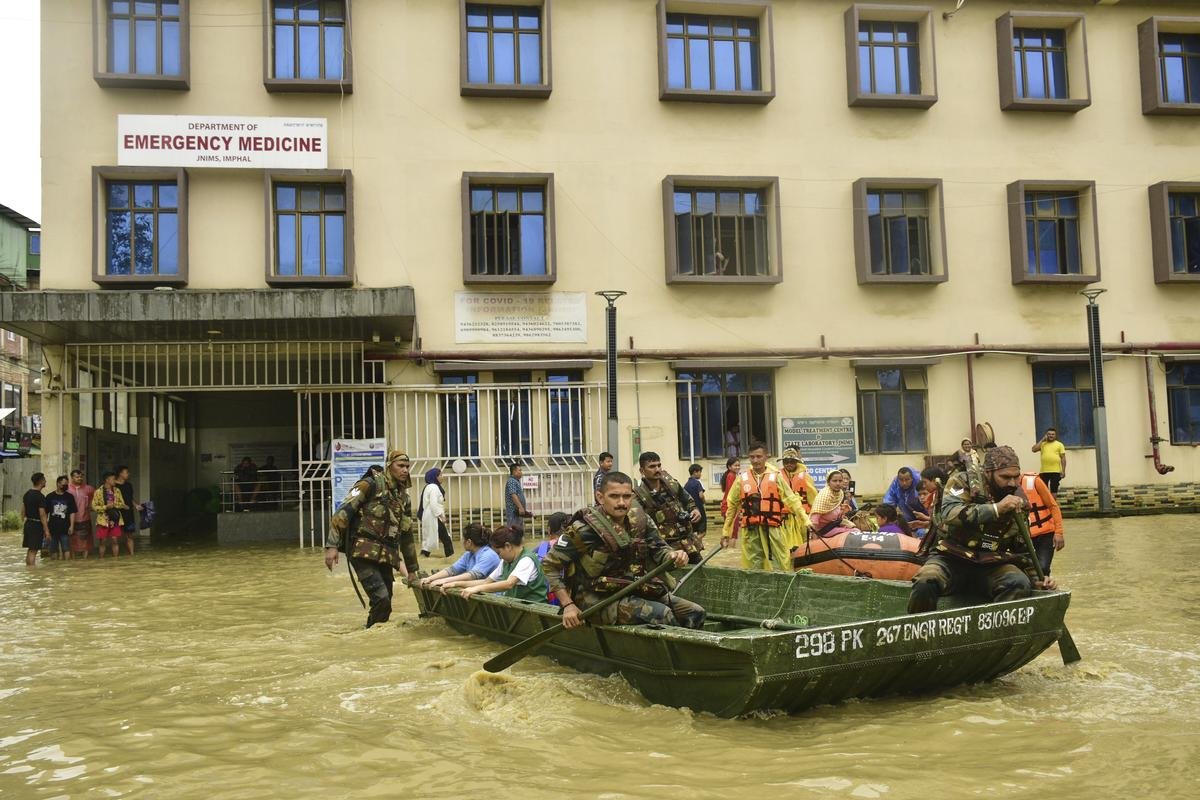
The Central Government has formally assured all northeastern state administrations of comprehensive logistical and operational support to address the challenges posed by the active monsoon season. The assurance comes amid widespread flooding, landslides, and infrastructure disruptions affecting several parts of Northeast India. Moreover, the Centre’s commitment underscores the importance of coordinated disaster response mechanisms, intergovernmental cooperation, and rapid deployment capabilities during large-scale natural emergencies.
Tripura Chief Minister Manik Saha Launches Digital Solid Waste Management Tracking Application
Northeast Security Advisors Convene in New Delhi to Address Emerging Hybrid Security Threats
Centre Reaffirms Full Support for Northeast Disaster Response
Senior officials of the Central Government have reportedly assured all northeastern states that logistical assistance and operational resources will be made available without limitation during the ongoing monsoon crisis. Consequently, state administrations have been encouraged to prioritize relief, rescue, and rehabilitation efforts without concerns regarding emergency support availability.
According to government sources, the commitment includes assistance related to transportation, emergency supplies, rescue operations, communication networks, and disaster management coordination. Moreover, authorities emphasized that rapid response and uninterrupted support remain essential to minimizing the humanitarian impact of natural disasters. Therefore, the announcement has received significant attention across the region.
Officials further stated that coordination between central agencies and state governments will continue throughout the monsoon period. As a result, emergency preparedness measures are expected to remain on high alert.
Meanwhile, disaster response teams continue to monitor evolving weather conditions and regional vulnerabilities.
Coordinated Disaster Management Remains a Priority
The Centre’s assurance highlights the growing emphasis on integrated disaster management systems and coordinated emergency response strategies. Moreover, effective collaboration between state administrations and central agencies is considered critical during large-scale natural disasters. Therefore, strengthening institutional coordination remains a key objective.
Disaster management experts noted that monsoon-related emergencies often require rapid mobilization of resources, specialized equipment, and inter-agency cooperation. Consequently, governments increasingly rely on coordinated operational frameworks to improve response efficiency. Such mechanisms contribute to saving lives and reducing economic losses.
Furthermore, enhanced logistical support can significantly improve relief distribution and emergency service delivery. As a result, authorities continue to strengthen preparedness and response capabilities.
Meanwhile, state governments remain engaged in damage assessments and relief operations.
Northeast Continues to Face Severe Monsoon Challenges
Several northeastern states have experienced severe rainfall, flooding, landslides, and transportation disruptions during the current monsoon season. Moreover, vulnerable infrastructure and difficult terrain have created additional challenges for rescue and rehabilitation efforts. Therefore, sustained logistical support remains essential.
Environmental and disaster response analysts observed that climate variability and extreme weather events have increased the frequency and intensity of natural disasters in the region. Consequently, governments continue to invest in disaster resilience, early warning systems, and emergency preparedness infrastructure. Such measures contribute to long-term risk reduction and public safety.
Furthermore, the availability of central support can help accelerate recovery operations and strengthen regional resilience. As a result, cooperation between different levels of government remains a critical component of disaster management strategy.
Meanwhile, authorities continue to monitor weather forecasts and operational requirements.
Long-Term Disaster Preparedness and Resilience Emphasized
The Centre’s commitment also reflects broader efforts to strengthen disaster preparedness, improve emergency response systems, and enhance resilience across Northeast India. Moreover, policymakers continue to emphasize the importance of investing in infrastructure, technology, and institutional capacity to address future climate-related risks. Therefore, disaster management remains a major policy priority.
Experts stressed that effective disaster response requires continuous planning, resource mobilization, and coordination among multiple stakeholders. Consequently, governments increasingly focus on building resilient systems capable of responding to complex emergencies. Such investments contribute to long-term social and economic stability.
Furthermore, ongoing cooperation between central and state authorities is expected to improve disaster preparedness outcomes. As a result, public confidence in emergency response mechanisms may strengthen over time.
Conclusion
The Central Government’s assurance of unlimited logistical support for northeastern states during the ongoing monsoon season represents a significant commitment to disaster response and humanitarian assistance. Moreover, the announcement highlights the importance of coordinated governance, rapid resource mobilization, and institutional cooperation in addressing natural disasters.
As the monsoon season continues, effective collaboration between central agencies and state administrations will remain essential for protecting lives, restoring infrastructure, and supporting affected communities. Therefore, the Centre’s commitment is expected to play a crucial role in strengthening disaster management efforts across Northeast India.
The latest assurance underscores the importance of preparedness, resilience, and coordinated action in responding to the region’s recurring monsoon challenges.
FAQs
1. What assurance did the Central Government provide?
The Centre assured northeastern states of comprehensive logistical and operational support during monsoon-related emergencies.
2. Why was the assurance issued?
The commitment was made in response to ongoing floods, landslides, and severe weather conditions affecting the region.
3. What types of support may be provided?
Support may include transportation, emergency supplies, rescue operations, communication assistance, and disaster management coordination.
4. Why is coordination important during disasters?
Effective coordination improves response speed, resource distribution, and overall disaster management outcomes.
5. What broader objective does this commitment support?
The initiative supports disaster preparedness, resilience-building, and long-term regional stability.