

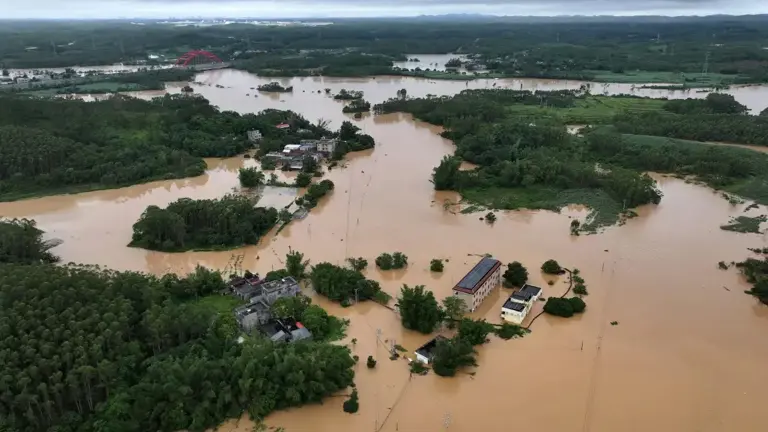
At least 39 people have lost their lives and nine others remain missing after torrential rain triggered devastating floods across China’s Guangxi Zhuang Autonomous Region. Days of intense rainfall caused rivers to overflow, reservoirs to breach, and widespread flooding that submerged towns, damaged infrastructure, and forced thousands of residents to flee their homes. Authorities have launched large-scale rescue and relief operations as emergency teams continue searching for those unaccounted for.
The disaster has become one of the deadliest flood events to strike southern China this year, with officials warning that unstable weather conditions could hamper rescue efforts.
Reservoir Breach Worsens Flooding
The worst devastation occurred in Hengzhou, where a reservoir partially collapsed following days of relentless rainfall, releasing massive volumes of water into nearby communities. The sudden surge inundated residential areas, trapping residents and causing extensive destruction to homes, roads, bridges, and agricultural land.
Emergency responders worked through flooded streets using rescue boats and heavy equipment to evacuate stranded families, while helicopters and drones were deployed to assess the extent of the damage.
Officials said the reservoir breach significantly intensified flooding across affected districts.
Rescue Operations Continue for Missing Persons
Search and rescue operations remain underway as authorities attempt to locate the nine people still reported missing.
Thousands of emergency personnel, including firefighters, police officers, soldiers, and medical teams, have been deployed across the affected areas. Rescue teams are navigating floodwaters, clearing debris, and reaching isolated communities where access remains difficult due to damaged roads and collapsed bridges.
Authorities said rescue efforts remain their highest priority while weather conditions continue to be closely monitored.
Thousands Evacuated From Flood-Hit Areas
The severe flooding has forced large-scale evacuations across Guangxi.
According to officials, around 130,000 residents have been relocated to safer locations as rising floodwaters threatened homes and public infrastructure. Temporary shelters have been established to provide food, drinking water, medical assistance, and emergency accommodation for displaced families.
Local governments have also distributed relief supplies while restoring essential services in affected communities.
Widespread Damage to Infrastructure
The torrential rain caused extensive damage to roads, bridges, electricity networks, schools, and public facilities throughout the flood-affected region.
Floodwaters submerged major transport routes, disrupting movement of people and emergency supplies. Agricultural fields were inundated, raising concerns about crop losses and the economic impact on farming communities.
Officials continue assessing structural damage while repair crews work to restore electricity, telecommunications, and transportation links wherever conditions permit.
Extreme Weather Compounds Challenges
The Guangxi floods come amid a period of extreme weather affecting several parts of China.
Meteorologists attributed the disaster to exceptionally heavy rainfall associated with Tropical Storm Maysak, which produced intense downpours over southern China. Experts have warned that changing climate patterns are increasing the frequency and intensity of extreme rainfall events, making floods more severe and difficult to predict.
Authorities remain on alert for additional rainfall that could trigger fresh flooding and landslides.
Relief and Recovery Efforts Underway
Chinese authorities have mobilised emergency resources to support rescue operations and begin recovery efforts in the affected areas.
Relief agencies are providing food, drinking water, temporary shelter, and medical assistance to displaced residents while engineers inspect damaged infrastructure. Officials have also initiated damage assessments to determine the scale of losses and identify areas requiring urgent rehabilitation.
Emergency management agencies continue coordinating with local governments to ensure relief reaches the worst-hit communities.
Authorities Monitor Weather as Recovery Begins
As floodwaters gradually begin to recede in some areas, authorities remain focused on rescue operations, humanitarian assistance, and restoring normalcy.
With 39 confirmed fatalities and nine people still missing, the Guangxi floods have highlighted the destructive impact of extreme weather on vulnerable communities. Emergency agencies continue monitoring weather conditions while warning residents to remain vigilant against further heavy rainfall, flash floods, and landslides. The immediate priority remains locating the missing, supporting displaced families, and rebuilding infrastructure damaged by one of the region’s most severe flood disasters in recent years.