

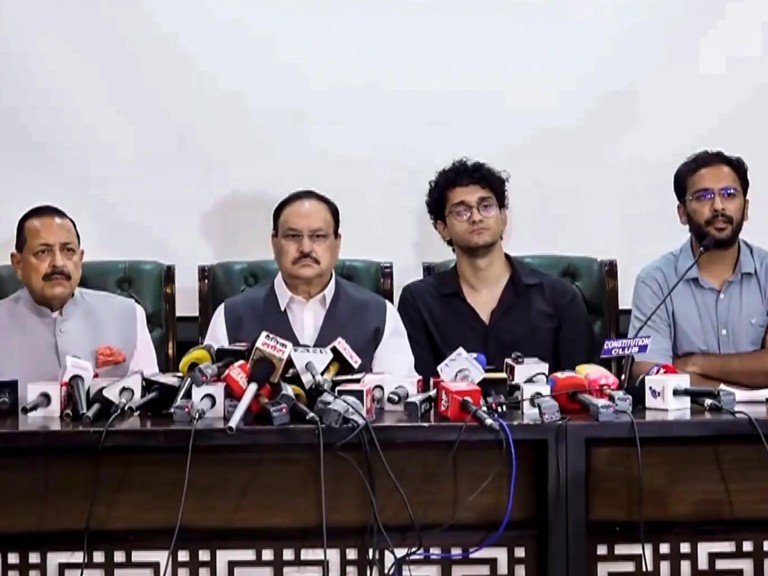
The Citizens’ Justice Platform (CJP) has decided to withdraw its protest at Delhi’s Jantar Mantar after the Central government assured that it would consider the protesters’ five-point charter of demands. The announcement came following discussions between representatives of the protesters and Union Health Minister and BJP National President J.P. Nadda, who said the government would examine the demands with seriousness and fairness.
The protest, which had drawn participants from several states, focused on a range of social, economic, and governance-related issues. Demonstrators had been staging a peaceful sit-in at Jantar Mantar, one of India’s most prominent protest sites, urging the Centre to address their concerns through dialogue and policy action.
The decision to end the agitation has been welcomed as a positive step toward resolving the issues through democratic engagement rather than prolonged confrontation.
Government Assures Consideration of Five-Point Charter
Speaking after meeting representatives of the protestors, J.P. Nadda said that the Central government had listened carefully to the concerns raised by the delegation. He assured them that the government would consider all five points included in the charter in the same spirit in which they had been presented.
According to the protesters, the assurance from the government was a significant breakthrough, as it reflected a willingness to engage constructively. They said their objective had never been confrontation but ensuring that the voices of ordinary citizens were heard by policymakers.
The government did not announce an immediate timeline for implementing any of the demands but reiterated its commitment to reviewing the proposals through the appropriate administrative channels.
Protest Ends After Positive Dialogue
The CJP leadership announced that the protest would be withdrawn following the government’s assurance. Addressing supporters gathered at Jantar Mantar, leaders said the decision had been taken after careful deliberation and in the interest of maintaining a constructive relationship with the authorities.
They emphasized that the withdrawal should not be viewed as an end to their campaign but rather as the beginning of a new phase focused on dialogue and follow-up discussions with the government.
Supporters welcomed the announcement with optimism, expressing hope that the Centre would now translate its assurances into meaningful action.
What Was Included in the Five-Point Charter?
While the complete details of the five-point charter have not been officially released, the demands reportedly covered key concerns affecting different sections of society. These included issues related to public welfare, governance, accountability, and policy reforms.
The protesters maintained that their charter had been prepared after extensive consultations with citizens, civil society groups, and subject experts. They argued that the recommendations were intended to improve governance and address long-standing concerns through practical and constitutional means.
The delegation also requested that regular consultations be held between government officials and representatives of affected communities to ensure sustained dialogue.
Jantar Mantar Remains a Symbol of Democratic Expression
Jantar Mantar has long served as one of India’s most significant venues for peaceful public demonstrations. Over the years, it has hosted protests involving students, farmers, workers, social activists, and various civil society organizations seeking government intervention on a wide range of issues.
The latest CJP protest once again highlighted the importance of democratic spaces where citizens can peacefully express their concerns and seek accountability from elected governments.
Political observers noted that the government’s decision to engage directly with the protesters reflects the value of dialogue in a democratic system, particularly when disagreements can be resolved through discussion rather than confrontation.
Opposition and Civil Society React
The development has received mixed reactions from political parties and civil society organizations. Some welcomed the government’s willingness to engage with the protesters, calling it a healthy example of democratic consultation.
Others, however, stressed that assurances alone would not be enough and that the real test would lie in whether the Centre acts upon the demands within a reasonable timeframe.
Several activists also urged the government to maintain transparent communication regarding the progress made on the charter’s proposals. They argued that public trust would depend largely on visible action and timely updates.
Protesters to Monitor Government’s Response
Although the protest has officially ended, CJP leaders made it clear that they would continue monitoring the government’s response. They said they would remain in contact with relevant ministries and departments to track progress on each point of the charter.
The organization indicated that future decisions would depend on how the government proceeds with its commitments. If meaningful progress is achieved, they expressed readiness to continue cooperating through dialogue. However, they also reserved the right to resume democratic protests if necessary.
Leaders emphasized that peaceful constitutional methods would continue to remain the foundation of their movement.
Significance of the Development
The withdrawal of the Jantar Mantar protest marks an important moment in the relationship between civil society groups and the government. It demonstrates that negotiations and open communication can create opportunities for resolving public concerns without prolonged conflict.
For the Centre, the decision to consider the five-point charter reflects an attempt to address citizen grievances through consultation rather than confrontation. For the protesters, ending the agitation after receiving official assurances signals confidence in the democratic process while keeping the government accountable for future action.
Whether the discussions ultimately lead to policy changes remains to be seen. However, the willingness of both sides to engage in dialogue has created a foundation for continued communication and cooperation.
As attention now shifts from the protest site to the policymaking process, citizens and observers alike will be watching closely to see how the government responds to the five-point charter. The coming weeks are expected to determine whether the assurances made during the discussions translate into concrete decisions that address the concerns raised by the protesters.