

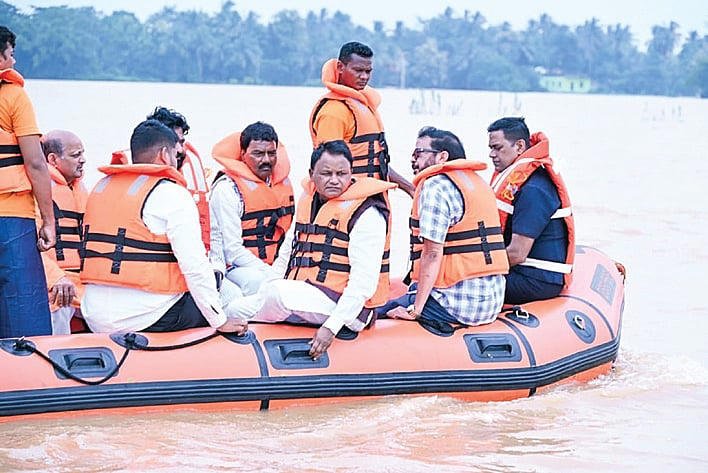
Odisha Chief Minister Mohan Charan Majhi visited the flood-hit districts of Jajpur and Bhadrak on Monday to assess the situation on the ground and review ongoing rescue and relief operations. The visit came as flooding continued to affect large parts of northern Odisha, with more than 7.85 lakh people across six districts facing the impact of the latest spell.
Majhi travelled through inundated areas, interacted with residents and reviewed the availability of essential supplies. He assured affected families that the safety of residents remained the government’s top priority. He also directed officials to maintain relief operations and ensure that essential assistance reaches people in affected villages.
The Chief Minister’s visit came at a critical time. Rising water levels in the Baitarani and Brahmani river systems have inundated several low-lying areas in Jajpur and Bhadrak. Authorities have evacuated more than 2.77 lakh people to safer locations as the state continues to monitor the flood situation.
Majhi Inspects Flood Situation in Jajpur
Majhi began his visit in Jajpur district, where he travelled to flood-affected areas of Dasarathpur block.
He visited Kasapa and Tarpada gram panchayats and interacted with residents of Ramchandrapur, Balda and Dobhabil villages. Local residents briefed him about the difficulties they faced because of the rising floodwaters.
The Baitarani river continued to flow above the danger mark at Dasarathpur during the Chief Minister’s visit. The swelling river and its tributaries had inundated several low-lying areas in Bari, Jajpur and Dasarathpur blocks. More than 242 villages across eight blocks remained surrounded by floodwaters, according to officials.
Majhi reviewed the situation with local officials and sought information about relief measures. He also assessed the availability of food, drinking water and other essential supplies.
Chief Minister Travels by Boat
The severity of the flooding forced Majhi to use a boat to reach some affected areas.
After inspecting parts of Jajpur, he travelled to severely flooded areas and assessed the situation from close quarters. The visit allowed him to see the difficulties faced by residents who remained surrounded by water.
Boat-based inspections also helped officials understand the condition of villages that remained difficult to access by road.
The Chief Minister’s direct interaction with residents gave affected families an opportunity to communicate their concerns. Such visits can help the administration identify gaps in relief delivery and respond to urgent needs.
Bhadrak Villages Also Face Severe Flooding
Majhi later travelled to Bhadrak district, where he visited Ishwarpur village under Shyamsundarpur panchayat in Tihidi block.
He reached the severely flooded village by boat and reviewed the local situation. The Chief Minister spoke with residents and checked whether government relief had reached them.
He specifically reviewed the availability of dry food and drinking water, two of the most important requirements during prolonged flooding.
The visit highlighted the difficulties faced by people in villages that remain surrounded by floodwater even after evacuation efforts. Authorities must continue supplying essential items while also monitoring the health and safety of residents who remain in affected areas.
Government Promises Prompt Assistance
After inspecting the affected areas, Majhi said that the government had placed the safety of residents and prompt assistance at the highest priority.
He said rescue and relief operations would continue on a war footing. The government has also focused on supplying food, drinking water and essential healthcare services to affected communities.
The Chief Minister’s assurance comes as thousands of families face disruptions to their homes, farms and daily livelihoods.
For many rural communities, flood relief involves more than evacuation. People also need food, clean water, medicines and temporary shelter. Farmers require assistance to recover from crop losses after the water recedes.
More Than 7.85 Lakh People Affected
The latest flood spell has affected more than 7.85 lakh people in six districts of Odisha. The affected districts include Balasore, Bhadrak, Jajpur, Keonjhar, Mayurbhanj and Kendrapara.
According to the Special Relief Commissioner’s latest status report, 448 gram panchayats across 66 blocks have faced the impact of the floods.
The flooding has also damaged crops covering more than 42,200 hectares and affected nearly 1,000 houses. Jajpur has recorded the highest crop damage, with more than 18,000 hectares affected. Balasore follows with around 16,000 hectares.
These figures indicate the scale of the challenge facing the state administration.
Jajpur Among Worst-Affected Districts
Jajpur has experienced particularly serious flooding during the latest spell.
More than two lakh people in the district have been affected. Several blocks have faced prolonged waterlogging because of the swelling Baitarani and its tributaries.
The situation has created difficulties for residents in low-lying villages. Some communities have remained surrounded by water for extended periods.
The Baitarani has remained a major concern for authorities. Officials continue to monitor river levels and assess the condition of vulnerable areas.
Bhadrak Faces Extensive Flood Impact
Bhadrak has also suffered extensive flooding. Around 1.96 lakh people in the district have been affected, according to the latest official figures.
Several villages have faced waterlogging, while roads and local communication networks have experienced disruption.
Flooding also threatens agricultural land in the district. Farmers may face significant losses if standing crops remain submerged for long periods.
The administration therefore needs to focus on both immediate relief and post-flood rehabilitation.
Water Levels Expected to Recede
Officials have indicated that the flood situation could gradually improve as rainfall decreases.
Water levels in some rivers have started to recede. However, waterlogging may continue in parts of Jajpur and Bhadrak for another four to five days, according to the state’s Water Resources Department.
Engineer-in-Chief of the Water Resources Department Dilip Rout described the state as facing a medium flood. The Brahmani and Baitarani remained in spate, while the Subarnarekha and Jalaka rivers did not face a flood situation at the time of the assessment.
The authorities will continue monitoring river levels because fresh rainfall could worsen the situation.
Relief Operations Continue Across Odisha
The Odisha government has continued its broader flood-relief operations alongside the Chief Minister’s field visit.
Earlier this month, the state released Rs 110 crore in flood assistance for 22 districts. Jajpur received Rs 20.20 crore, while Bhadrak received Rs 20.12 crore under that relief allocation.
The funds can support immediate relief and disaster-response activities in affected districts.
Local administrations also continue to coordinate evacuation, food distribution, healthcare and other emergency services.
Political Dispute Emerges During Visit
Majhi’s Jajpur visit also triggered a political controversy after some Biju Janata Dal legislators alleged that officials prevented them from accompanying the Chief Minister during his inspection.
Jajpur MLA Sujata Sahu and Binjharpur MLA Pramila Mallik claimed that they received invitations to join the visit but later faced restrictions. Sahu subsequently filed a police complaint alleging misbehaviour by BJP workers.
The Jajpur Collector rejected the allegations and said security considerations prevented the legislators from joining the Chief Minister’s group.
The political disagreement unfolded against the backdrop of the ongoing humanitarian crisis.
Focus Shifts to Recovery
While immediate rescue and relief remain the government’s priority, authorities will eventually need to focus on recovery.
Floodwaters can damage crops, homes, roads and other infrastructure. Farmers may need financial assistance to recover from agricultural losses, while families with damaged houses may require rehabilitation support.
The state will also need to inspect embankments and strengthen vulnerable points before the next major rainfall event.
Long-term recovery will become particularly important in districts such as Jajpur and Bhadrak, where repeated flooding has affected communities.
Odisha Government Faces Major Relief Challenge
The Odisha floods 2026 have created a major challenge for the state government, particularly across northern districts. Chief Minister Mohan Charan Majhi’s visit to Jajpur and Bhadrak reflects the administration’s effort to monitor the situation directly and ensure that relief reaches affected communities.
With more than 7.85 lakh people affected and over 2.77 lakh evacuated, the scale of the disaster remains significant. Crop losses across more than 42,200 hectares will also create challenges for rural communities after the waters recede.
For now, the government’s priority remains clear: rescue people in danger, provide food and drinking water, maintain healthcare services and support families through the crisis.
As river levels gradually fall, Odisha will have to move from emergency response to rehabilitation. Continued monitoring, timely assistance and proper assessment of damage will remain crucial in helping flood-hit communities in Jajpur and Bhadrak rebuild their lives.