

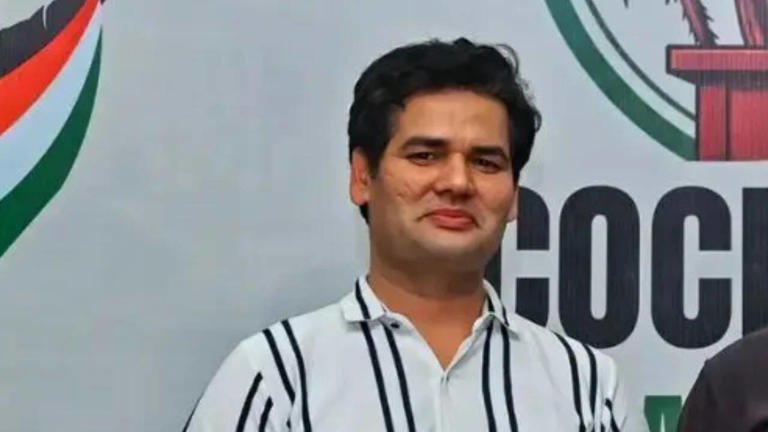
The Cockroach Janta Party (CJP) has removed its national spokesperson, Vijeta Dahiya, following widespread criticism over a viral video that sparked intense public and political backlash. The decision came shortly after the video began circulating across social media platforms, drawing strong reactions from citizens, political observers, and rival parties.
The controversy quickly gained momentum online, with users sharing clips and expressing concern over the remarks made in the video. As pressure mounted, the party announced that Dahiya had been relieved of her responsibilities as spokesperson, stating that the decision was taken in the interest of maintaining the party’s principles and public image.
The incident has once again highlighted the growing influence of social media in shaping political narratives and the speed at which online controversies can affect public figures and political organisations.
Viral Video Triggers Widespread Criticism
The controversy began when a video featuring Vijeta Dahiya started circulating widely on social media. The clip quickly went viral, attracting thousands of views, comments, and shares within a short period.
Many social media users criticised the content of the video, arguing that the remarks were inappropriate and inconsistent with the responsibilities expected from a political spokesperson. Several users called for accountability, while others questioned the party’s stance on the issues raised in the clip.
The video soon became a trending topic, with hashtags related to Dahiya and the Cockroach Janta Party appearing across multiple platforms. Political commentators also weighed in, discussing the potential impact of the controversy on the party’s public image.
Party Announces Immediate Action
Responding to the growing criticism, the Cockroach Janta Party issued a statement announcing the removal of Vijeta Dahiya from the position of national spokesperson.
According to the party, the decision was taken after reviewing the situation and considering the public response. Party leaders stated that the organisation does not endorse statements or actions that could damage its reputation or create unnecessary controversy.
The announcement was seen as an attempt to contain the political fallout and reassure supporters that the party was prepared to take disciplinary action when required.
While the party did not elaborate extensively on the internal discussions leading to the decision, it maintained that accountability and responsible public communication remain important organisational values.
Social Media Amplifies the Controversy
The incident demonstrates how rapidly social media can influence political developments. Within hours of the video being uploaded and shared, it had reached a large audience across various digital platforms.
Users expressed differing opinions, with some condemning the remarks outright while others argued that the clip should be viewed in its full context before drawing conclusions. Despite these differing viewpoints, the online debate continued to intensify, increasing pressure on the party to respond.
Political analysts note that viral content often shapes public perception before official clarifications are issued, making crisis management significantly more challenging for political organisations.
The widespread sharing of short video clips has made it increasingly difficult for public figures to control narratives once controversies emerge online.
Opposition Parties React
Following the video’s circulation, opposition leaders criticised the Cockroach Janta Party and questioned its internal standards for selecting public representatives.
Some political leaders argued that the controversy reflected broader concerns about political communication and accountability. Others demanded a stronger explanation from the party regarding the circumstances surrounding the incident.
Supporters of the party, however, pointed out that the leadership acted promptly by removing the spokesperson, suggesting that swift disciplinary action demonstrated organisational responsibility.
The differing political responses contributed to the controversy remaining in public discussion beyond the initial viral moment.
Vijeta Dahiya Yet to Issue Detailed Response
At the time of the party’s announcement, Vijeta Dahiya had not released a detailed public statement addressing the controversy or responding to the decision to remove her from the spokesperson’s role.
Political observers expect that any future clarification or explanation from Dahiya may influence public opinion regarding the incident. Until then, much of the discussion continues to be driven by reactions to the viral video and the party’s disciplinary action.
The absence of an immediate detailed response has also led to speculation online, although no official information has been provided regarding any further role she may hold within the organisation.
Reputation Management in the Digital Age
The controversy highlights the increasing importance of reputation management in modern politics. Public representatives today operate in an environment where every statement, interview, or public appearance can be recorded, shared, and scrutinised within minutes.
Political parties are therefore placing greater emphasis on media training, responsible communication, and crisis response mechanisms to minimise reputational risks.
Experts believe that prompt responses to controversies are becoming an essential part of political strategy, particularly in an era where online discussions can significantly influence public opinion.
The Cockroach Janta Party’s decision to remove its spokesperson reflects this broader trend of responding quickly to controversies that gain widespread attention on digital platforms.
Growing Impact of Viral Content on Politics
The Vijeta Dahiya episode serves as another example of how viral social media content can shape political developments. Digital platforms have transformed the speed at which information spreads, making public accountability more immediate than ever before.
For political leaders and parties, maintaining credibility now depends not only on policy decisions but also on effective communication and rapid responses to emerging controversies.
As political engagement increasingly shifts online, parties across the country are adapting their communication strategies to manage both opportunities and risks presented by social media.
The incident also underscores the need for public figures to exercise caution in their public remarks, recognising that any statement can quickly reach millions of people.
Looking Ahead
The removal of Vijeta Dahiya as national spokesperson marks a significant development for the Cockroach Janta Party amid ongoing public scrutiny. While the immediate disciplinary action may help contain the controversy, its longer-term political impact will depend on how the party rebuilds public confidence and manages future communication.
As discussions continue online and political observers assess the implications of the incident, the controversy serves as a reminder of the powerful role social media now plays in shaping political discourse and influencing organisational decisions.