

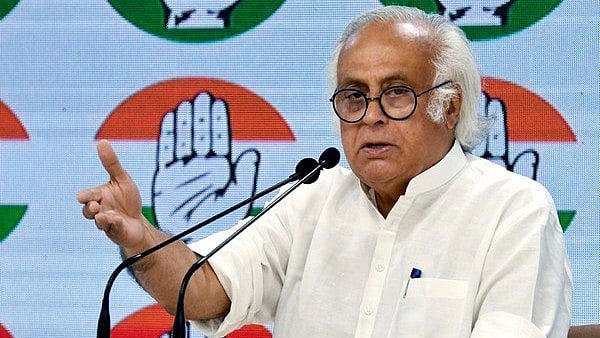
The Congress on Saturday launched a fresh attack on the Narendra Modi-led Central government, accusing it of pursuing a policy of “calibrated capitulation” towards China. The opposition party alleged that the government’s handling of bilateral relations with Beijing has weakened India’s strategic position and raised questions over its approach to national security and foreign policy.
Addressing the issue, Congress leaders claimed that recent developments in India-China relations reflect what they described as a gradual softening of the government’s stance despite ongoing concerns over border-related issues. The party argued that the Centre must provide greater clarity regarding its diplomatic engagement with China and explain how its policies safeguard India’s territorial integrity and national interests.
The remarks add to the continuing political debate over India’s China policy, with the opposition seeking greater transparency on the government’s diplomatic and security strategies.
Opposition Questions Government’s China Approach
Congress leaders alleged that the Centre’s recent diplomatic engagements with China indicate what they termed a “calibrated capitulation,” suggesting that the government has not taken a sufficiently firm position on issues concerning bilateral relations.
The party questioned whether recent policy decisions and diplomatic exchanges adequately reflect India’s long-standing national security priorities.
According to Congress, Parliament and the public deserve greater information regarding the government’s strategy in dealing with China, particularly on matters relating to border management, diplomatic negotiations, and regional security.
The opposition maintained that foreign policy should remain guided by national interest while ensuring transparency and accountability in major strategic decisions.
Demand for Greater Transparency
A key aspect of the Congress’ criticism centred on the need for greater transparency in the government’s handling of India-China relations.
The party urged the Centre to clearly communicate its diplomatic objectives and explain the rationale behind recent engagements with Beijing. Congress leaders argued that regular updates on important foreign policy developments would help strengthen public confidence while enabling informed parliamentary discussions.
The opposition also called for greater institutional consultation on issues involving national security and international diplomacy.
According to the party, foreign policy decisions involving strategic challenges should be accompanied by clear communication regarding the government’s objectives and long-term vision.
India-China Relations Remain Strategically Important
Relations between India and China continue to hold significant strategic importance due to their shared border, growing economic engagement, and regional influence.
The two countries maintain dialogue through diplomatic, military, and multilateral channels while simultaneously addressing complex issues related to border management, trade, regional security, and international cooperation.
Both governments have repeatedly emphasized the importance of maintaining peace and stability along the Line of Actual Control (LAC) while continuing diplomatic engagement through established bilateral mechanisms.
India and China also cooperate on various global and regional platforms, although differences continue on several strategic and geopolitical issues.
The evolving nature of bilateral relations remains closely watched by policymakers, analysts, and international observers.
Government Has Reiterated Commitment to National Security
The Central government has consistently maintained that safeguarding India’s sovereignty, territorial integrity, and national security remains its highest priority in all diplomatic engagements.
Government officials have repeatedly stated that India continues to pursue constructive dialogue while protecting national interests and strengthening border infrastructure, defence preparedness, and strategic capabilities.
The Centre has also emphasized the importance of maintaining peace and stability in border areas through diplomatic and military-level discussions without compromising national security considerations.
Officials have maintained that India’s foreign policy seeks to balance dialogue, strategic autonomy, and robust national defence.
These positions have been reiterated on multiple occasions in Parliament and official statements.
Political Debate Intensifies
The Congress’ latest remarks are expected to intensify political discussions surrounding India’s foreign policy and its approach to managing relations with China.
While the opposition has questioned the government’s diplomatic strategy, the ruling side has consistently defended its handling of national security and international relations, stating that India continues to act firmly in protecting its interests.
Political observers note that issues concerning national security and foreign policy frequently become subjects of parliamentary debate, particularly when involving neighbouring countries and strategic challenges.
The latest exchange reflects broader political differences over how India’s long-term relationship with China should be managed.
Strategic Challenges Continue to Shape Policy
India’s relationship with China remains one of its most significant foreign policy priorities due to shared borders, economic interactions, regional influence, and broader geopolitical considerations.
Experts observe that managing such a complex relationship requires balancing diplomacy, economic engagement, military preparedness, and strategic cooperation while addressing areas of disagreement through established mechanisms.
Successive governments have pursued dialogue alongside efforts to strengthen national security capabilities and regional partnerships.
The evolving geopolitical environment continues to influence India’s diplomatic decisions and strategic planning in the Indo-Pacific and beyond.
Policy discussions regarding China therefore remain central to India’s broader foreign policy framework.
Foreign Policy Debate Expected to Continue
The Congress’ allegation of “calibrated capitulation” has once again brought India’s China policy into the political spotlight. As the government and opposition continue to present differing perspectives, the issue is expected to remain an important subject of public and parliamentary discussion.
Foreign policy and national security remain areas of significant public interest, particularly in the context of India’s relations with neighbouring countries and evolving regional dynamics.
While the opposition has called for greater transparency and a stronger diplomatic posture, the government continues to maintain that its approach is guided by national interest, strategic autonomy, and the protection of India’s sovereignty.
As bilateral engagement with China continues through diplomatic channels, political debate over the government’s approach is likely to persist. The discussion reflects the broader democratic process in which foreign policy decisions are scrutinized by political parties, policymakers, and the public alike. Going forward, developments in India-China relations will continue to attract close attention, with national security, diplomacy, and regional stability remaining at the centre of the debate.