

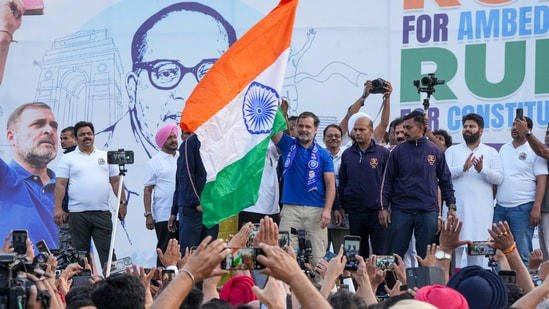
The debate over women reservation Lok Sabha seats has gained fresh momentum. The Congress party has announced plans to push for reservation within the existing framework of parliamentary constituencies.
Senior leaders have indicated that the party will advocate stronger representation for women. They aim to ensure that women receive adequate opportunities in the electoral system. As a result, the issue has returned to the centre of political discourse.
The proposal comes at a time when discussions on gender equality remain significant. Political parties are under pressure to improve representation. Therefore, the move by Congress carries wider implications.
Observers believe the initiative may influence future policy debates. It could also shape electoral strategies across parties.
Read More: PM Modi to inaugurate HPCL refinery in Rajasthan on April 21
Congress outlines strategy for increased representation
The Congress leadership, including Rahul Gandhi, has emphasised the need for practical solutions. The party plans to push for women reservation within existing Lok Sabha seats rather than creating new constituencies.
This approach focuses on internal allocation of tickets. Congress may ensure that a fixed percentage of candidates are women. Such a strategy can increase representation without structural changes.
Leaders argue that political parties must take responsibility. They believe change can begin at the organisational level. Therefore, they aim to set an example through candidate selection.
The party has also discussed strengthening women’s participation at grassroots levels. Training and support programmes may be expanded. These efforts can prepare women for leadership roles.
Focus on gender equality and political inclusion
The women reservation Lok Sabha proposal reflects a broader push for gender equality. Women continue to remain underrepresented in Indian politics. This gap has drawn attention from various stakeholders.
Congress leaders have highlighted the need for inclusive governance. They argue that diverse representation leads to better decision-making. Women bring unique perspectives to policy discussions.
The proposal also aligns with global trends. Many countries have adopted measures to increase women’s participation. Therefore, India faces pressure to follow similar paths.
Civil society organisations have welcomed the discussion. They have called for concrete action rather than symbolic gestures.
Debate over implementation and feasibility
The Congress proposal has sparked debate over implementation. Some leaders support reservation within existing seats. They see it as a practical and immediate solution.
However, others have raised concerns. They question whether internal party measures will be enough. They argue that legal provisions may still be necessary.
Experts have also pointed out challenges. Seat allocation may lead to resistance within parties. Existing leaders may hesitate to give up constituencies.
Despite these concerns, the discussion continues. Political stakeholders are exploring different models. The debate highlights the complexity of electoral reform.
Political reactions from other parties
Reactions from other political parties have varied. Some leaders have supported the idea of increasing women’s representation. They have acknowledged the need for reform.
However, criticism has also emerged. Rival parties have questioned Congress’s commitment. They have pointed to past opportunities where similar steps were not taken.
The ruling party has emphasised its own initiatives. It has highlighted policies aimed at empowering women. This response reflects competitive positioning.
Despite differences, there is a growing consensus. Most parties agree that women’s representation must improve. The debate now focuses on how to achieve this goal.
Importance of grassroots participation
The women reservation Lok Sabha proposal also highlights the role of grassroots participation. Political representation often begins at local levels. Therefore, strengthening women’s presence in local bodies remains crucial.
Congress leaders have emphasised training and capacity building. They aim to prepare women for higher roles. This approach can create a pipeline of leaders.
Grassroots engagement also helps address social barriers. Women often face challenges in entering politics. Support systems can help overcome these obstacles.
Experts believe long-term change requires sustained effort. Policies must be supported by social and institutional changes.
Impact on upcoming elections and strategies
The push for women reservation Lok Sabha seats may influence upcoming elections. Political parties may adjust their candidate selection strategies. Increased representation could become a campaign issue.
Congress may highlight this initiative to attract women voters. It may also appeal to younger voters who support gender equality. Therefore, the move carries electoral significance.
Other parties may respond with similar measures. Competition could lead to broader adoption of such policies. This trend can accelerate change.
Analysts believe the issue will remain relevant. It may shape campaign narratives in future elections.
Challenges in achieving meaningful representation
Despite growing support, challenges remain. Social norms and political structures often limit women’s participation. These barriers require careful attention.
Internal party dynamics can also create obstacles. Leadership positions are often dominated by men. Changing this structure will take time.
Experts have stressed the need for clear targets. Without measurable goals, progress may remain slow. Accountability will play a key role.
At the same time, public awareness is increasing. More people support gender equality in politics. This shift creates a favourable environment for reform.
Conclusion
The push for women reservation Lok Sabha seats by Congress marks an important development. Leaders such as Rahul Gandhi have highlighted the need for immediate action.
The proposal focuses on increasing representation within existing structures. It reflects a practical approach to a long-standing issue.
While challenges remain, the debate has gained momentum. Political parties and stakeholders are actively discussing solutions.
Ultimately, improving women’s representation will strengthen democracy. It will ensure that governance reflects the diversity of society. The coming years will determine how effectively these ideas translate into action.
Read More: Unidentified Woman Found Dead Amid Manipur Tensions