

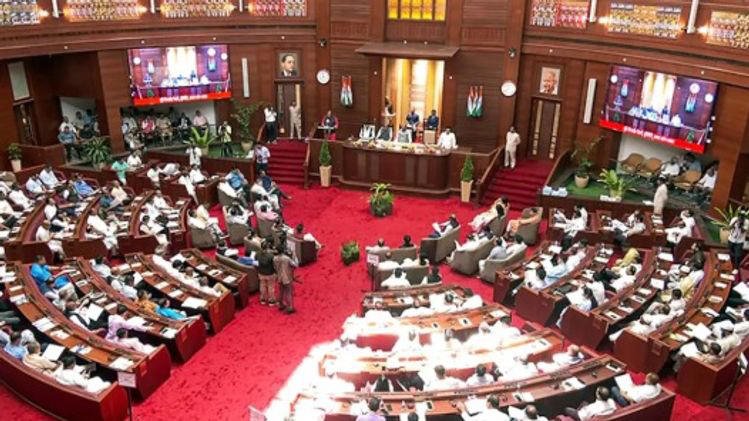
The Assam Assembly witnessed high political drama as members of the Congress and Raijor Dal staged a walkout to protest the delay in granting Scheduled Tribe (ST) status to six communities in the state. The opposition parties accused the government of failing to fulfil a long-standing promise despite repeated assurances over the years.
The issue has remained one of the most debated political and social matters in Assam, with the six communities seeking Scheduled Tribe recognition for several years. During the Assembly session, opposition legislators demanded clarity from the government regarding the current status of the proposal and the timeline for its implementation.
As the debate intensified, members of the Congress and Raijor Dal walked out of the House, alleging that the government had not provided satisfactory answers to concerns raised over the pending demand.
Opposition Raises Delay in ST Status Issue
The protest centred on the prolonged delay in granting Scheduled Tribe status to six communities, a demand that has featured prominently in Assam’s political discourse for years.
Opposition members argued that successive announcements and assurances had raised expectations among the communities concerned. However, they claimed that little tangible progress had been made toward securing constitutional recognition.
Congress legislators questioned the government’s commitment to fulfilling its promises and sought an explanation for why the proposal had not moved forward despite repeated public statements.
Raijor Dal members also criticised the delay, saying the affected communities continued to wait for a decision on an issue that carries significant social, educational, and economic implications.
Walkout Follows Heated Debate
The discussion in the Assembly became increasingly heated as opposition legislators pressed the government for specific details about the proposal.
Members demanded information on the current status of consultations with the Centre and asked whether any concrete steps had been taken to expedite the process.
Unsatisfied with the government’s response, legislators from the Congress and Raijor Dal staged a walkout as a mark of protest.
The opposition said the walkout reflected its dissatisfaction with what it described as the government’s inability to provide a clear roadmap for resolving the issue.
Demand Has Continued for Several Years
The demand for Scheduled Tribe status for the six communities is not new. It has remained under discussion for many years and has been raised repeatedly by community organisations, political parties, and civil society groups.
Supporters of the demand argue that constitutional recognition would provide greater access to educational opportunities, government employment, and welfare schemes available to Scheduled Tribe communities.
They have consistently urged both the state and central governments to complete the necessary constitutional and administrative procedures required for granting ST status.
The prolonged nature of the issue has made it an important political subject during elections and legislative debates.
Government Responds to Opposition Criticism
Responding during the Assembly session, government representatives said the matter involves constitutional procedures that require action beyond the state government alone.
They maintained that the government remains committed to the welfare of all communities and has continued pursuing the issue through appropriate channels.
According to the government’s response, granting Scheduled Tribe status requires multiple stages of examination and approval before Parliament can take a final decision.
The ruling side also accused the opposition of attempting to politicise a sensitive issue instead of acknowledging the constitutional process involved.
Constitutional Process Requires Multiple Approvals
The issue of granting Scheduled Tribe status involves a detailed constitutional procedure. The state government forwards recommendations to the central government after necessary assessments and consultations.
The proposal is then examined at different administrative levels before any constitutional amendment or legislative action can proceed.
Since Scheduled Tribe recognition affects constitutional provisions, Parliament must ultimately approve any changes before new communities can receive official ST status.
Government representatives said these procedural requirements contribute to the time taken in completing the process.
Political Significance of the Issue
The demand for ST status carries considerable political importance in Assam because it concerns communities that have consistently sought constitutional recognition.
Political parties across the state have repeatedly expressed support for the demand at different points. As a result, the issue frequently becomes part of election campaigns and legislative discussions.
The latest Assembly protest demonstrates that the matter continues to remain politically significant, with opposition parties using the debate to question the government’s performance.
Observers believe the issue is likely to remain a major topic in Assam’s political landscape until a final decision is reached.
Communities Continue to Await Decision
Representatives of the six communities have repeatedly appealed for an early resolution of their demand. Many believe that Scheduled Tribe status would improve access to government welfare programmes, reservation benefits, educational opportunities, and public employment.
Community organisations have organised meetings, memorandums, and peaceful demonstrations over the years to keep the issue in public focus.
Many leaders have argued that prolonged uncertainty creates frustration among people who have waited for constitutional recognition for decades.
They continue to urge both the state and central governments to complete the remaining formalities at the earliest.
Opposition Demands Clear Timeline
During the Assembly debate, opposition legislators called upon the government to provide a definite timeline for resolving the issue.
They argued that repeated assurances without concrete progress have weakened public confidence and increased dissatisfaction among the affected communities.
Congress members said the government should actively engage with the Centre to expedite the constitutional process rather than limiting itself to general statements.
Raijor Dal legislators echoed similar concerns, saying the people deserve greater transparency regarding the current stage of the proposal and the steps required before final approval.
Government Reiterates Commitment
Despite the opposition’s criticism, the government reaffirmed its commitment to pursuing the matter through constitutional and administrative mechanisms.
Government representatives maintained that they remain in communication with the concerned authorities and will continue making efforts to secure a favourable outcome.
They also stressed that constitutional procedures cannot be bypassed and that every stage of the process must follow established legal requirements.
The government assured the Assembly that it remains sensitive to the aspirations of the six communities and will continue working toward resolving the issue.
Assembly Protest Highlights Continuing Debate
The walkout by Congress and Raijor Dal once again brought the long-pending demand for Scheduled Tribe status for six communities into the spotlight.
While the opposition accused the government of delaying action, the ruling side maintained that constitutional procedures determine the pace of the process and that the state continues to pursue the matter through appropriate channels.
With the issue carrying significant social, political, and constitutional importance, it is expected to remain a key subject of public debate in Assam. Until a final decision emerges through the constitutional process, both the affected communities and political parties are likely to continue pressing for faster action and greater clarity on the path forward.