

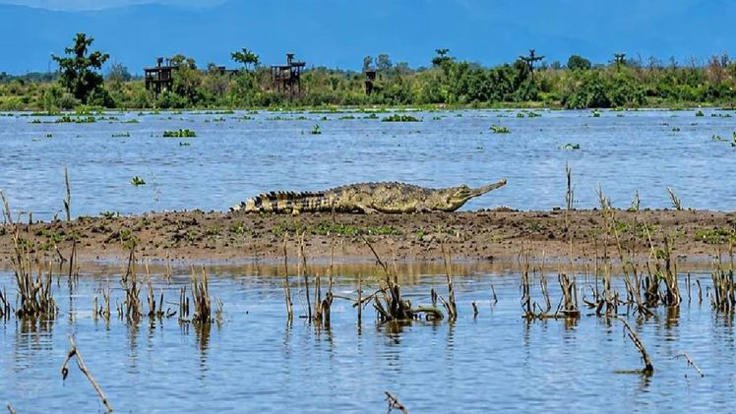
A critically endangered gharial has been spotted outside a protected area in Assam’s Tinsukia district, drawing attention from wildlife enthusiasts and conservationists. The sighting of the rare crocodilian has highlighted the importance of protecting riverine habitats beyond officially designated wildlife reserves.
The gharial is among the most threatened crocodilian species in the world and is primarily associated with freshwater rivers. Its appearance in an area outside a protected zone has generated interest among local residents as well as wildlife authorities.
The sighting also raises questions about the availability and quality of suitable river habitats for the species in Assam.
Rare Sighting Raises Conservation Concerns
Gharials are known for their distinctive long and narrow snouts, which make them easily distinguishable from other crocodilian species. Unlike the mugger crocodile, which is more commonly found across parts of India, gharials have highly specialised adaptations for catching fish.
Their survival is closely linked to healthy river ecosystems, adequate fish populations and suitable sandbanks for nesting.
The appearance of a gharial outside a protected area could indicate that the animal is moving through a wider river landscape in search of food, breeding grounds or suitable habitat. At the same time, such movement can expose the animal to several threats associated with human activity.
Why Gharials Are Critically Endangered
The gharial (Gavialis gangeticus) has suffered a dramatic decline in population over the decades. Habitat loss, changes in river flow, declining fish stocks, sand mining, fishing activities and disturbance of nesting sites have all contributed to the species’ vulnerability.
River development projects and changes to natural river systems can also affect the availability of the shallow waters and sandbanks that gharials require.
Because of these pressures, conservation efforts focus heavily on protecting river habitats and maintaining suitable conditions for breeding and feeding.
Importance of the Tinsukia Sighting
Tinsukia is known for its rich biodiversity and diverse ecosystems, including important wetlands, forests and riverine habitats. The district forms part of a landscape that supports several species of conservation importance.
A gharial sighting in an unprotected location therefore provides valuable information about wildlife movement in the region. It could encourage authorities and researchers to examine whether the surrounding river system is being used regularly by gharials.
Monitoring such sightings can help determine whether the animal is an isolated visitor or part of a wider population movement.
Human-Wildlife Interaction Becomes a Concern
When endangered wildlife appears outside protected areas, interaction with local communities can become an important concern. Residents may not be familiar with the behaviour of a gharial and could potentially approach the animal out of curiosity.
Experts generally advise people to maintain a safe distance from wild animals and inform forest officials when such species are spotted.
For a critically endangered species, avoiding unnecessary disturbance is particularly important. The animal should be allowed to move naturally while trained personnel assess the situation.
Need for Habitat Protection Beyond Protected Areas
The sighting underlines the fact that wildlife conservation cannot be restricted only to national parks and sanctuaries. Many species move between protected and unprotected landscapes in search of food, water and breeding sites.
River systems, in particular, are interconnected ecosystems. Pollution, fishing pressure, sand extraction and other activities outside protected areas can directly affect wildlife that depends on these waterways.
Conservationists have therefore increasingly emphasised the importance of protecting ecological corridors and maintaining healthy river habitats outside formally protected boundaries.
A Valuable Opportunity for Conservation
The Tinsukia gharial sighting could provide an opportunity for wildlife authorities to gather more information about the species’ presence in Assam. Further monitoring could help establish whether other gharials are present in nearby stretches of river.
Regular surveys, community awareness and cooperation between local residents and forest officials could play an important role in protecting the animal.
The appearance of a critically endangered gharial outside a protected area is both a remarkable wildlife encounter and a reminder of the challenges facing threatened species. As Assam continues to balance development with biodiversity conservation, protecting natural river habitats will remain crucial for ensuring that rare species such as the gharial have a chance to survive.