

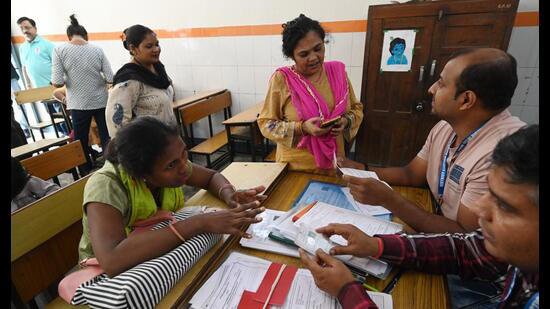
The Election Commission of India (ECI) has launched special camps at polling stations across Delhi to help voters complete forms and resolve queries related to the ongoing Special Intensive Revision (SIR) of electoral rolls.
The camps began on Sunday, September 27, as the poll panel stepped up efforts to assist voters who received notices over discrepancies in the draft electoral rolls. Booth-level officers (BLOs) were deployed at the camps to help residents understand the process, submit documents and address their concerns.
Special Camps Held Across Delhi
The special camps were organised at polling station locations across the national capital. Election officials assisted voters with filling out forms, submitting supporting documents and resolving questions related to the SIR exercise.
The initiative comes after a large number of voters were flagged because their details could not be mapped to earlier electoral rolls or because officials identified what they described as logical discrepancies.
According to the Delhi Chief Electoral Officer’s latest figures, 298,431 hearings had been conducted for voters who received notices under these categories.
BLOs Assist Voters With Documents
Booth-level officers played a central role at the special camps.
Officials helped residents understand which documents were required and assisted them with submitting forms. BLOs are also visiting the homes of voters who received notices in certain cases to collect documents and upload them on the ECINet platform for consideration by electoral registration officers.
The door-to-door exercise is intended to provide another avenue for voters who may face difficulties attending hearings or visiting election offices.
Millions of Voters Received Notices
The SIR exercise has generated significant activity across Delhi’s electoral system.
Around 3.16 million voters received notices after their names were flagged for either a lack of mapping with previous records or logical discrepancies. Election officials have been conducting hearings to allow these voters to provide documents and clarify their electoral status.
The Election Commission has maintained that receiving a notice does not automatically mean that a voter’s name has been removed from the electoral roll. The notice provides an opportunity for the voter to respond and submit relevant documents.
Different Forms Serve Different Purposes
The election office has also received applications through different electoral forms during the SIR process.
Form 6 is used to apply for inclusion in the electoral roll. Form 6A is meant for eligible Indian citizens living abroad, while Form 7 is used for deletion or objections to entries. Form 8 covers shifting of residence and correction or modification of electoral roll details.
The availability of these forms allows voters to address different types of electoral roll issues through the appropriate procedure.
Claims and Objections Deadline Extended
The special camps come shortly after the Election Commission extended the deadline for filing claims and objections in Delhi’s SIR exercise.
Voters can now submit claims and objections until October 30, while the deadline for disposing of claims and objections has been extended to November 30. The final electoral roll is now scheduled to be published on December 4.
The extension gives voters additional time to respond to notices, seek inclusion or raise objections regarding entries in the electoral roll.
More Applications Filed Under SIR
According to figures released by the Delhi CEO’s office, 134,485 Form 6 applications were received between August 31 and September 26 under the SIR process.
Separately, the election office received 127,218 Form 6 applications between January 1 and September 25. By September 26, officials had also received 1,351 Form 6A applications, 51,471 Form 7 applications and 260,768 Form 8 applications.
These figures reflect the volume of applications being processed by the election machinery during the revision exercise.
Special Camps for Young Voters
The Election Commission is also conducting targeted enrolment camps for young voters.
Special camps will be organised at colleges, universities and other educational institutions on September 29 and 30. Eligible young people who are not included in the draft electoral roll will be able to apply for registration through Form 6.
The initiative aims to help first-time voters complete the registration process and participate in the electoral system.
Support for Vulnerable Groups
The Delhi election authorities have also planned assistance for vulnerable groups during the SIR exercise.
Special arrangements have included camps and help desks for people living in night shelters, labourers, homeless citizens and other groups who may face difficulties accessing regular election offices.
The election office has also conducted targeted camps for transgender people and sex workers as part of its outreach efforts.
Election Office Steps Up Outreach
The special camps form part of a broader effort by the Delhi election machinery to resolve discrepancies before the final electoral roll is prepared.
Additional electoral registration officers have been deployed, while BLOs have been instructed to assist voters with documentation. The authorities are also using house visits and public outreach to ensure that voters receive information about the SIR process.
The approach gives voters multiple channels to clarify their status and submit documents.
SIR Process Moves Towards Final Roll
The Election Commission’s special camps come at a crucial stage of Delhi’s electoral roll revision.
With millions of voters receiving notices and the deadline for claims and objections extended to October 30, election officials will continue processing applications and documents over the coming weeks.
The final electoral roll is scheduled for publication on December 4. Until then, voters who have concerns about their entries or have received notices can use the available camps, BLO assistance and formal application procedures to submit their claims and supporting documents.