

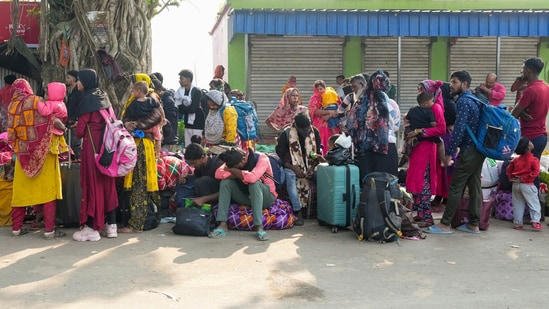
Large groups of people identified by authorities as undocumented Bangladeshi migrants have gathered near multiple points along the India-Bangladesh border in West Bengal following the rollout of a stricter immigration enforcement approach described as “detect, delete and deport.” The development has triggered intense political discussion and renewed attention on border management, deportation procedures, and migration policy.
According to reports, long queues formed near the Bithari-Hakimpur border area in North 24 Parganas as many individuals attempted to return to Bangladesh amid fears of detention and administrative action. Officials have begun verification processes before any transfer across the border takes place.
The movement has emerged against the backdrop of a broader crackdown targeting people staying in India without valid documents and has become one of the most closely watched developments in recent weeks.
What Is The ‘Detect, Delete And Deport’ Policy?
The phrase “detect, delete and deport” refers to an administrative approach announced by the West Bengal government to identify undocumented foreign nationals, remove ineligible names from official records where applicable, and initiate legal deportation procedures.
As part of this process, authorities have also moved to establish holding centres for individuals identified under deportation procedures. Reports stated that the first such facility became operational in Malda and currently houses individuals under verification.
State authorities have linked the initiative to enforcement under immigration-related legal provisions and have argued that stronger border administration and identity verification remain necessary.
Supporters of the policy argue that stronger enforcement improves border management and addresses concerns related to illegal immigration. Critics, however, have raised questions regarding implementation, verification standards, and humanitarian implications.
Why Are People Gathering Near The Bangladesh Border?
Reports suggest that the immediate trigger behind the gathering was concern among undocumented individuals over possible detention and deportation measures. Many reportedly moved toward border checkpoints hoping to leave before authorities initiated stronger enforcement action.
The crowding became especially visible at border points in North 24 Parganas after public remarks by political leaders urging undocumented migrants to leave. Reports indicated that these developments created anxiety and accelerated movement toward exit points.
Officials stated that border agencies have not allowed unrestricted movement and continue to carry out verification procedures before any formal handover process.
Many of those attempting to cross reportedly expressed concern about being moved into holding centres while awaiting legal processing.
Holding Centres And Verification Become Central To The Process
The creation of holding centres has become one of the most discussed elements of the policy.
According to official directions reported in the media, district administrations have been asked to create facilities for apprehended foreign nationals and individuals awaiting deportation or repatriation under existing procedures.
Authorities described these centres as temporary administrative arrangements rather than final detention facilities.
At the same time, border security agencies continue to verify nationality and legal status before any movement across the international boundary. Officials indicated that verification remains necessary because deportation generally requires confirmation of citizenship by the receiving country.
Bangladesh Also Steps Up Border Vigilance
The developments have attracted attention across the border as well.
Bangladesh increased vigilance in border districts following concerns regarding irregular crossings and possible unauthorised movement. Reports stated that border agencies strengthened patrols and launched public awareness efforts to discourage illegal entry.
Bangladesh has also emphasised that repatriation should follow established bilateral and legal procedures rather than unilateral movement.
At the same time, India has reportedly sought nationality verification in thousands of suspected cases through official channels.
Political Debate Intensifies Around Immigration Policy
The border gathering has quickly become a political issue.
Supporters of stricter enforcement argue that immigration laws must be implemented consistently and that governments should identify undocumented residents through legal procedures.
Others have raised concerns regarding humanitarian implications, verification standards, and the handling of people caught in administrative processes.
Observers note that immigration and border management remain politically sensitive issues in eastern India because of the region’s long international border and history of migration movements.
For now, authorities continue verification and monitoring while large public attention remains focused on how the policy unfolds and what impact it may have on migration management and border administration in West Bengal.